Review
. 2015 Dec 2:6:50.
doi: 10.1186/s40104-015-0048-6. eCollection 2015.

Early pregnancy in the horse revisited - does exception prove the rule?

Affiliations
Review

Early pregnancy in the horse revisited - does exception prove the rule?

Christine Aurich et al. J Anim Sci Biotechnol. .

Abstract

Early equine pregnancy shares many features with that of more intensively assessed domestic animals species, but there are also characteristic differences. Some of those are poorly understood. Descent of the equine conceptus into the uterine lumen occurs at day 5 to 6 after ovulation but is only possible when the embryo secretes prostaglandin E2. Although maintenance of equine pregnancy probably involves secretion of a conceptus derived anti-luteolytic factor, this agent has not been identified. Rapid growth, conceptus mobility and presence of an acellular capsule at the time of maternal recognition of pregnancy, i.e. between days 12 and 14, are prerequisites to avoid pregnancy loss. Progesterone together with 5α-pregnanes is secreted by the corpus luteum and induces the production of endometrial histotroph which is responsible for conceptus nutrition until placention. A stable contact between the outer trophoblast layer of the allantochorion and the luminal epithelium of the endometrium is not established before days 40 to 42 of pregnancy.

Keywords: Conceptus; Horse; Maternal recognition; Pregnancy.


Figures
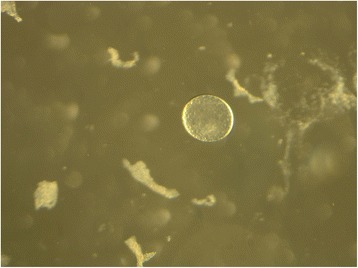
Fig. 1
Fig. 1
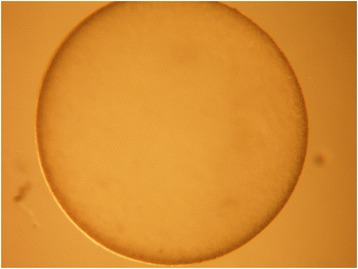
Blastocyst collected from the uterus of a mare on day 7 after ovulation. The zona pellucida is clearly visible
Fig. 2
Fig. 2
Horse conceptus collected from the uterus of a mare on day 7 after ovulation with the acellular capsule being clearly visible
Fig. 3
Fig. 3
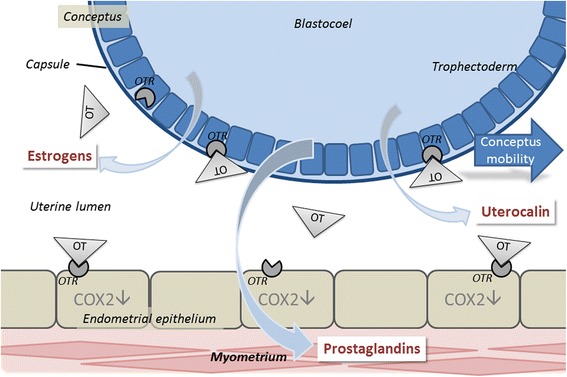
Schematic representation of interactions between the conceptus and the uterus as currently proposed at the time of maternal recognition of pregnancy on days 12/13 after ovulation: The conceptus propels through the uterine lumen dependent on the action of conceptus-derived prostaglandins on the myometrium. In addition, the conceptus secretes estrogens and arginine into the uterine lumen. Endometrial oxytocin (OT) stimulates conceptus growth by action on OT receptors (OTR) in the trophectoderm. Due to down-regulation of cyclooxygenase 2 (COX2) in the endometrial epithelium, endometrial oxytocin cannot stimulate endometrial synthesis of prostaglandin F, therefore corpus luteum function is maintained
Fig. 4
Fig. 4
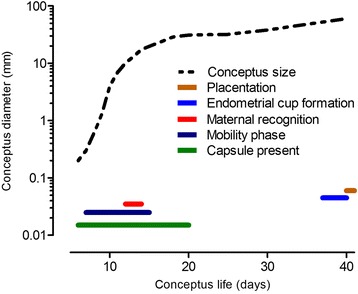
Mean conceptus diameter (mm) of the horse conceptus between days 7 and 40 after ovulation and time of some significant events that are involved in the establishment of equine pregnancy

References

    1. Berg SL, Ginther OJ. Effect of estrogens on uterine tone and life span of the corpus luteum in mares. J Anim Sci. 1978;47:203–8. - PubMed
    1. Sharp DC, McDowell KJ, Weithenauer J, Thatcher WW. The continuum of events leading to maternal recognition of pregnancy in mares. J Reprod Fertil Suppl. 1989;37:101–7. - PubMed
    1. McDowell KJ, Sharp DC, Fazleabas AT, Roberts RM. Synthesis and release of proteins by endometrium from pregnant and non-pregnant mares, and by conceptus membranes: characterization by two-dimensioal gel electrophoresis. J Reprod Fertil. 1990;89:107–115. doi: 10.1530/jrf.0.0890107. - DOI - PubMed
    1. Goff AK, Sirois J, Pontbrian D. Effect of oestradiol on oxytocin-stimulated prostaglandin F2alpha release in mares. J Reprod Fertil. 1993;98:107–12. doi: 10.1530/jrf.0.0980107. - DOI - PubMed
    1. Vanderwall DK, Woods GL, Weber JA, Lichtenwalner AB. Corpus luteum function in nonpregnant mares following intrauterine administration of prostaglandin E(2) or estradiol-17beta. Theriogenology. 1994;42:1069–83. doi: 10.1016/0093-691X(94)90855-9. - DOI - PubMed

LinkOut - more resources