


Microbial analysis of in situ biofilm formation in drinking water distribution systems: implications for monitoring and control of drinking water quality
- PMID: 26637423
- PMCID: PMC4786615
- DOI: 10.1007/s00253-015-7155-3
Microbial analysis of in situ biofilm formation in drinking water distribution systems: implications for monitoring and control of drinking water quality
Abstract
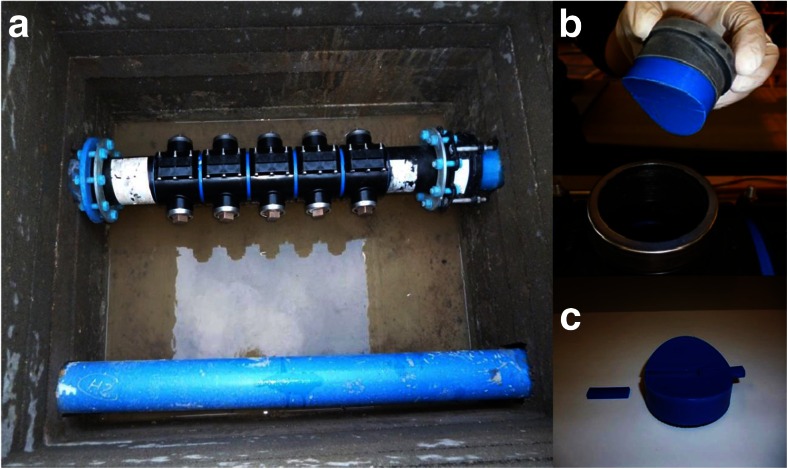
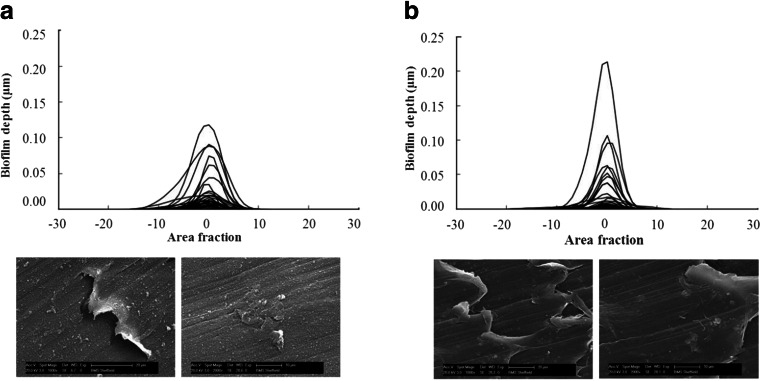
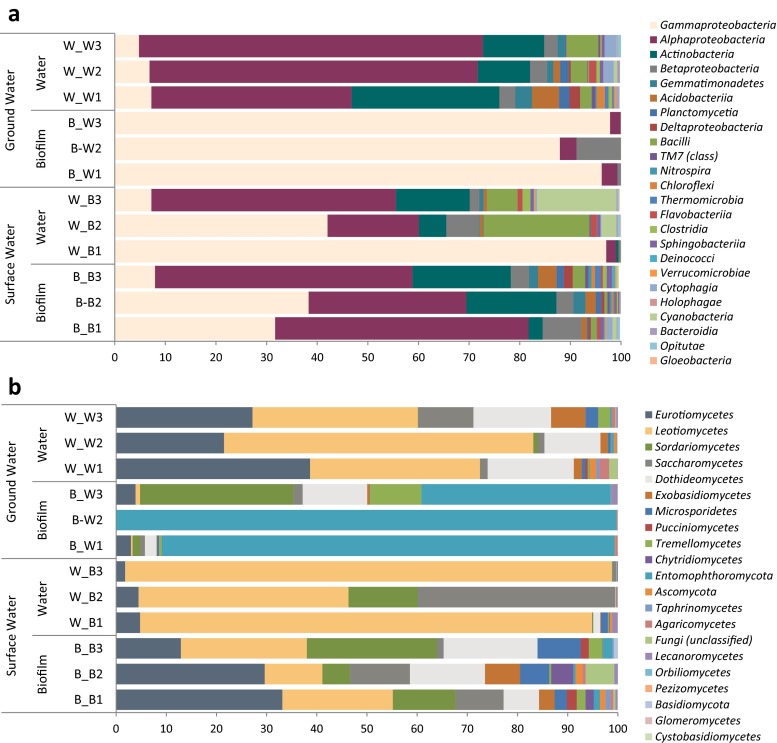
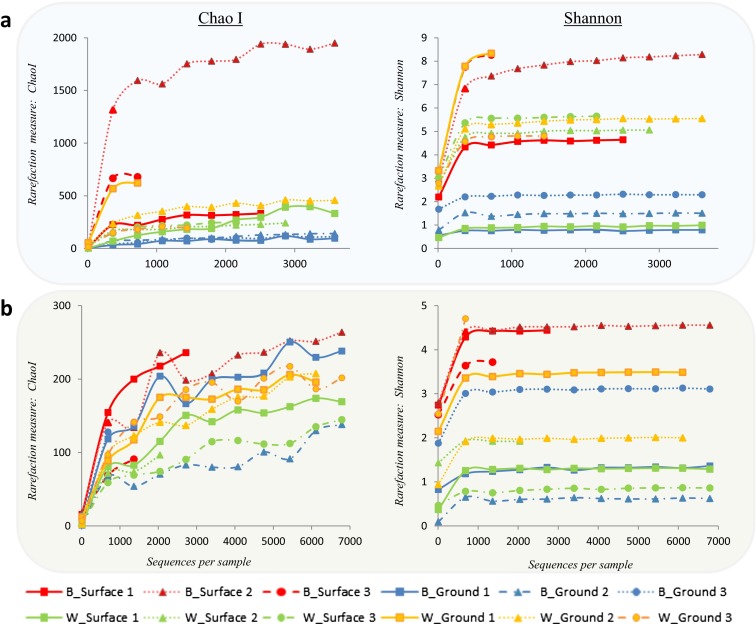
Biofilm formation in drinking water distribution systems (DWDS) is influenced by the source water, the supply infrastructure and the operation of the system. A holistic approach was used to advance knowledge on the development of mixed species biofilms in situ, by using biofilm sampling devices installed in chlorinated networks. Key physico-chemical parameters and conventional microbial indicators for drinking water quality were analysed. Biofilm coverage on pipes was evaluated by scanning electron microscopy (SEM) and confocal laser scanning microscopy (CLSM). The microbial community structure, bacteria and fungi, of water and biofilms was assessed using pyrosequencing. Conventional wisdom leads to an expectation for less microbial diversity in groundwater supplied systems. However, the analysis of bulk water showed higher microbial diversity in groundwater site samples compared with the surface water site. Conversely, higher diversity and richness were detected in biofilms from the surface water site. The average biofilm coverage was similar among sites. Disinfection residual and other key variables were similar between the two sites, other than nitrates, alkalinity and the hydraulic conditions which were extremely low at the groundwater site. Thus, the unexpected result of an exceptionally low diversity with few dominant genera (Pseudomonas and Basidiobolus) in groundwater biofilm samples, despite the more diverse community in the bulk water, is attributed to the low-flow hydraulic conditions. This finding evidences that the local environmental conditions are shaping biofilm formation, composition and amount, and hence managing these is critical for the best operation of DWDS to safeguard water quality.
Keywords: Bacteria; Biofilms; Drinking water distribution systems; Fungi.
Figures

References
-
- Abu-Ashour JJ, Lee D, Whiteley H, Zelin S. Transport of microorganisms through soil. Water Air Soil Pollut. 1994;75:141–158. doi: 10.1007/BF01100406. - DOI
-
- Callaway TR, Dowd SE, Edrington TS, Anderson RC, Krueger N, Bauer N, Kononoff PJ, Nisbet DJ. Evaluation of bacterial diversity in the rumen and feces of cattle fed different levels of dried distillers grains plus solubles using bacterial tag-encoded FLX amplicon pyrosequencing. J Anim Sci. 2010;88:3977–3983. doi: 10.2527/jas.2010-2900. - DOI - PubMed
Publication types
MeSH terms
Substances
LinkOut - more resources
Full Text Sources
Other Literature Sources
Medical
