


Autosomal-Recessive Intellectual Disability with Cerebellar Atrophy Syndrome Caused by Mutation of the Manganese and Zinc Transporter Gene SLC39A8
- PMID: 26637978
- PMCID: PMC4678439
- DOI: 10.1016/j.ajhg.2015.11.002
Autosomal-Recessive Intellectual Disability with Cerebellar Atrophy Syndrome Caused by Mutation of the Manganese and Zinc Transporter Gene SLC39A8
Abstract
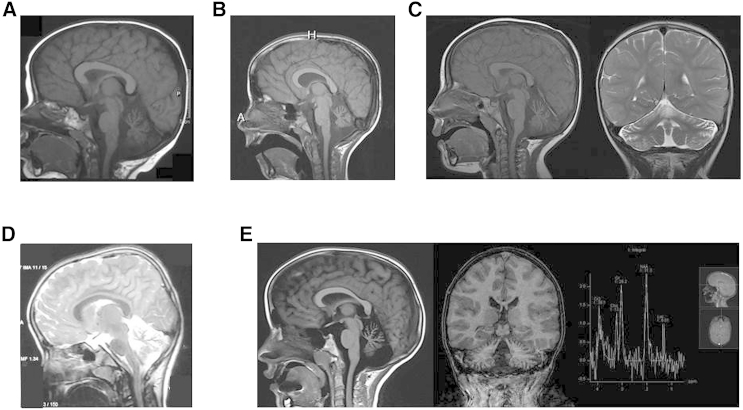
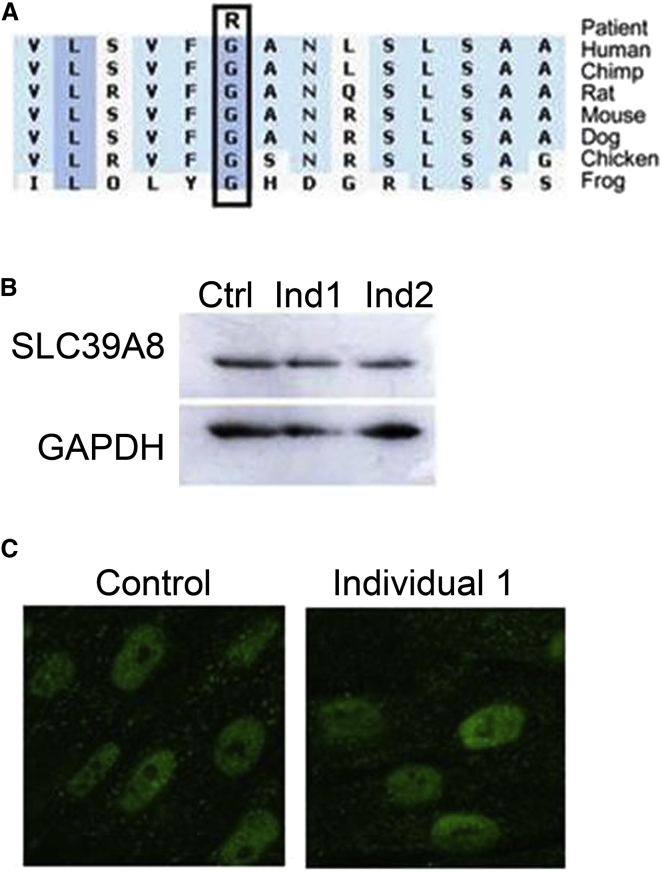
Manganese (Mn) and zinc (Zn) are essential divalent cations used by cells as protein cofactors; various human studies and animal models have demonstrated the importance of Mn and Zn for development. Here we describe an autosomal-recessive disorder in six individuals from the Hutterite community and in an unrelated Egyptian sibpair; the disorder is characterized by intellectual disability, developmental delay, hypotonia, strabismus, cerebellar atrophy, and variable short stature. Exome sequencing in one affected Hutterite individual and the Egyptian family identified the same homozygous variant, c.112G>C (p.Gly38Arg), affecting a conserved residue of SLC39A8. The affected Hutterite and Egyptian individuals did not share an extended common haplotype, suggesting that the mutation arose independently. SLC39A8 is a member of the solute carrier gene family known to import Mn, Zn, and other divalent cations across the plasma membrane. Evaluation of these two metal ions in the affected individuals revealed variably low levels of Mn and Zn in blood and elevated levels in urine, indicating renal wasting. Our findings identify a human Mn and Zn transporter deficiency syndrome linked to SLC39A8, providing insight into the roles of Mn and Zn homeostasis in human health and development.
Copyright © 2015 The American Society of Human Genetics. Published by Elsevier Inc. All rights reserved.
Figures
References
-
- Fukada T., Kambe T. Molecular and genetic features of zinc transporters in physiology and pathogenesis. Metallomics. 2011;3:662–674. - PubMed
-
- Pennington J.A., Schoen S.A. Total diet study: estimated dietary intakes of nutritional elements, 1982-1991. Int. J. Vitam. Nutr. Res. 1996;66:350–362. - PubMed
-
- Küry S., Dréno B., Bézieau S., Giraudet S., Kharfi M., Kamoun R., Moisan J.P. Identification of SLC39A4, a gene involved in acrodermatitis enteropathica. Nat. Genet. 2002;31:239–240. - PubMed
Publication types
MeSH terms
Substances
Grants and funding
LinkOut - more resources
Full Text Sources
Other Literature Sources
Medical
Molecular Biology Databases
