


Nanotechnology-based inhalation treatments for lung cancer: state of the art
- PMID: 26640374
- PMCID: PMC4657804
- DOI: 10.2147/NSA.S49052
Nanotechnology-based inhalation treatments for lung cancer: state of the art
Abstract
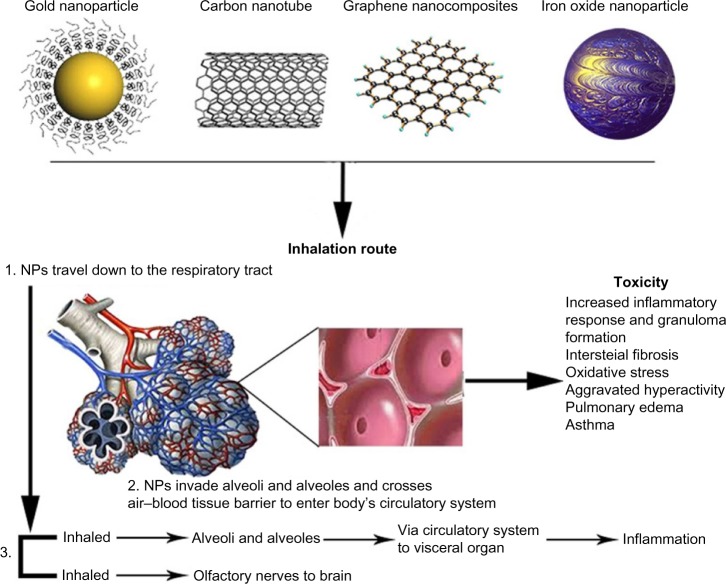
Considering the challenges associated with conventional chemotherapy, targeted and local delivery of chemotherapeutics via nanoparticle (NP) carriers to the lungs is an emerging area of interest. Recent studies and growing clinical application in cancer nanotechnology showed the huge potential of NPs as drug carriers in cancer therapy, including in lung carcinoma for diagnosis, imaging, and theranostics. Researchers have confirmed that nanotechnology-based inhalation chemotherapy is viable and more effective than conventional chemotherapy, with lesser side effects. Recently, many nanocarriers have been investigated, including liposomes, polymeric micelles, polymeric NPs, solid lipid NPs, and inorganic NPs for inhalation treatments of lung cancer. Yet, the toxicity of such nanomaterials to the lungs tissues and further distribution to other organs due to systemic absorption on inhalation delivery is a debatable concern. Here, prospect of NPs-based local lung cancer targeting through inhalation route as well as its associated challenges are discussed.
Keywords: drug targeting; inhalational chemotherapy; lung cancer; nanoparticles; nanotoxicity.
Figures
References
-
- Ramalingam SS, Owonikoko TK, Khuri FR. Lung cancer: new biological insights and recent therapeutic advances. CA Cancer J Clin. 2011;61(2):91–112. - PubMed
-
- Jemal A, Bray F, Center MM, Ferlay J, Ward E, Forman D. Global cancer statistics. CA Cancer J Clin. 2011;61(2):69–90. - PubMed
-
- American Lung Association Trends in Lung Cancer Morbidity and Mortality. Epidemiology and Statistics Unit, Research and Scientific Affairs. [Accessed February 28, 2013]. Available from: http://www.lung.org/lung-disease/lung-cancer/learning-more-about-lung-ca...
-
- Ferlay J, Soerjomataram I, Ervik M, et al. GLOBOCAN 2012 v1.0. Cancer Incidence and Mortality Worldwide: IARC Cancer Base Number 11 [Internet] Lyon, France: International Agency for Research on Cancer; 2013. [Accessed December 13, 2013]. Available from: http://globocan.iarc.fr.
-
- Cochrane Database of systematic reviews [Accessed February 28, 2013];Chemotherapy can improve survival rates for nonsmall cell lung cancer. Available from: http://summaries.cochrane.org/CD002139/chemotherapy-can-improve-survival....
Publication types
LinkOut - more resources
Full Text Sources
Miscellaneous
