


A missense mutation in TFRC, encoding transferrin receptor 1, causes combined immunodeficiency
- PMID: 26642240
- PMCID: PMC4696875
- DOI: 10.1038/ng.3465
A missense mutation in TFRC, encoding transferrin receptor 1, causes combined immunodeficiency
Abstract
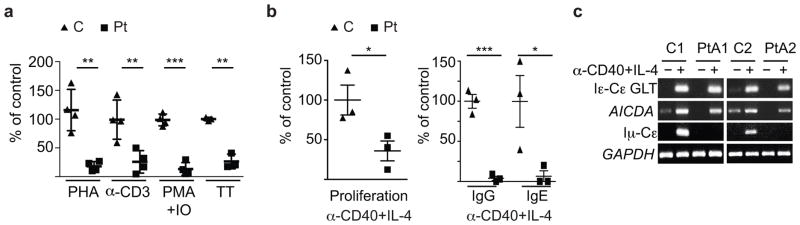
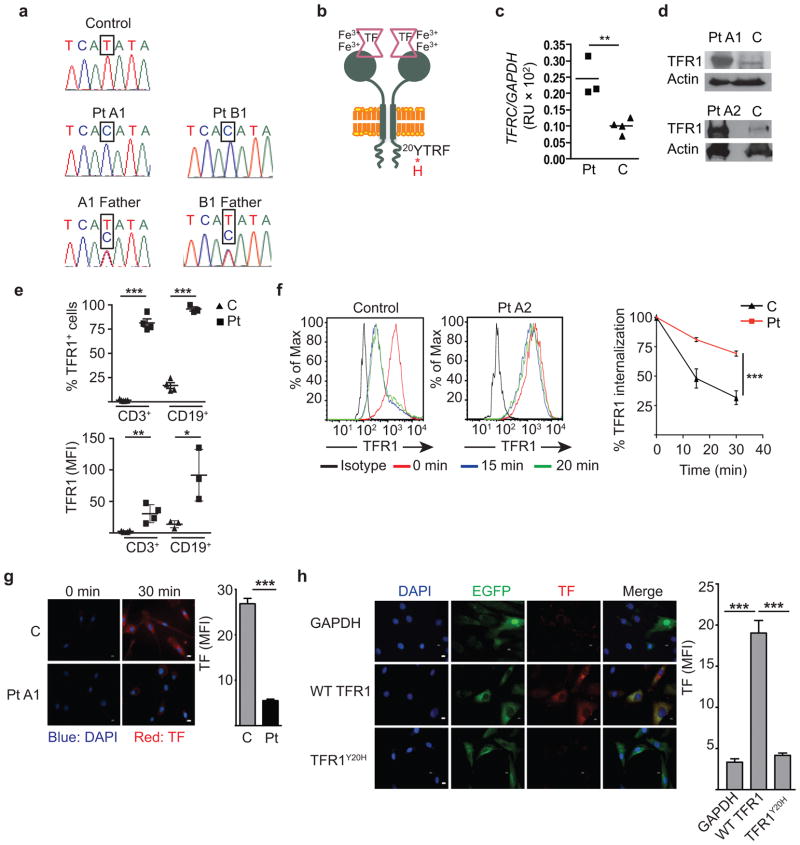
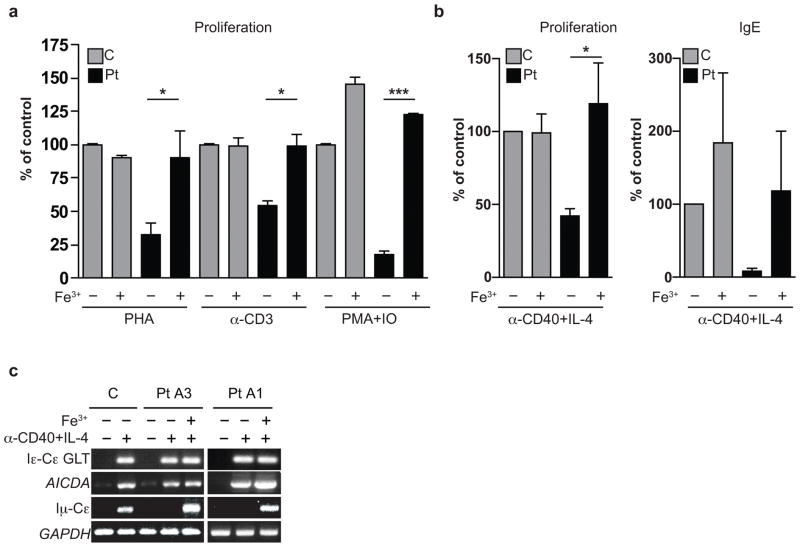
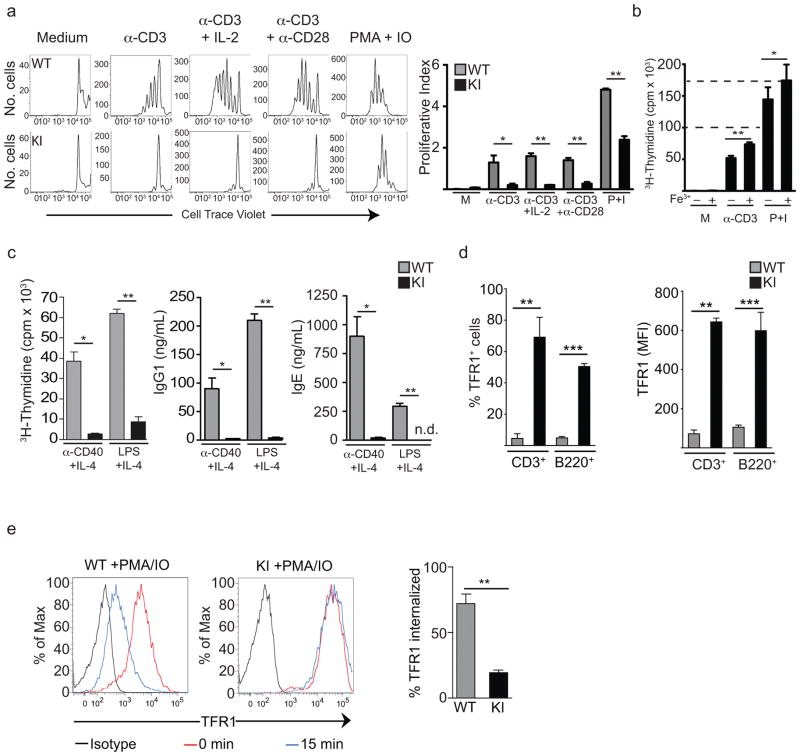
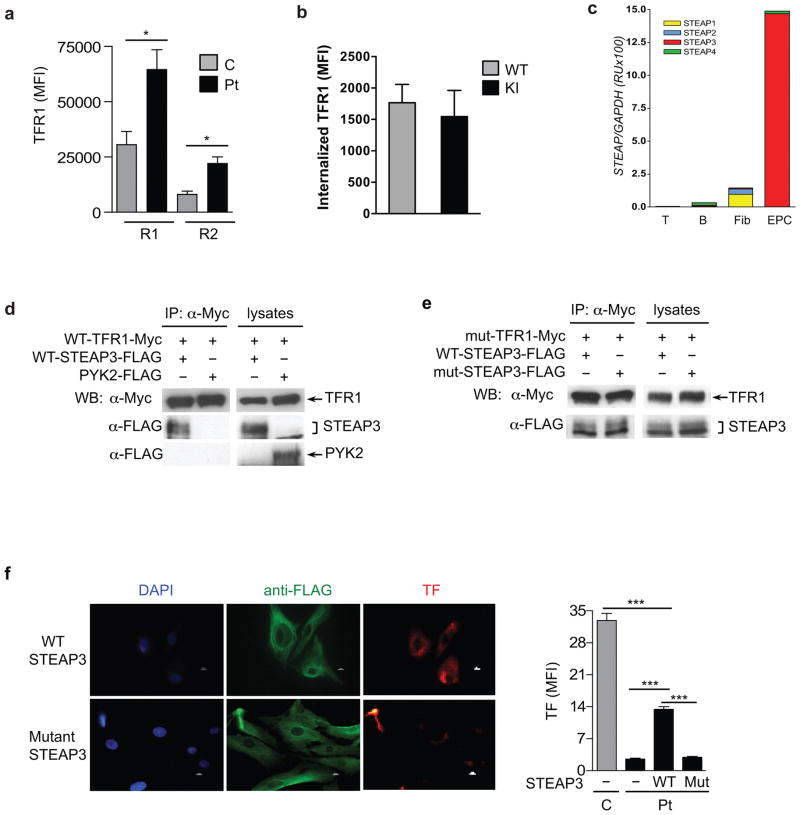
Patients with a combined immunodeficiency characterized by normal numbers but impaired function of T and B cells had a homozygous p.Tyr20His substitution in transferrin receptor 1 (TfR1), encoded by TFRC. The substitution disrupts the TfR1 internalization motif, resulting in defective receptor endocytosis and markedly increased TfR1 expression on the cell surface. Iron citrate rescued the lymphocyte defects, and expression of wild-type but not mutant TfR1 rescued impaired transferrin uptake in patient-derived fibroblasts. Tfrc(Y20H/Y20H) mice recapitulated the immunological defects of patients. Despite the critical role of TfR1 in erythrocyte development and function, patients had only mild anemia and only slightly increased TfR1 expression in erythroid precursors. We show that STEAP3, a metalloreductase expressed in erythroblasts, associates with TfR1 and partially rescues transferrin uptake in patient-derived fibroblasts, suggesting that STEAP3 may provide an accessory TfR1 endocytosis signal that spares patients from severe anemia. These findings demonstrate the importance of TfR1 in adaptive immunity.
Figures
Comment in
-
The requirement of iron transport for lymphocyte function.Nat Genet. 2016 Jan;48(1):10-1. doi: 10.1038/ng.3478. Nat Genet. 2016. PMID: 26711111
References
Publication types
MeSH terms
Substances
Grants and funding
LinkOut - more resources
Full Text Sources
Other Literature Sources
Molecular Biology Databases
Miscellaneous
