Review
. 2016 Jan;15(1):169-86.
doi: 10.1111/gbb.12273.

RNA-binding proteins, neural development and the addictions

Affiliations
Review

RNA-binding proteins, neural development and the addictions

C D Bryant et al. Genes Brain Behav. 2016 Jan.

Abstract

Transcriptional and post-transcriptional regulation of gene expression defines the neurobiological mechanisms that bridge genetic and environmental risk factors with neurobehavioral dysfunction underlying the addictions. More than 1000 genes in the eukaryotic genome code for multifunctional RNA-binding proteins (RBPs) that can regulate all levels of RNA biogenesis. More than 50% of these RBPs are expressed in the brain where they regulate alternative splicing, transport, localization, stability and translation of RNAs during development and adulthood. Dysfunction of RBPs can exert global effects on their targetomes that underlie neurodegenerative disorders such as Alzheimer's and Parkinson's diseases as well as neurodevelopmental disorders, including autism and schizophrenia. Here, we consider the evidence that RBPs influence key molecular targets, neurodevelopment, synaptic plasticity and neurobehavioral dysfunction underlying the addictions. Increasingly well-powered genome-wide association studies in humans and mammalian model organisms combined with ever more precise transcriptomic and proteomic approaches will continue to uncover novel and possibly selective roles for RBPs in the addictions. Key challenges include identifying the biological functions of the dynamic RBP targetomes from specific cell types throughout subcellular space (e.g. the nuclear spliceome vs. the synaptic translatome) and time and manipulating RBP programs through post-transcriptional modifications to prevent or reverse aberrant neurodevelopment and plasticity underlying the addictions.

Keywords: Amphetamine; RNA-binding protein; dopamine; genetic; hnRNP; neurodevelopmental; opioid; psychostimulant; substance abuse; substance use disorder.


Conflict of interest statement

The authors have no conflict of interests to declare.

Figures
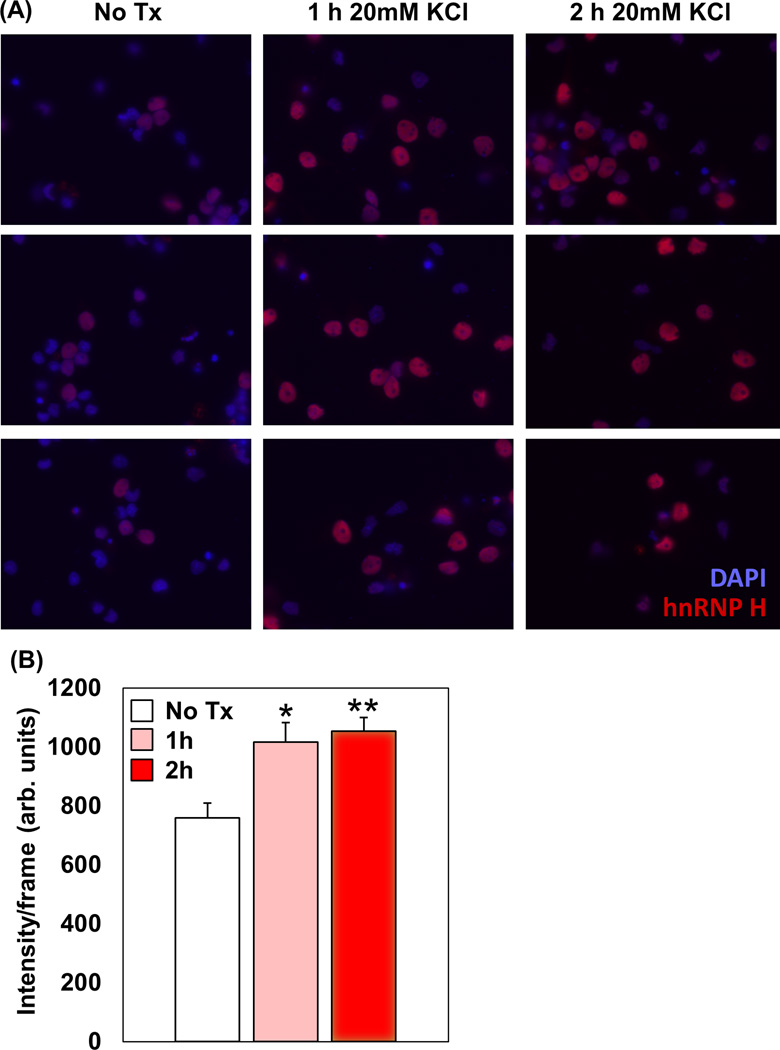
Figure 1
Figure 1. Immunocytochemical staining of hnRNP H in rat cortical neurons following KCl-induced depolarization
(A): Primary neocortical neurons were dissected from E18 Sprague-Dawley rat embryos (Charles River Laboratories). Dissociated neurons were cultured neurons for 1 week. For the control, no treatment (No Tx) group, 1 ml of conditioned media was replaced with 1 ml of neurobasal media. For the 1 h and 2 h Tx groups, 1 mL of conditioned media was replaced with 1ml of 20 mM KCl-enriched neurobasal media. Treated neurons were then washed, fixed, permeabilized, blocked, and incubated with primary hnRNP H antibody (1:500 Rabbit polyclonal, Bethyl Labs) in 1% BSA overnight at 4° C. 12 h later, neurons were washed and incubated with an Alexa Fluor 594 antibody (1:500 Donkey anti-Rabbit, Life Technologies) in 1% BSA. Processed coverslips were then stained with DAPI (blue) and mounted onto glass slides. Images were collected using a Zeiss AxioObserver microscope under uniform settings for all three groups. 20 serial images (frames) were captured per condition and fluorescence was quantified using ImageJ under a uniform threshold range. Note both an increase in the number of H1 stained neurons following 1–2 h of KCl Tx as well as an increase in the fluorescent staining intensity after KCl treatment. (B): Semi-quantification of fluorescence staining intensity. One-way ANOVA indicated a main effect of genotype (F2,57 = 8.4; P = 0.0006). *P = 0.01; **P <0.001 (unpaired t-tests versus No Tx).
Figure 2
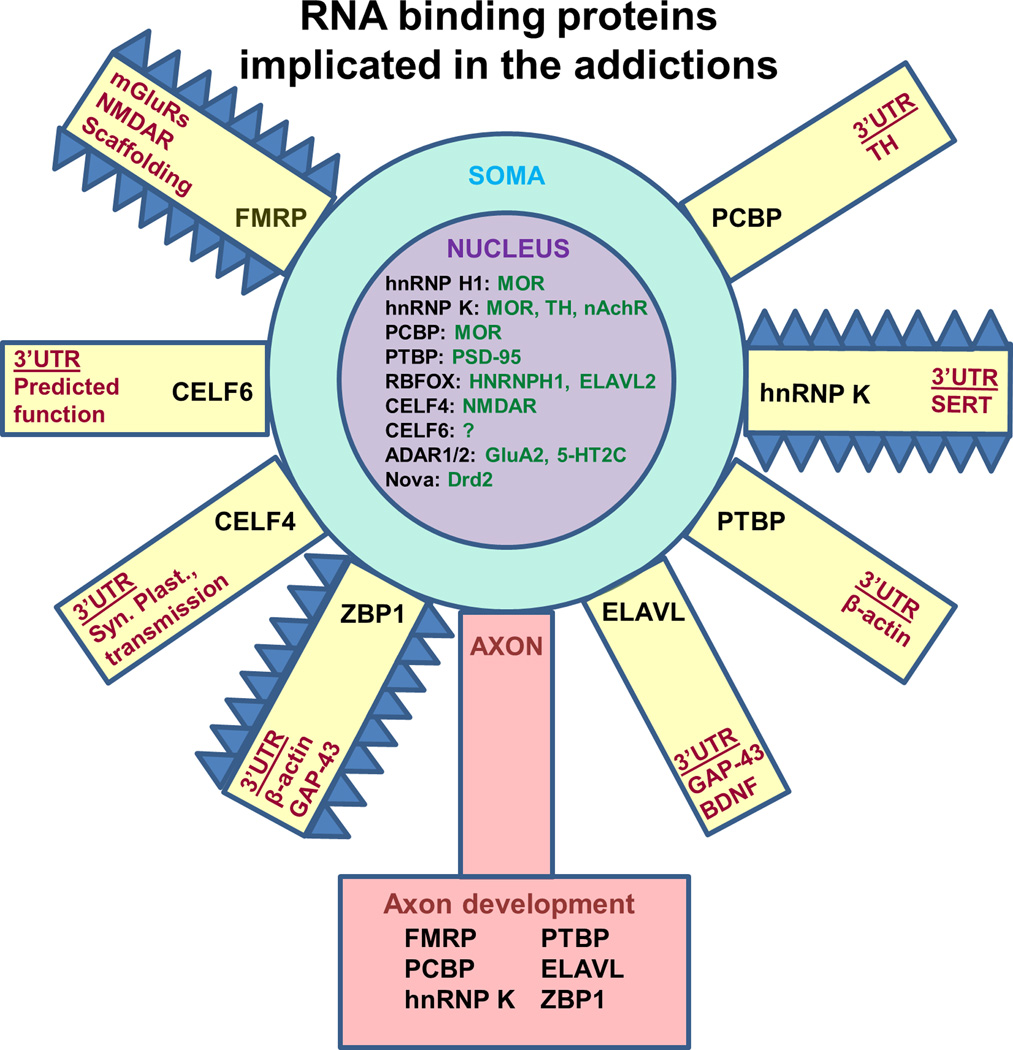
Figure 2. RNA binding proteins implicated in the addictions
Many RBPs have the capability to shuttle between the nucleus and cytoplasm to regulate all levels of RNA post-transcriptional processing. Here, we illustrate the location of action of the main examples that are discussed and some of their well-characterized targets. For the RBPs that are illustrated, we have also indicated whether not they contribute to axon development by listing them in the axon terminal (bottom). The yellow rectangles denote dendrites. The blue spikes indicate an association with structural changes in dendritic morphology.

References

    1. Adori C, Ando RD, Ferrington L, Szekeres M, Vas S, Kelly PA, Hunyady L, Bagdy G. Elevated BDNF protein level in cortex but not in hippocampus of MDMA-treated Dark Agouti rats: a potential link to the long-term recovery of serotonergic axons. Neuroscience letters. 2010;478:56–60. - PubMed
    1. Akubuiro A, Bridget Zimmerman M, Boles Ponto LL, Walsh SA, Sunderland J, McCormick L, Singh M. Hyperactive hypothalamus, motivated and non-distractible chronic overeating in ADAR2 transgenic mice. Genes, brain, and behavior. 2013;12:311–322. - PMC - PubMed
    1. Alibhai IN, Green TA, Potashkin JA, Nestler EJ. Regulation of fosB and DeltafosB mRNA expression: in vivo and in vitro studies. Brain research. 2007;1143:22–33. - PMC - PubMed
    1. Allen M, Bird C, Feng W, Liu G, Li W, Perrone-Bizzozero NI, Feng Y. HuD promotes BDNF expression in brain neurons via selective stabilization of the BDNF long 3'UTR mRNA. PloS one. 2013;8:e55718. - PMC - PubMed
    1. An JJ, Gharami K, Liao GY, Woo NH, Lau AG, Vanevski F, Torre ER, Jones KR, Feng Y, Lu B, Xu B. Distinct role of long 3' UTR BDNF mRNA in spine morphology and synaptic plasticity in hippocampal neurons. Cell. 2008;134:175–187. - PMC - PubMed

Publication types

Substances

LinkOut - more resources