


Studying mechanisms of cAMP and cyclic nucleotide phosphodiesterase signaling in Leydig cell function with phosphoproteomics
- PMID: 26643407
- PMCID: PMC5679091
- DOI: 10.1016/j.cellsig.2015.11.014
Studying mechanisms of cAMP and cyclic nucleotide phosphodiesterase signaling in Leydig cell function with phosphoproteomics
Abstract
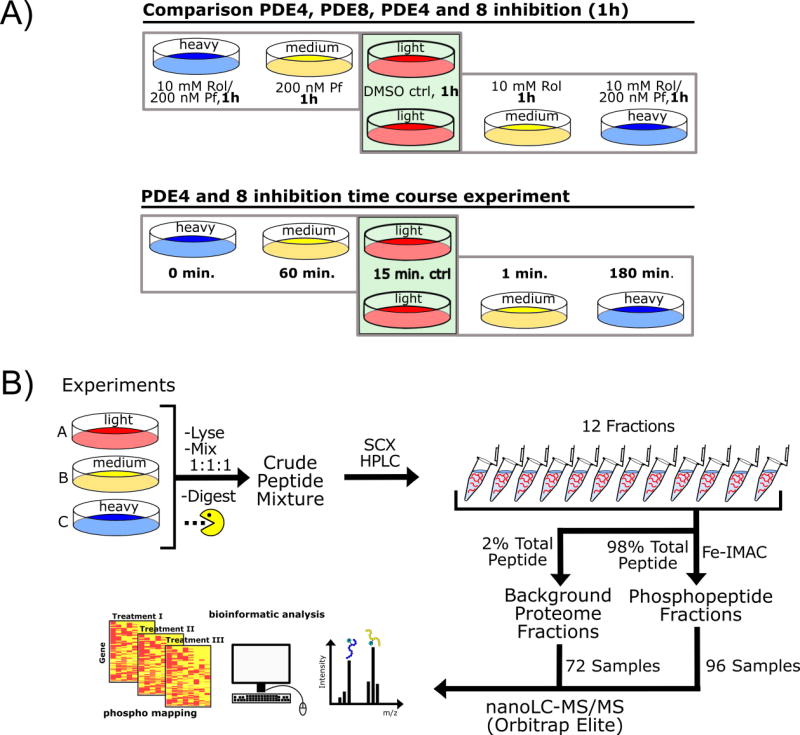
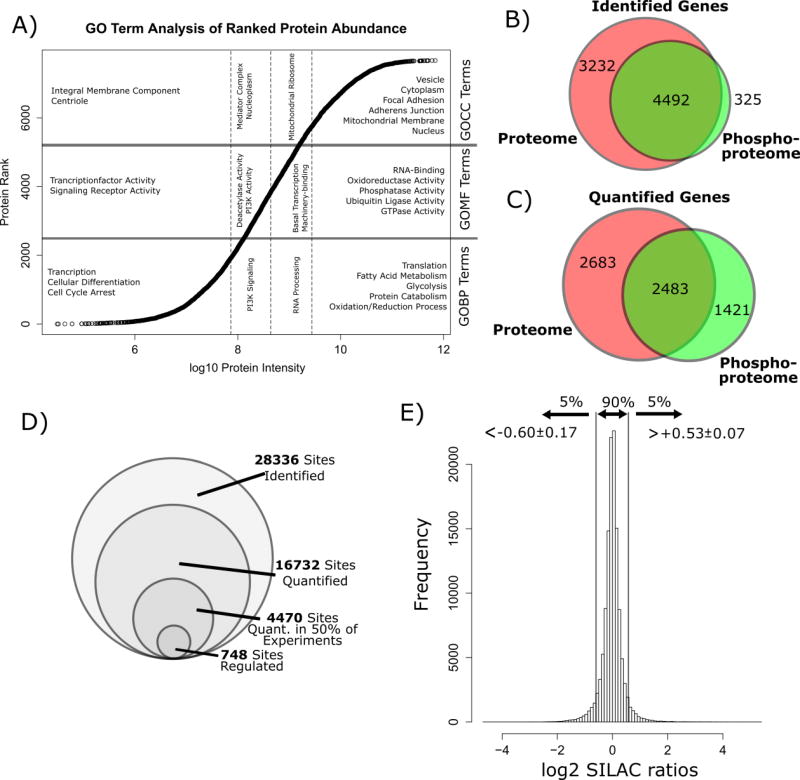
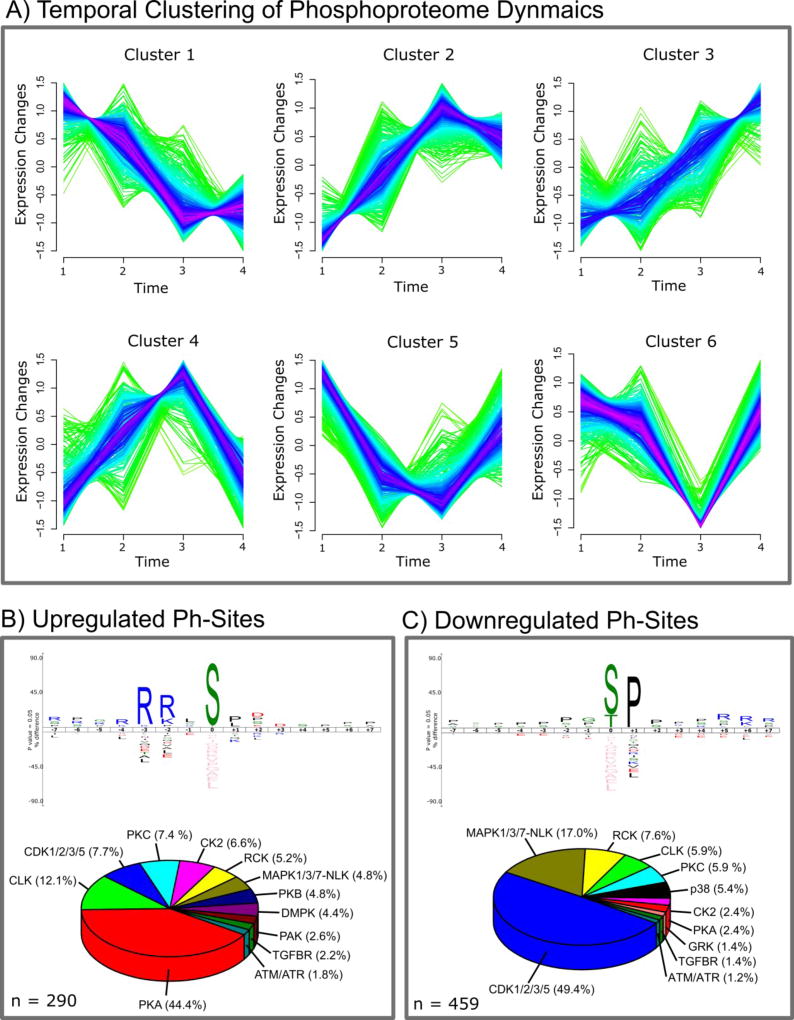
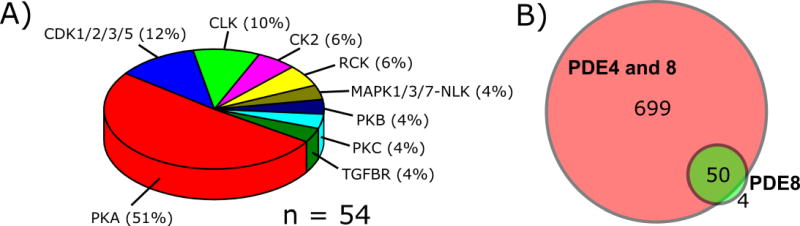
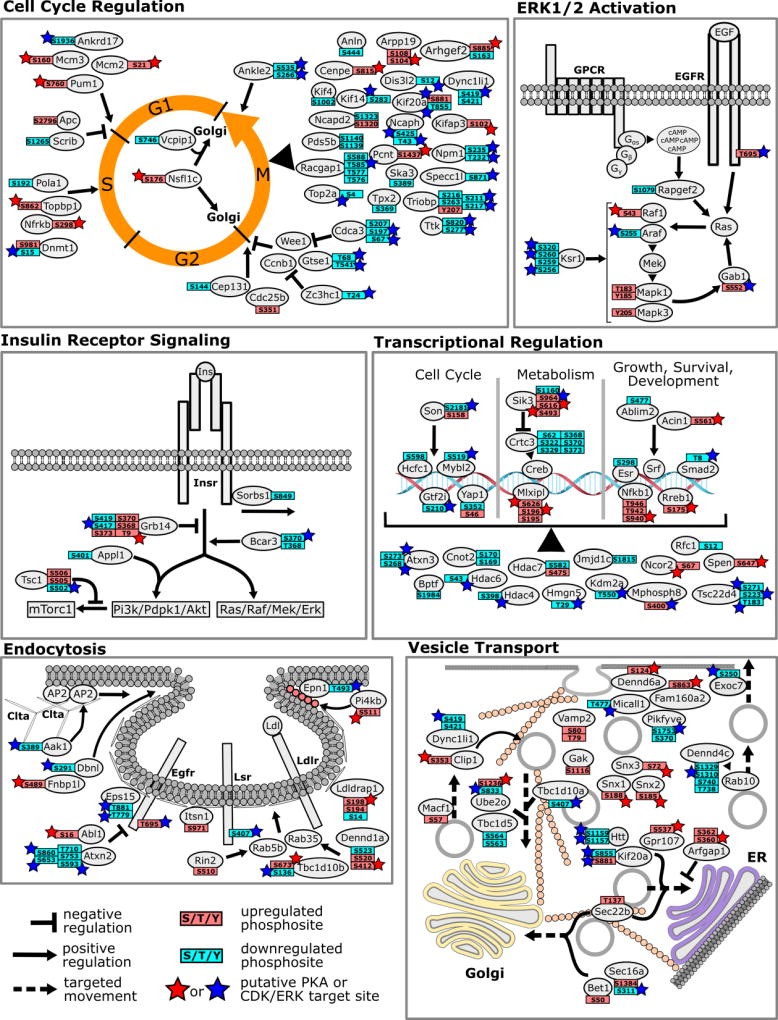
Many cellular processes are modulated by cyclic AMP and nucleotide phosphodiesterases (PDEs) regulate this second messenger by catalyzing its breakdown. The major unique function of testicular Leydig cells is to produce testosterone in response to luteinizing hormone (LH). Treatment of Leydig cells with PDE inhibitors increases cAMP levels and the activity of its downstream effector, cAMP-dependent protein kinase (PKA), leading to a series of kinase-dependent signaling and transcription events that ultimately increase testosterone release. We have recently shown that PDE4B and PDE4C as well as PDE8A and PDE8B are expressed in rodent Leydig cells and that combined inhibition of PDE4 and PDE8 leads to dramatically increased steroid biosynthesis. Here we investigated the effect of PDE4 and PDE8 inhibition on the molecular mechanisms of cAMP actions in a mouse MA10 Leydig cell line model with SILAC mass spectrometry-based phosphoproteomics. We treated MA10 cells either with PDE4 family specific inhibitor (Rolipram) and PDE8 family specific inhibitor (PF-04957325) alone or in combination and quantified the resulting phosphorylation changes at five different time points between 0 and 180min. We identified 28,336 phosphosites from 4837 proteins and observed significant regulation of 749 sites in response to PDE4 and PDE8 inhibitor treatment. Of these, 132 phosphosites were consensus PKA sites. Our data strongly suggest that PDE4 and PDE8 inhibitors synergistically regulate phosphorylation of proteins required for many different cellular processes, including cell cycle progression, lipid and glucose metabolism, transcription, endocytosis and vesicle transport. Our data suggests that cAMP, PDE4 and PDE8 coordinate steroidogenesis by acting on not one rate-limiting step but rather multiple pathways. Moreover, the pools of cAMP controlled by these PDEs also coordinate many other metabolic processes that may be regulated to assure timely and sufficient testosterone secretion in response to LH.
Keywords: Leydig cells; Phosphodiesterase; Phosphorylation; Proteomics; SILAC; Steroidogenesis.
Copyright © 2015 Elsevier Inc. All rights reserved.
Figures
References
-
- Beavo JA, Brunton LL. Cyclic nucleotide research -- still expanding after half a century. Nat Rev Mol Cell Biol. 2002;3:710–718. - PubMed
-
- Conti M, Beavo J. Biochemistry and physiology of cyclic nucleotide phosphodiesterases: essential components in cyclic nucleotide signaling. Annu. Rev. Biochem. 2007;76:481–511. - PubMed
-
- Hanoune J, Defer N. Regulation and role of adenylyl cyclase isoforms. Annu. Rev. Pharmacool. Toxicol. 2001;41:145–174. - PubMed
Publication types
MeSH terms
Substances
Grants and funding
LinkOut - more resources
Full Text Sources
Other Literature Sources
