


Aerobic Exercise for Reducing Migraine Burden: Mechanisms, Markers, and Models of Change Processes
- PMID: 26643584
- PMCID: PMC4813301
- DOI: 10.1111/head.12738
Aerobic Exercise for Reducing Migraine Burden: Mechanisms, Markers, and Models of Change Processes
Abstract
Background: Engagement in regular exercise routinely is recommended as an intervention for managing and preventing migraine, and yet empirical support is far from definitive. We possess at best a weak understanding of how aerobic exercise and resulting change in aerobic capacity influence migraine, let alone the optimal parameters for exercise regimens as migraine therapy (eg, who will benefit, when to prescribe, optimal types, and doses/intensities of exercise, level of anticipated benefit). These fundamental knowledge gaps critically limit our capacity to deploy exercise as an intervention for migraine.
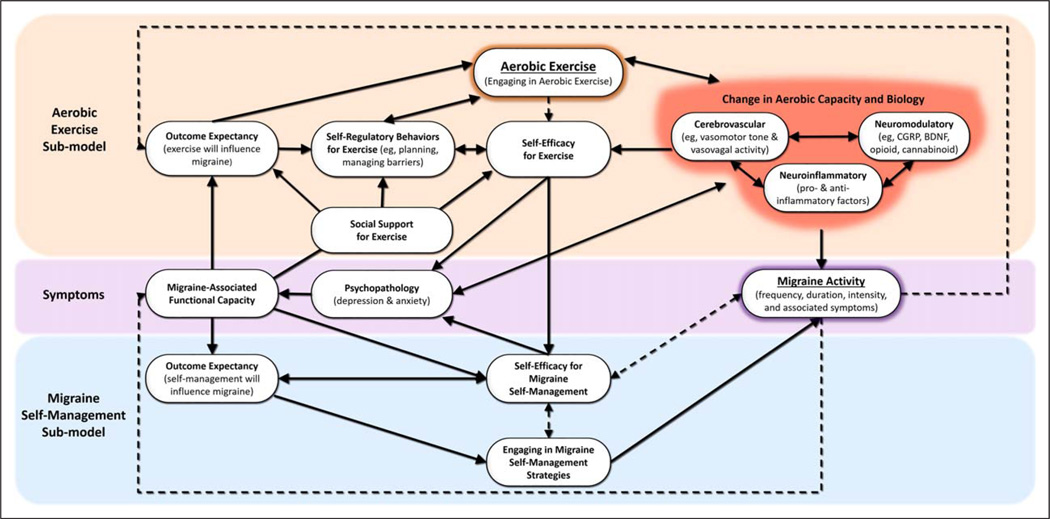
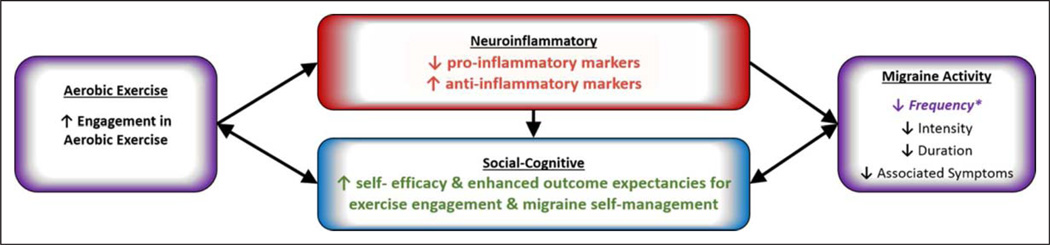
Overview: Clear articulation of the markers and mechanisms through which aerobic exercise confers benefits for migraine would prove invaluable and could yield insights on migraine pathophysiology. Neurovascular and neuroinflammatory pathways, including an effect on obesity or adiposity, are obvious candidates for study given their role both in migraine as well as the changes known to accrue with regular exercise. In addition to these biological pathways, improvements in aerobic fitness and migraine alike also are mediated by changes in psychological and sociocognitive factors. Indeed a number of specific mechanisms and pathways likely are operational in the relationship between exercise and migraine improvement, and it remains to be established whether these pathways operate in parallel or synergistically. As heuristics that might conceptually benefit our research programs here forward, we: (1) provide an extensive listing of potential mechanisms and markers that could account for the effects of aerobic exercise on migraine and are worthy of empirical exploration and (2) present two exemplar conceptual models depicting pathways through which exercise may serve to reduce the burden of migraine.
Conclusion: Should the promise of aerobic exercise as a feasible and effective migraine therapy be realized, this line of endeavor stands to benefit migraineurs (including the many who presently remain suboptimally treated) by providing a new therapeutic avenue as an alternative or augmentative compliment to established interventions for migraine.
Keywords: aerobic exercise; aerobic fitness; endocannabinoids; inflammation; migraine; outcome expectancies; self-efficacy; self-management; self-regulation.
© 2015 American Headache Society.
Conflict of interest statement
Figures
References
-
- Baillie LE, Gabriele JM, Penzien DB. A systematic review of behavioral headache interventions with an aerobic exercise component. Headache. 2014;54:40–53. - PubMed
-
- Busch V, Gaul C. Exercise in migraine therapy-is there any evidence for efficacy? A critical review. Headache. 2008;48:890–899. - PubMed
-
- Darabaneanu S, Overath CH, Rubin D, et al. Aerobic exercise as a therapy option for migraine: A pilot study. Int J Sports Med. 2011;32:455–460. - PubMed
-
- Narin SO, Pinar L, Erbas D, Oztürk V, Idiman F. The effects of exercise and exercise-related changes in blood nitric oxide level on migraine headache. Clin Rehabil. 2003;17:624–630. - PubMed
Publication types
MeSH terms
Grants and funding
LinkOut - more resources
Full Text Sources
Other Literature Sources
Medical
