


Cumulative stress in research animals: Telomere attrition as a biomarker in a welfare context?
- PMID: 26645576
- PMCID: PMC4737400
- DOI: 10.1002/bies.201500127
Cumulative stress in research animals: Telomere attrition as a biomarker in a welfare context?
Abstract
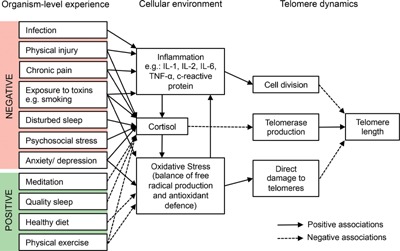
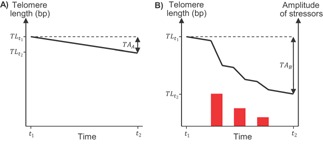
Progress in improving animal welfare is currently limited by the lack of objective methods for assessing lifetime experience. I propose that telomere attrition, a cellular biomarker of biological age, provides a molecular measure of cumulative experience that could be used to assess the welfare impact of husbandry regimes and/or experimental procedures on non-human animals. I review evidence from humans that telomere attrition is accelerated by negative experiences in a cumulative and dose-dependent manner, but that this attrition can be mitigated or even reversed by positive life-style interventions. Evidence from non-human animals suggests that despite some specific differences in telomere biology, stress-induced telomere attrition is a robust phenomenon, occurring in a range of species including mice and chickens. I conclude that telomere attrition apparently integrates positive and negative experience in an accessible common currency that translates readily to novel species--the Holy Grail of a cumulative welfare indicator.
Keywords: animal welfare; biological age; biomarker; cumulative experience; cumulative severity; stress; telomere dynamics.
© 2015 The Author. BioEssays published by WILEY Periodicals, Inc.
Figures
References
-
- European Parliament and the Council of the European Union. 2010. Directive 2010/63/EU on the protection of animals used for scientific purposes.
-
- Pickard J. 2013. Review of the assessment of cumulative severity and lifetime experience in non‐human primates used in neuroscience research. Retrieved from: www.gov.uk/government/uploads/system/uploads/attachment_data/file/261687...
-
- Hones P, Wolfensohn S. 2010. The extended welfare assessment grid: a matrix for the assessment of welfare and cumulative suffering experimental animals. ATLA‐Alternatives Lab Anim 38: 205–12. - PubMed
-
- Selye H. 1956. The Stress of Life. New York, NY: McGraw‐Hill.
Publication types
MeSH terms
Substances
Grants and funding
LinkOut - more resources
Full Text Sources
Other Literature Sources
