


The climate hazards infrared precipitation with stations--a new environmental record for monitoring extremes
- PMID: 26646728
- PMCID: PMC4672685
- DOI: 10.1038/sdata.2015.66
The climate hazards infrared precipitation with stations--a new environmental record for monitoring extremes
Abstract
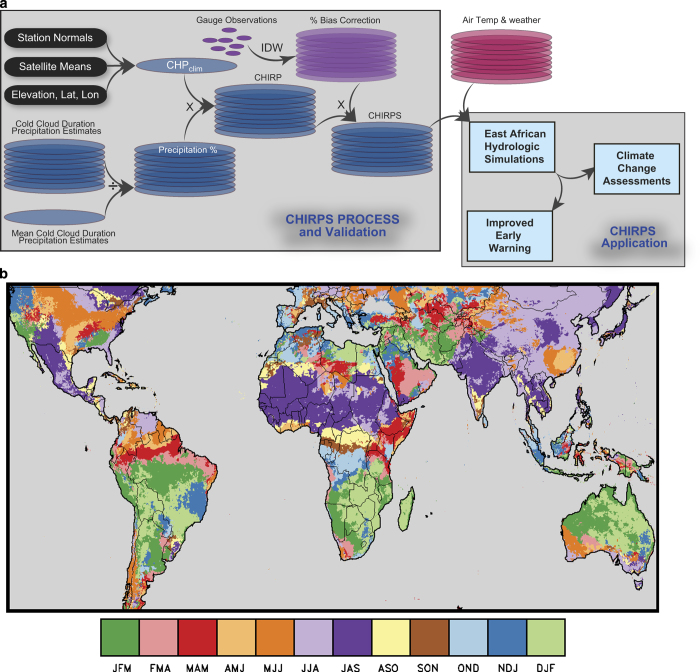
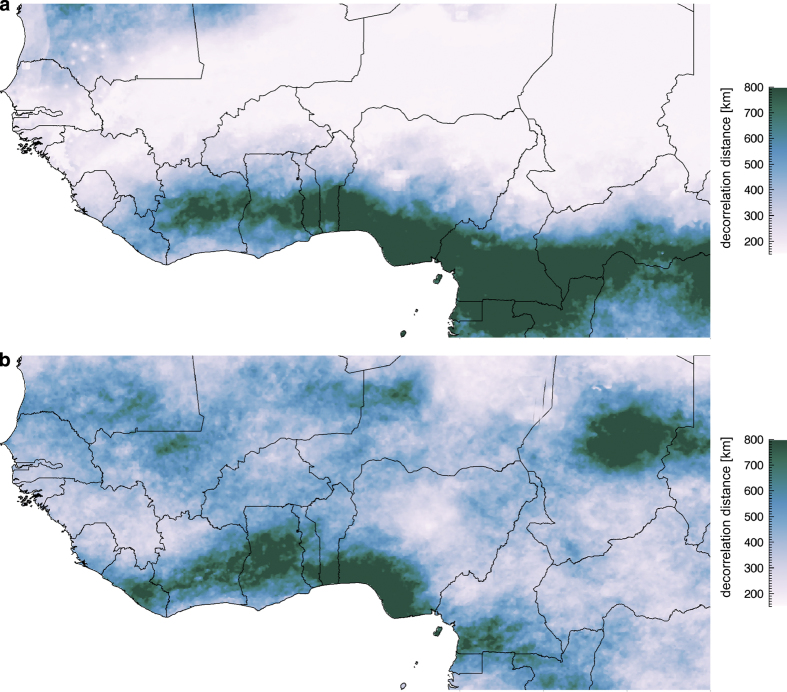
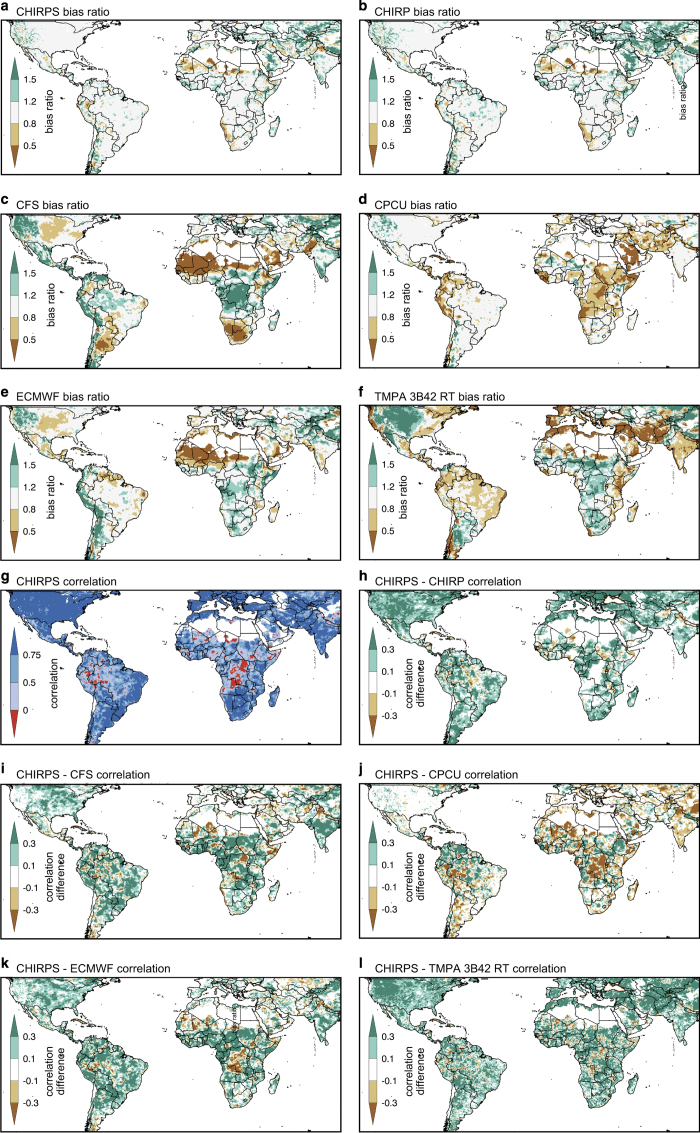
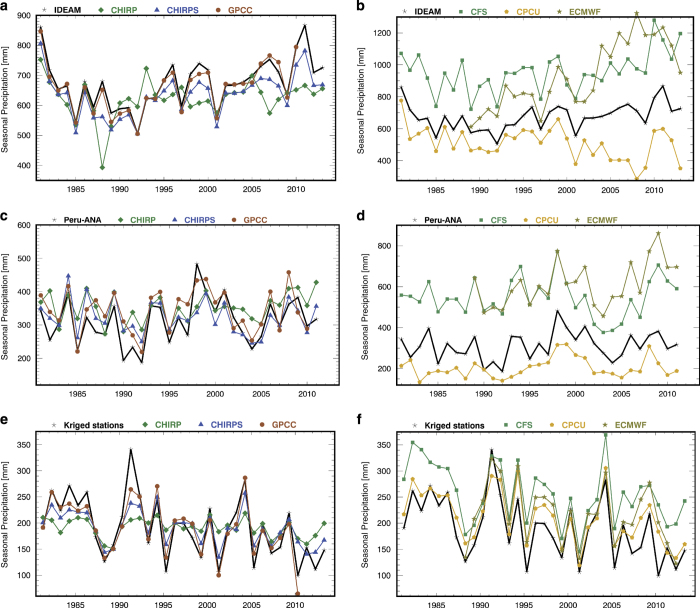
The Climate Hazards group Infrared Precipitation with Stations (CHIRPS) dataset builds on previous approaches to 'smart' interpolation techniques and high resolution, long period of record precipitation estimates based on infrared Cold Cloud Duration (CCD) observations. The algorithm i) is built around a 0.05° climatology that incorporates satellite information to represent sparsely gauged locations, ii) incorporates daily, pentadal, and monthly 1981-present 0.05° CCD-based precipitation estimates, iii) blends station data to produce a preliminary information product with a latency of about 2 days and a final product with an average latency of about 3 weeks, and iv) uses a novel blending procedure incorporating the spatial correlation structure of CCD-estimates to assign interpolation weights. We present the CHIRPS algorithm, global and regional validation results, and show how CHIRPS can be used to quantify the hydrologic impacts of decreasing precipitation and rising air temperatures in the Greater Horn of Africa. Using the Variable Infiltration Capacity model, we show that CHIRPS can support effective hydrologic forecasts and trend analyses in southeastern Ethiopia.
Conflict of interest statement
The authors declare no competing financial interests.
Figures
Dataset use reported in
References
Data Citations
-
- Funk C. 2015. Climate Hazards Group. http://dx.doi.org/10.15780/G2RP4Q - DOI
References
-
- Love T. B., Kumar V., Xie P. & Thiaw W. A 20-year daily Africa precipitation climatology using satellite and gauge data. In Proceedings of the 84th AMS Annual Meeting, vol. Conference on Applied Climatology, Seattle, (2004)
-
- Xie P. & Arkin P. A. Global precipitation: A 17-year monthly analysis based on gauge observations, satellite estimates, and numerical model outputs. B Am Meteorol. Soc. 78, 2539–2558 (1997).
-
- Novella N. S. & Thiaw W. M. African rainfall climatology version 2 for famine early warning systems. Journal of Applied Meteorology and Climatology 52, 588–606 (2013).
-
- Abram N. J., Gagan M. K., Cole J. E., Hantoro W. S. & Mudelsee M. Recent intensification of tropical climate variability in the Indian Ocean. Nat. Geosci. 1, 849–853 (2008).
-
- Maidment R. I. et al. The 30 year TAMSAT African Rainfall Climatology And Time series (TARCAT) data set. Journal of Geophysical Research: Atmospheres 119, 10,619–610,644 (2014).
Publication types
LinkOut - more resources
Full Text Sources
Other Literature Sources
