Review
. 2017;18(3):271-280.
doi: 10.2174/1389450117666160209143529.

Adoptive Immunotherapy For Leukemia With Ex vivo Expanded T Cells

Affiliations
Review

Adoptive Immunotherapy For Leukemia With Ex vivo Expanded T Cells

Conrad R Y Cruz et al. Curr Drug Targets. 2017.

Abstract

The development of novel T cell therapies to target leukemia has facilitated the translation of this approach for hematologic malignancies. Different methods of manufacturing leukemia-specific T cells have evolved, along with additional measures to increase the safety of this therapy. This is an overview of expanded T cell therapeutics with a focus on how the manufacturing strategies have been refined, and where the research is heading.

Keywords: Cell therapy; ex vivo expanded T cells.; leukemia antigens.


Conflict of interest statement

CONFLICT OF INTEREST

The authors confirm that this article content has no conflicts of interest.

Figures
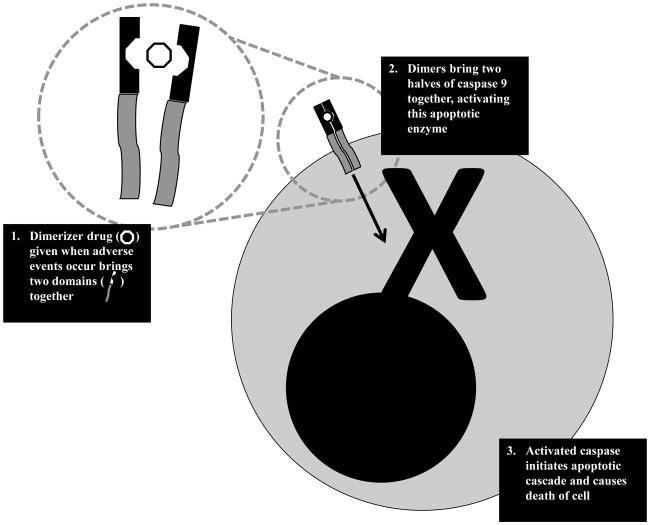
Fig. 1
Fig. 1
Schematic of mechanisms used to activate iCaspase suicide gene system. Cells are genetically modified to express caspase 9 that has been separated into two halves, and require dimerization to be functional. Dimerization occurs as a result of coupling with a domain that is brought together by an inert dimerizer drug. Upon iCaspase dimerization, the protein becomes activated and initiates the apoptotic cascade.
Fig. 2
Fig. 2
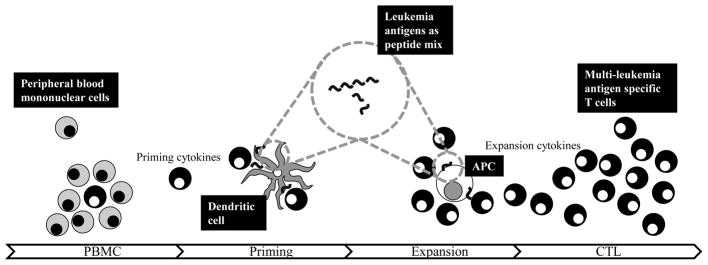
Schematic of manufacture of multileukemia antigen specific T cells. Peripheral blood mononuclear cells (PBMC) from blood serve as source of effector cells and antigen presenting cells (APC), including the most potent - dendritic cells. To expand the rare cell with the appropriate specificity against leukemia antigens, an overlapping peptide library spanning the antigens of choice, in this case, is presented by dendritic cells in the presence of cytokines to prime the naïve response ex vivo. After this initial stimulation, cells are then expanded either by dendritic cells or alternative APC (e.g. PHA blasts with artificial antigen presenting cells) to expand the selected leukemia specific T cell. Subsequent expansion steps in the presence of cytokines will generate multi-leukemia antigen T cells.

References

    1. Janeway C. Immunobiology: the immune system in health and disease. 6. Garland Science; New York: 2005. p. xxiii.p. 823.
    1. Rosenberg SA. Raising the bar: the curative potential of human cancer immunotherapy. Sci Transl Med. 2012;4(127):127ps8. - PMC - PubMed
    1. Barnes DW, Corp MJ, Loutit JF, et al. Treatment of murine leukaemia with X rays and homologous bone marrow; preliminary communication. Br Med J. 1956;2(4993):626–7. - PMC - PubMed
    1. Cruz CR, Bollard CM. T Cell Immunotherapy for Cancer. Academic Press; 2015.
    1. Fefer A, Einstein AB, Cheever MA. Adoptive chemoimmunotherapy of cancer in animals: a review of results, principles, and problems. Ann N Y Acad Sci. 1976;277:492–504. - PubMed

Publication types