


Alternatives to Antibiotics to Prevent Necrotic Enteritis in Broiler Chickens: A Microbiologist's Perspective
- PMID: 26648920
- PMCID: PMC4664614
- DOI: 10.3389/fmicb.2015.01336
Alternatives to Antibiotics to Prevent Necrotic Enteritis in Broiler Chickens: A Microbiologist's Perspective
Abstract
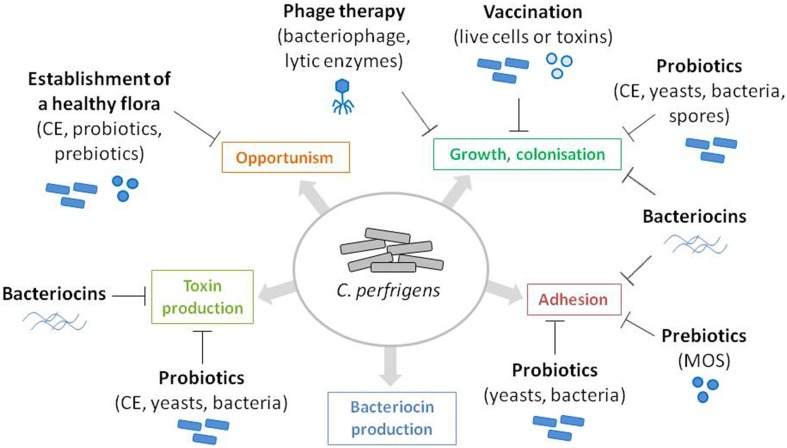
Since the 2006 European ban on the use of antibiotics as growth promoters in animal feed, numerous studies have been published describing alternative strategies to prevent diseases in animals. A particular focus has been on prevention of necrotic enteritis in poultry caused by Clostridium perfringens by the use of microbes or microbe-derived products. Microbes produce a plethora of molecules with antimicrobial properties and they can also have beneficial effects through interactions with their host. Here we review recent developments in novel preventive treatments against C. perfringens-induced necrotic enteritis in broiler chickens that employ yeasts, bacteria and bacteriophages or secondary metabolites and other microbial products in disease control.
Keywords: Clostridium perfringens; antimicrobials; bacteriocin; broiler chicken; competitive exclusion; necrotic enteritis; probiotic.
Figures
References
-
- Abudabos A. M., Yehia H. M. (2013). Effect of dietary mannan oligosaccharide from Saccharomyces cerevisiae on live performance of broilers under Clostridium perfringens challenge. Ital. J. Anim. Sci. 12, 231–235. 10.4081/ijas.2013.e38 - DOI
-
- Baba E., Wakeshima H., Fukui K., Fukata T., Arakawa A. (1992). Adhesion of bacteria to the cecal mucosal surface of conventional and germ-free chickens infected with Eimeria tenella. Am. J. Vet. Res. 53, 194–197. - PubMed
Publication types
LinkOut - more resources
Full Text Sources
Other Literature Sources
