


Detection of BRAF Mutation in Urine DNA as a Molecular Diagnostic for Canine Urothelial and Prostatic Carcinoma
- PMID: 26649430
- PMCID: PMC4674145
- DOI: 10.1371/journal.pone.0144170
Detection of BRAF Mutation in Urine DNA as a Molecular Diagnostic for Canine Urothelial and Prostatic Carcinoma
Abstract
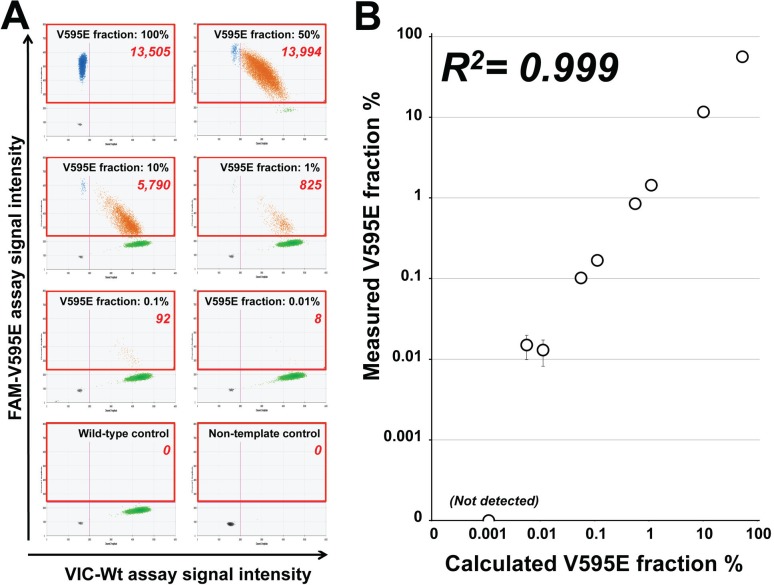
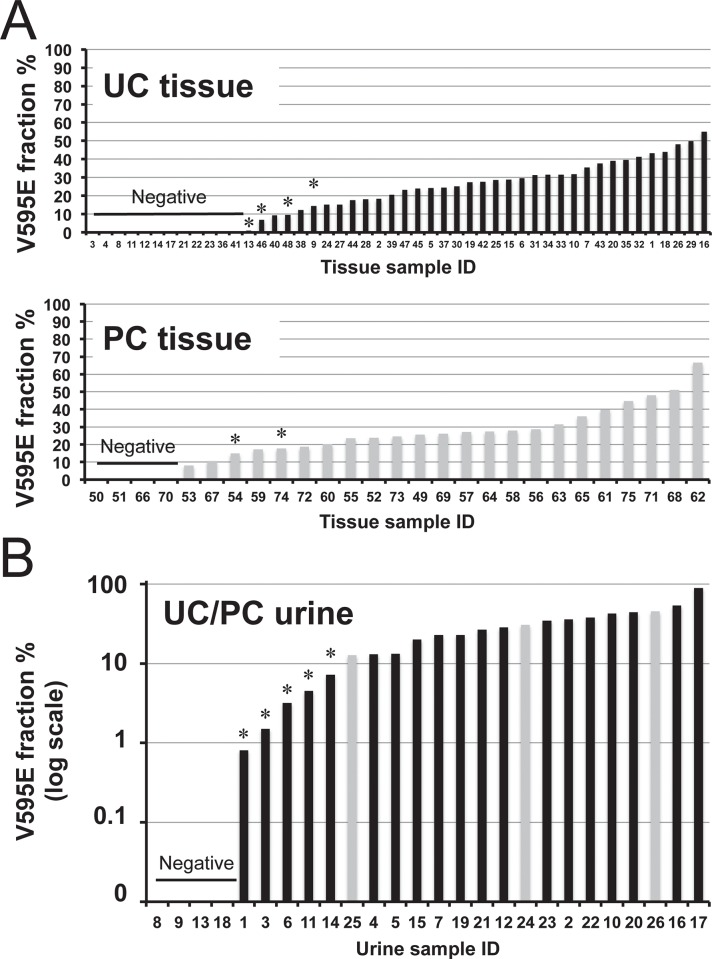
Urothelial carcinoma (UC) of the lower urinary tract and prostatic carcinoma (PC) are aggressive genitourinary cancers in dogs, characterized by invasion to surrounding tissues and high metastatic potential. Current diagnosis of canine UC and PC requires histopathological examination of a biopsy. Such specimens require specialized medical equipment and are invasive procedures, limiting the availability of diagnosis by histopathology for many canine patients. Access to a non-invasive means to confirm diagnosis is currently an unmet need. Recently, the canine BRAF V595E mutation was detected in ~80% of canine UCs and PCs. In this study, we developed a droplet digital PCR (ddPCR) assay for detection of the canine BRAF V595E mutation in canine urogenital tumors. The assay was evaluated in DNA samples prepared from biopsy specimens of UC (n = 48) and PC (n = 27), as well and non-neoplastic bladder epithelium (n = 38). In addition the assay was assessed for use with DNA isolated from free catch urine samples derived from canine patients with UC (n = 23), PC (n = 3), as well as from dogs with cystitis and healthy controls (n = 37). In all cases the sensitivity to detect the mutant allele was compared with conventional Sanger sequencing. ddPCR had superior sensitivity for detection of the V595E mutation: 75% of UC, 85% of PC, and 0% of control samples were mutation positive, respectively, and the V595E mutation was detected at a level as low as just 1 in 10,000 alleles (~0.01%). Furthermore, the ddPCR assay identified the mutation in free catch urine samples from 83% of canine UC and PC patients, demonstrating its utility as a non-invasive means of diagnosis. We have shown that ddPCR is a sensitive molecular technique with the potential to facilitate accurate and non-invasive means of canine UC and PC diagnosis.
Conflict of interest statement
Figures
References
-
- Knapp DW, Glickman NW, Denicola DB, Bonney PL, Lin TL, Glickman LT (2000) Naturally-occurring canine transitional cell carcinoma of the urinary bladder A relevant model of human invasive bladder cancer. Urol Oncol 5: 47–59. - PubMed
-
- Cornell KK, Bostwick DG, Cooley DM, Hall G, Harvey HJ, Hendrick MJ, et al. (2000) Clinical and pathologic aspects of spontaneous canine prostate carcinoma: a retrospective analysis of 76 cases. Prostate 45: 173–183. - PubMed
-
- Bell FW, Klausner JS, Hayden DW, Feeney DA, Johnston SD (1991) Clinical and pathologic features of prostatic adenocarcinoma in sexually intact and castrated dogs: 31 cases (1970–1987). J Am Vet Med Assoc 199: 1623–1630. - PubMed
-
- Powe JR, Canfield PJ, Martin PA (2004) Evaluation of the cytologic diagnosis of canine prostatic disorders. Vet Clin Pathol 33: 150–154. - PubMed
Publication types
MeSH terms
Substances
Grants and funding
LinkOut - more resources
Full Text Sources
Other Literature Sources
Medical
Research Materials
