


Application of the Intervention Mapping protocol to develop Keys, a family child care home intervention to prevent early childhood obesity
- PMID: 26654726
- PMCID: PMC4675063
- DOI: 10.1186/s12889-015-2573-9
Application of the Intervention Mapping protocol to develop Keys, a family child care home intervention to prevent early childhood obesity
Abstract
Background: Many families rely on child care outside the home, making these settings important influences on child development. Nearly 1.5 million children in the U.S. spend time in family child care homes (FCCHs), where providers care for children in their own residences. There is some evidence that children in FCCHs are heavier than those cared for in centers. However, few interventions have targeted FCCHs for obesity prevention. This paper will describe the application of the Intervention Mapping (IM) framework to the development of a childhood obesity prevention intervention for FCCHs
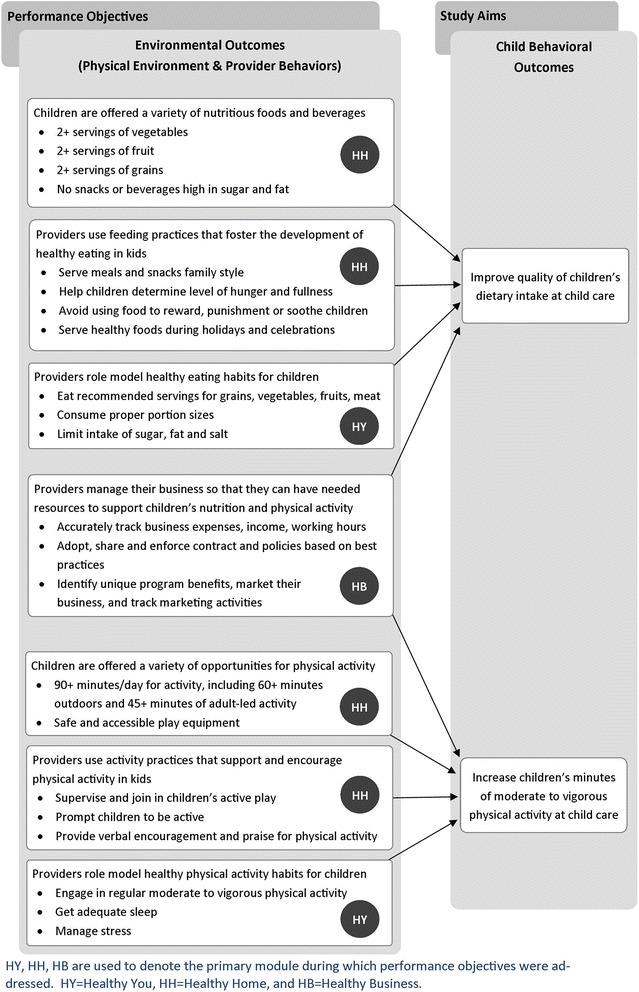
Methods: Following the IM protocol, six steps were completed in the planning and development of an intervention targeting FCCHs: needs assessment, formulation of change objectives matrices, selection of theory-based methods and strategies, creation of intervention components and materials, adoption and implementation planning, and evaluation planning
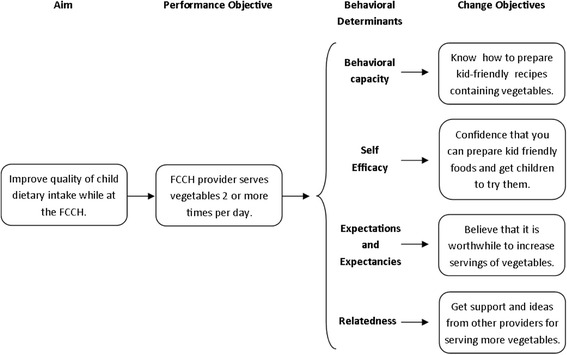
Results: Application of the IM process resulted in the creation of the Keys to Healthy Family Child Care Homes program (Keys), which includes three modules: Healthy You, Healthy Home, and Healthy Business. Delivery of each module includes a workshop, educational binder and tool-kit resources, and four coaching contacts. Social Cognitive Theory and Self-Determination Theory helped guide development of change objective matrices, selection of behavior change strategies, and identification of outcome measures. The Keys program is currently being evaluated through a cluster-randomized controlled trial
Conclusions: The IM process, while time-consuming, enabled rigorous and systematic development of intervention components that are directly tied to behavior change theory and may increase the potential for behavior change within the FCCHs.
Figures
References
Publication types
MeSH terms
Grants and funding
LinkOut - more resources
Full Text Sources
Other Literature Sources
Medical
