


Controlled release of biologics for the treatment of type 2 diabetes
- PMID: 26655062
- PMCID: PMC4889564
- DOI: 10.1016/j.jconrel.2015.12.002
Controlled release of biologics for the treatment of type 2 diabetes
Abstract
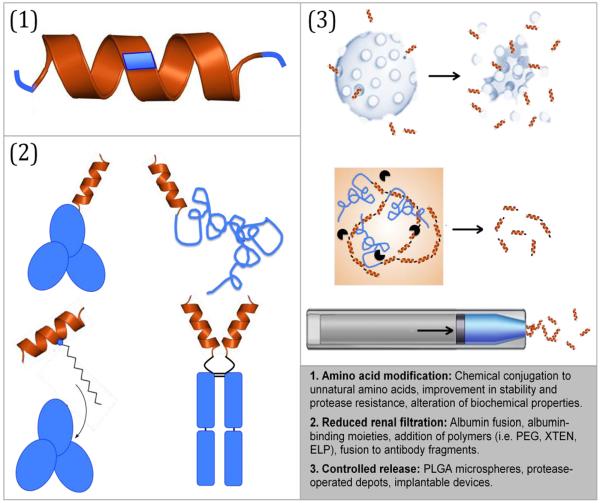
Type 2 diabetes is a rapidly growing disease that poses a significant burden to the United States healthcare system. Despite the many available treatments for the disease, close to half of diagnosed type 2 diabetes cases are not properly managed, largely due to inadequate patient adherence to prescribed treatment regimens. Methods for improving delivery - and thereby easing administration - of type 2 drugs have the potential to greatly improve patient health. This review focuses on two peptide drugs - insulin and glucagon-like peptide 1 (GLP-1) - for treatment of type 2 diabetes. Peptide drugs offer the benefits of high potency and specificity but pose a significant delivery challenge due to their inherent instability and short half-life. The development of insulin and GLP-1 analogs highlights the broad spectrum of drug delivery strategies that have been used to solve these problems. Numerous structural modifications and formulations have been introduced to optimize absorption, residence time, stability, route of delivery and frequency of administration. Continual improvements in delivery methods for insulin and GLP-1 receptor agonists are paving the way towards better patient compliance and improved disease management, and thereby enhanced patient quality of life.
Keywords: Controlled release; Diabetes; Drug delivery; GLP-1; Insulin; Peptide.
Copyright © 2015 Elsevier B.V. All rights reserved.
Figures

References
-
- Centers for Disease Control and Prevention . In: National Diabetes Statistics Report: Estimates of Diabetes and Its Burden in the United States, 2014. US Department of Health and Human Services, editor. Atlanta: 2014.
-
- American Diabetes Association Position Statement Standards of medical care in diabetes – 2015. Diabetes Care. 2015;38:S4.
-
- Handelsman Y, Bloomgarden ZT, Grunberger G, Umpierrez G, Zimmerman RS, Bailey TS, Blonde L, Bray GA, Cohen AJ, Dagogo-Jack S. American association of clinical endocrinologists and american college of endocrinology - clinical practice guidelines for developing a diabetes mellitus comprehensive care plan - 2015. Endocrine Practice. 2015;21:1–87. - PMC - PubMed
-
- Bailey CJ. The Current Drug Treatment Landscape for Diabetes and Perspectives for the Future. Clinical Pharmacology & Therapeutics. 2015;98:170–184. - PubMed
Publication types
MeSH terms
Substances
Grants and funding
LinkOut - more resources
Full Text Sources
Other Literature Sources
Medical
