Review
. 2016 Jan;16(1):7-21.
doi: 10.1038/nri.2015.7. Epub 2015 Dec 14.

Converging roles of caspases in inflammasome activation, cell death and innate immunity

Affiliations
Review

Converging roles of caspases in inflammasome activation, cell death and innate immunity

Si Ming Man et al. Nat Rev Immunol. 2016 Jan.

Abstract

Inflammatory and apoptotic caspases are central players in inflammation and apoptosis, respectively. However, recent studies have revealed that these caspases have functions beyond their established roles. In addition to mediating cleavage of the inflammasome-associated cytokines interleukin-1β (IL-1β) and IL-18, inflammatory caspases modulate distinct forms of programmed cell death and coordinate cell-autonomous immunity and other fundamental cellular processes. Certain apoptotic caspases assemble structurally diverse and dynamic complexes that direct inflammasome and interferon responses to fine-tune inflammation. In this Review, we discuss the expanding and interconnected roles of caspases that highlight new aspects of this family of cysteine proteases in innate immunity.


Figures
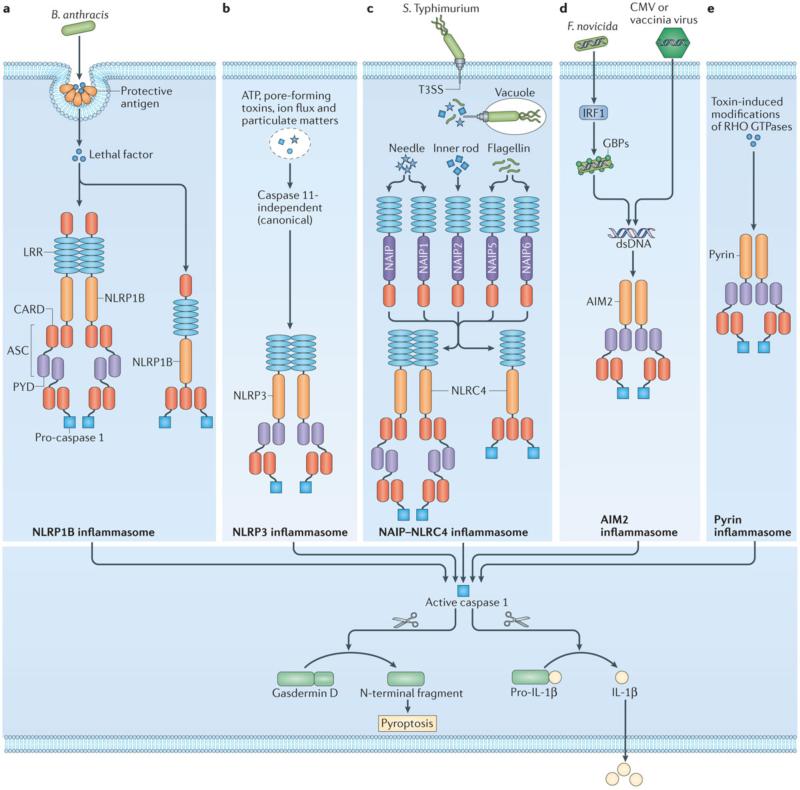
Figure 1
Figure 1. Caspase 1 and the canonical inflammasomes
a | Release of the Bacillus anthracis anthrax lethal toxin, composed of a protective antigen and a lethal factor, activates the mouse NLRP1B inflammasome by inducing cleavage of NLRP1B , . b | NLRP3 responds to a plethora of activators and physiological aberrations -. Engagement of the NLRP3 inflammasome independently of caspase 11 is known as the canonical NLRP3 inflammasome pathway. c, Certain pathogenic bacteria such as Salmonella enterica serovar Typhimurium (S. Typhimurium) inject proteins into the host cells via the Type III secretion system (T3SS). These effector proteins are detected by neuronal apoptosis inhibitory proteins (NAIPs) in the cytoplasm, where they engage activation of the NLRC4 inflammasome -. d, The cytosolic bacteria Francisella tularensis subspecies novicida (F. novicida), and the DNA viruses mouse cytomegalovirus (CMV) or vaccinia virus release DNA during infection to activate the AIM2 inflammasome -, , . The transcription factor interferon-regulatory factor 1 (IRF1) induces expression of interferon-inducible GTPases called guanylate-binding proteins (GBPs) to expose DNA from F. novicida , . e, Pyrin senses modifications of Rho GTPases caused by Rho-inactivating toxins from bacteria including Vibrio parahaemolyticus, Histophilus somni Clostridium botulinum and Burkholderia cenocepacia , . Apoptosis-associated speck-like protein containing a CARD (ASC, also known as PYCARD) is an adaptor protein which carries a pyrin domain (PYD) and Caspase activation and recruitment domains (CARD) and is used to bridge the PYD-bearing inflammasome sensors NLRP3, AIM2 and pyrin with the CARD of pro-caspase 1. Inflammasome sensors carrying a CARD, such as NLRP1B or NLRC4, may engage pro-caspase 1 directly by CARD-CARD interactions. In all cases, caspase 1 drives pro-IL-1β and pro-IL-18 processing. Inflammatory caspases cleave gasdermin D, causing pyroptosis which allows the release of matured IL-1β and IL-18 (Refs , -). The N-terminal fragment of gasdermin D conveys a signal by caspases 4, 5 and 11 to activate the non-canonical NLRP3 inflammasome.
Figure 2
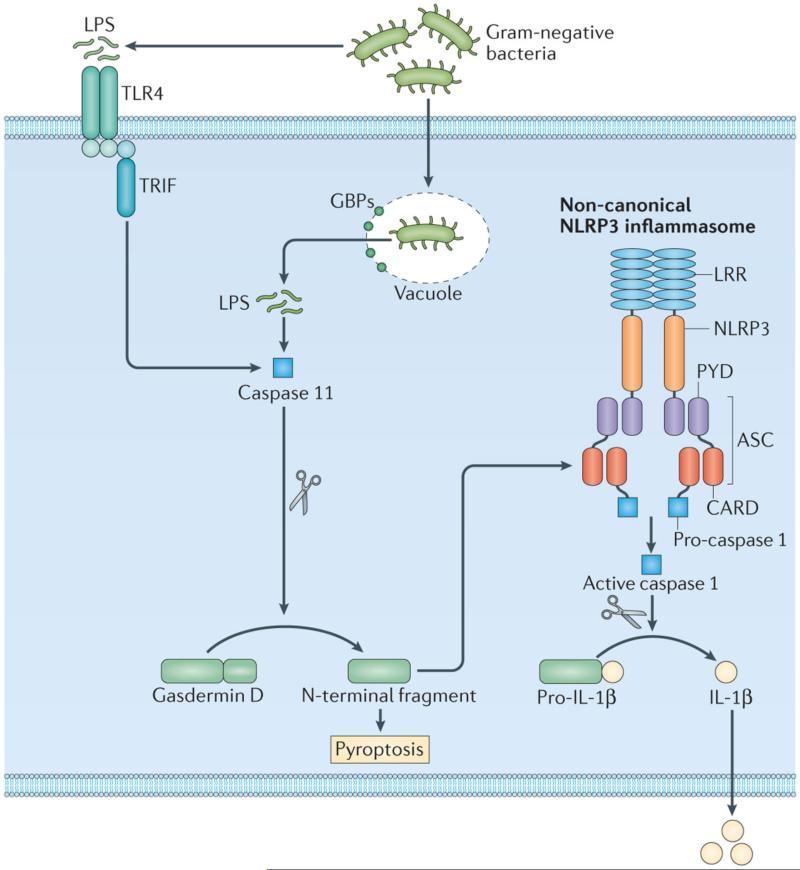
Figure 2. Inflammatory caspases and the non-canonical NLRP3 inflammasome
LPS released by Gram-negative bacteria activates TLR4 and its adaptor TIR-domain-containing adaptor protein inducing IFNβ (TRIF), inducing caspase 11 expression via type I interferon signalling. Cytoplasmic LPS which enters the cytoplasm owing to rupture of the pathogen-containing vacuole by guanylate-binding proteins (GBPs) binds mouse caspase 11 and activate the non-canonical NLRP3 inflammasome , -, . Cytoplasmic LPS also binds human caspase 4 and 5. ASC, apoptosis-associated speck-like protein containing a CARD (also known as PYCARD).
Figure 3
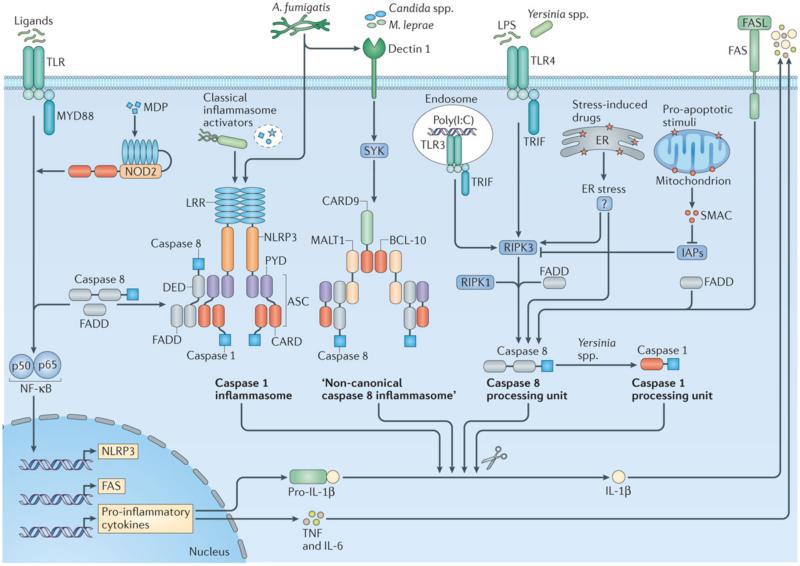
Figure 3. Caspase 8 mediates initiation of NF-κB signalling and maturation of IL-1β
Recognition of ligands by Toll-like receptors (TLRs) leads to signalling via the adaptor MyD88 and subsequent NF-κB activation. Caspase 8 and its adaptor Fas-associated death domain (FADD) contribute to this pathway, inducing transcription of genes encoding pro-inflammatory cytokines, some of which such as pro-IL-1β and pro-IL-18 require further proteolytic processing -. Caspase 8 or FADD is also recruited to the NLRC4, NLRP3 and AIM2 inflammasome complexes activated by classical inflammasome activators (Salmonella enterica serovar Typhimurium, LPS plus ATP or nigericin, Citrobacter rodentium, Escherichia coli, Francisella novicida, dsDNA, or Aspergillus fumigatus), in which caspase 8 either activates caspase 1, leading to caspase 1-dependent processing of pro-IL-1β and pro-IL-18, and/or modulates cell death , , , , . However, in the absence of caspase 1, caspase 8 may induce apoptosis in the inflammasome speck , . Caspase 8 also assembles a range of structurally diverse complexes to directly mediate processing of pro-IL-1β independently of caspase 1. Candida species, A. fumigatus and Mycobacterium leprae infection trigger dectin 1 and its adaptor SYK to engage a so-called “non-canonical caspase 8 inflammasome” complex that is composed of CARD9, BCL-10, MALT1, ASC and caspase 8. Caspase 8 directly processes pro-IL-1β in the absence of caspase 1 and does not require internationalization of the pathogen . In response to TLR3 or TLR4 activators, the adaptor TIR-domain-containing adaptor protein inducing IFNβ (TRIF) promotes assembly of a caspase 8 processing unit for direct cleavage of IL-1β in a manner that may require the kinases RIPK1 and RIPK3, and the adaptor FADD , -. For example, TLR4-TRIF signalling via LPS and a yet-unidentified signal released as a result of stress in the endoplasmic reticulum (ER) engage caspase 8-dependent processing of IL-1β with or without RIPK3 (Ref ). LPS-induced TLR4-TRIF signalling and release of second mitochondrial-derived activator of caspases (SMAC; also known as DIABLO) owing to exposure to proapoptotic signals delivered by doxorubicin, staurosporine or cycloheximide activate caspase 8-dependent processing of IL-1β , . Here, SMAC or SMAC mimetics suppress inhibitor of apoptosis proteins (IAPs) from blocking RIPK3. During Yersinia infection, RIPK1 and FADD are essential in mediating caspase 8 activation via TRIF- and RIPK3-dependent and -independent mechanisms, whereby activation of caspase 8 ultimately drives caspase 1-mediated processing of IL-1β , . Signalling via TLRs induces upregulation of FAS (also known as CD95 and TNFRSF6). Interaction between FAS and FASL licenses caspase 8-dependent IL-1β release via FADD, independently of RIPK3 or caspase 1 (Ref , ).
Figure 4
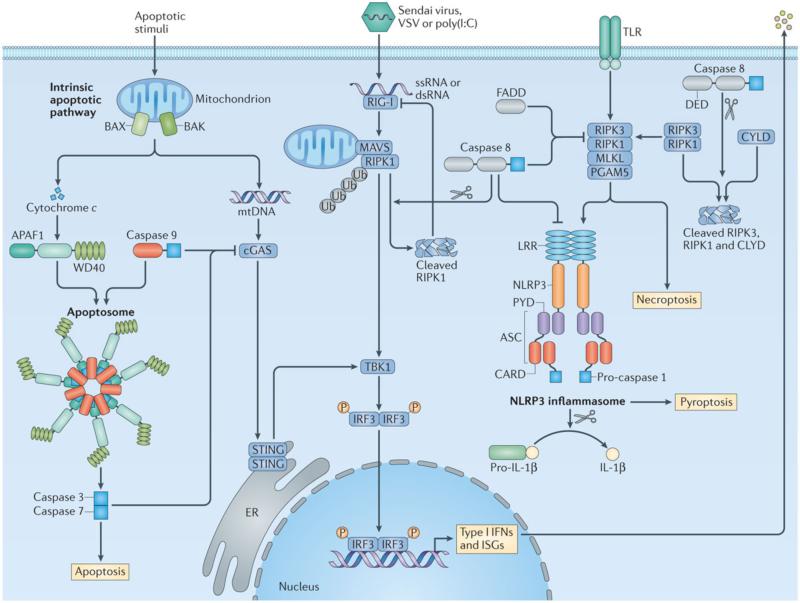
Figure 4. Inhibition of inflammation by caspase 8 and other apoptotic caspases
In the intrinsic pathway of apoptosis, mitochondrial DNA (mtDNA) is released owing to mitochondrial outer membrane permeabilization mediated by the pro-apoptotic effector proteins BAX (BCL-2-associated X protein) and BAK (BCL-2 antagonist/killer). Released mtDNA binds to the DNA sensor cGAS (cGAMP synthase), which signals through its adaptor STING, TBK1 and IRF3 to activate type I interferon and interferon-stimulated genes (ISGs) , . Cytochrome c is also released by mitochondria, which is sensed by the sensor APAF1 (apoptotic protease-activating factor 1). APAF1 and caspase 9 assembles the apoptosome to activate effector caspases 3 and 7 (Refs -). During apoptosis, caspases 3, 7 and 9 prevent signal transduction by the cGAS-STING pathway leading to type I interferon production through an as-yet-undefined mechanism , . The RNA sensor RIG-I recognizes the dsRNA viruses Sendai virus and vesicular stomatitis virus (VSV) or the synthetic dsRNA ligand poly(I:C). RIG-I interacts with the adaptor mitochondrial antiviral signalling protein (MAVS) at the mitochondria, where the kinase RIPK1 is recruited and undergoes K63-linked polyubiquitylation at site Lys-377. Mitochondria-associated polyubiquitylated RIPK1 induces activation of antiviral responses via TBK1 and IRF3. Following activation of IRF3, polyubiquitylated RIPK1 is cleaved by caspase 8, whereby cleaved RIPK1 inhibits RIG-I signalling . Caspase 8 also suppresses activation of the NLRP3 inflammasome . Upon stimulation of Toll-like receptor 2 (TLR2) or TLR4 in dendritic cells, caspase 8 and FADD inhibit the ripoptosome composed of the kinases RIPK3 and RIPK1. In the absence of caspase 8 or FADD, the ripoptosome signals through the effector MLKL and the mitochondrial serine/threonine-protein phosphatase PGAM5 to activate the NLRP3 inflammasome . Caspase 8 and FADD have also been proposed to directly interact and inhibit NLRP3. There is also evidence to suggest that caspase 8 mediates cleavage of RIPK3, RIPK1 and the deubiquitylating enzyme CYLD as a mechanism to inhibit necroptosis and inflammation -.

References

    1. Alnemri ES, et al. Human ICE/CED-3 protease nomenclature. Cell. 1996;87:171. - PubMed
    1. Latz E, Xiao TS, Stutz A. Activation and regulation of the inflammasomes. Nat Rev Immunol. 2013;13:397–411. - PMC - PubMed
    1. Lamkanfi M, Dixit VM. Mechanisms and functions of inflammasomes. Cell. 2014;157:1013–22. - PubMed
    1. Man SM, Kanneganti TD. Regulation of inflammasome activation. Immunol Rev. 2015;265:6–21. - PMC - PubMed
    1. Stowe I, Lee B, Kayagaki N. Caspase-11: arming the guards against bacterial infection. Immunol Rev. 2015;265:75–84. - PubMed