


Discovery of Anti-inflammatory Ingredients in Chinese Herbal Formula Kouyanqing Granule based on Relevance Analysis between Chemical Characters and Biological Effects
- PMID: 26657159
- PMCID: PMC4674803
- DOI: 10.1038/srep18080
Discovery of Anti-inflammatory Ingredients in Chinese Herbal Formula Kouyanqing Granule based on Relevance Analysis between Chemical Characters and Biological Effects
Abstract
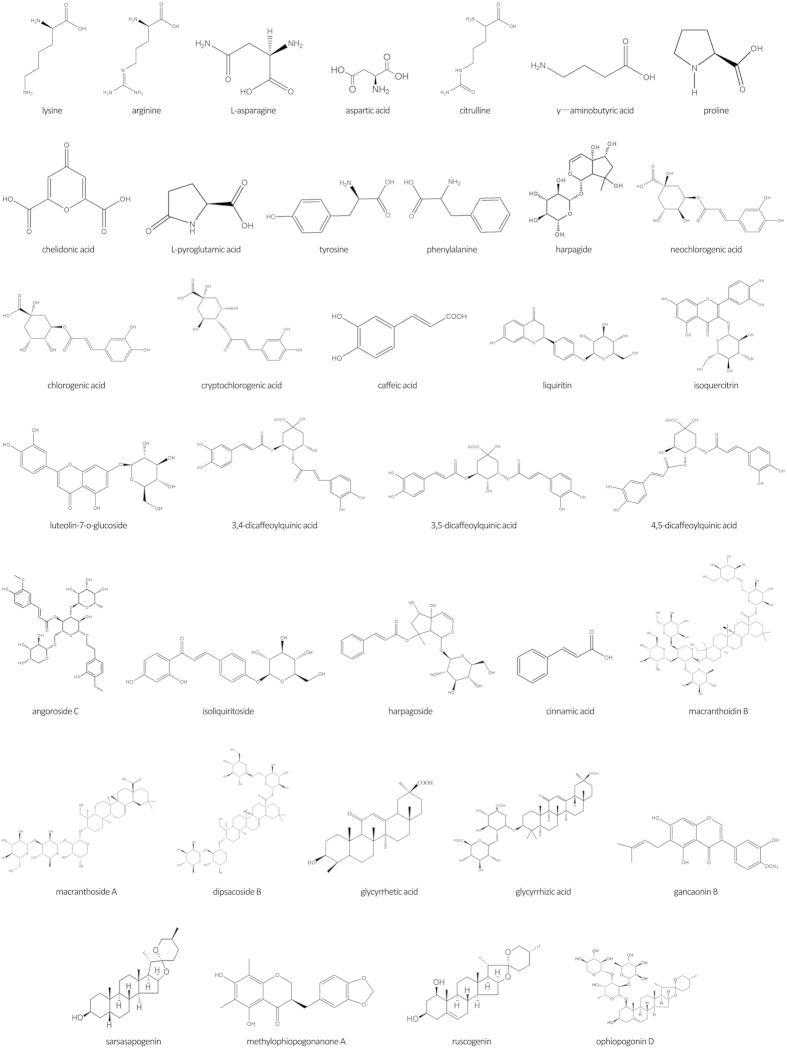
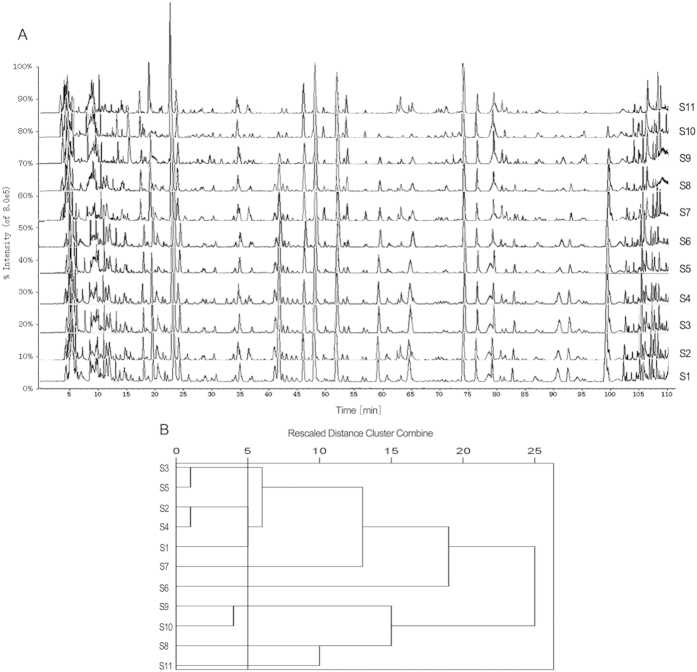
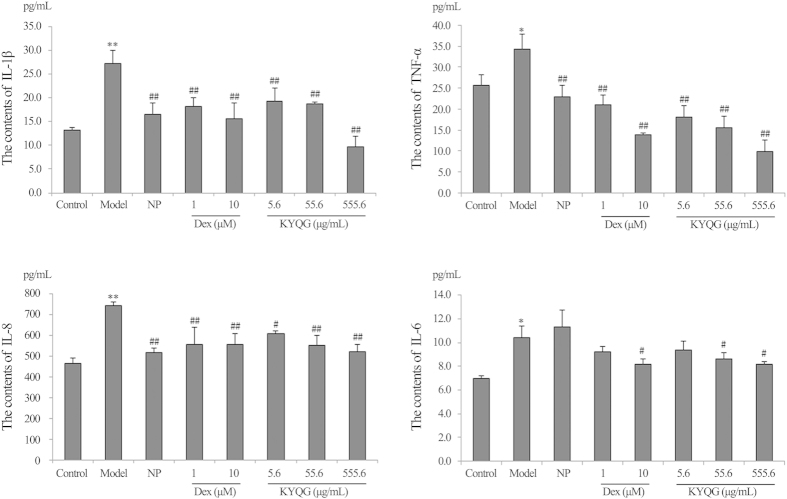
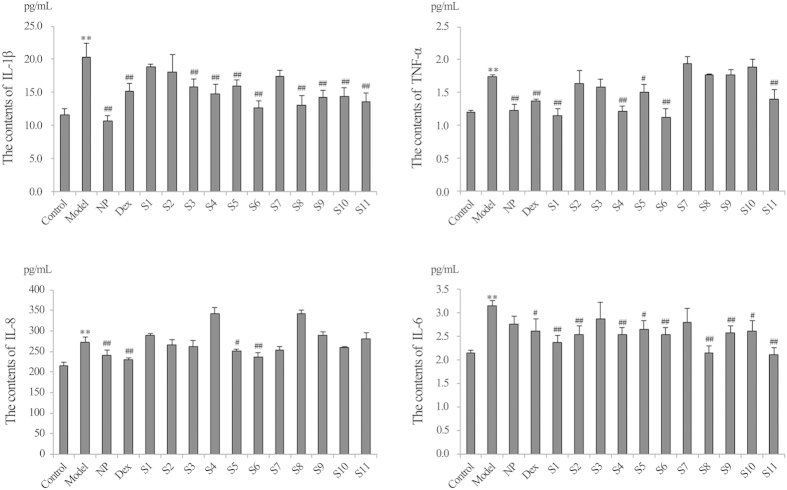
Kouyanqing Granule (KYQG) is a traditional Chinese herbal formula composed of Flos lonicerae (FL), Radix scrophulariae (RS), Radix ophiopogonis (RO), Radix asparagi (RA), and Radix et rhizoma glycyrrhizae (RG). In contrast with the typical method of separating and then biologicalily testing the components individually, this study was designed to establish an approach in order to define the core bioactive ingredients of the anti-inflammatory effects of KYQG based on the relevance analysis between chemical characters and biological effects. Eleven KYQG samples with different ingredients were prepared by changing the ratios of the 5 herbs. Thirty-eight ingredients in KYQG were identified using Ultra-fast liquid chromatography-Diode array detector-Quadrupole-Time-of-flight-Tandem mass spectrometry (UFLC-DAD-Q-TOF-MS/MS) technology. Human oral keratinocytes (HOK) were cultured for 24 hours with 5% of Cigarette smoke extract (CSE) to induce inflammation stress. Interleukin-1β (IL-1β), interleukin-6 (IL-6), interleukin-8 (IL-8), and tumour necrosis factor-α (TNF-α) were evaluated after treatment with the eleven KYQG samples. Grey relational analysis(GRA), Pearson's correlations (PCC), and partial least-squares (PLS) were utilized to evaluate the contribution of each ingredient. The results indicated that KYQG significantly reduced interleukin-1β, interleukin-6, interleukin-8, and tumour necrosis factor-α levels, in which lysine, γ-aminobutyric acid, chelidonic acid, tyrosine, harpagide, neochlorogenic acid, chlorogenic acid, cryptochlorogenic acid, isoquercitrin, luteolin-7-o-glucoside, 3,4-dicaffeoylquinic acid, 3,5-dicaffeoylquinic acid, angoroside C, harpagoside, cinnamic acid, and ruscogenin play a vital role.
Conflict of interest statement
The authors declare no competing financial interests.
Figures
References
-
- Jiang W. Y. Therapeutic wisdom in traditional Chinese medicine: a perspective from modern science. Trends Pharmacol. Sci. 26, 558–563 (2005). - PubMed
-
- Wang X. et al. Ultra high performance liquid chromatography with tandem mass spectrometry method for the determination of tetrandrine and fangchinoline in rat plasma after oral administration of Fangji Huangqi Tang and Stephania tetrandra S. Moore extracts. J. Sep. Sci. 38, 1286–1293 (2015). - PubMed
-
- Lau K. M. et al. Synergistic interaction between Astragali Radix and Rehmanniae Radix in a Chinese herbal formula to promote diabetic wound healing. J. Ethnopharmacol. 141, 250–256 (2012). - PubMed
-
- Wang M. et al. Metabolomics in the context of systems biology: bridging traditional Chinese medicine and molecular pharmacology. Phytother. Res. 19, 173–182 (2005). - PubMed
MeSH terms
Substances
LinkOut - more resources
Full Text Sources
Other Literature Sources
Molecular Biology Databases
Research Materials
