


Factors Influencing the Recurrence Potential of Benign Endometrial Polyps after Hysteroscopic Polypectomy
- PMID: 26660149
- PMCID: PMC4676604
- DOI: 10.1371/journal.pone.0144857
Factors Influencing the Recurrence Potential of Benign Endometrial Polyps after Hysteroscopic Polypectomy
Abstract
Background: An endometrial polyp is a frequently encountered gynecologic disease with abnormal uterine bleeding and infertility being the two common presenting problems, and hysteroscopic polypectomy is an effective method to remove them. The postoperative polyp recurrence might result in reappearance of abnormal uterine bleeding or infertility, whereas factors influencing the postoperative recurrence potential have limited data.
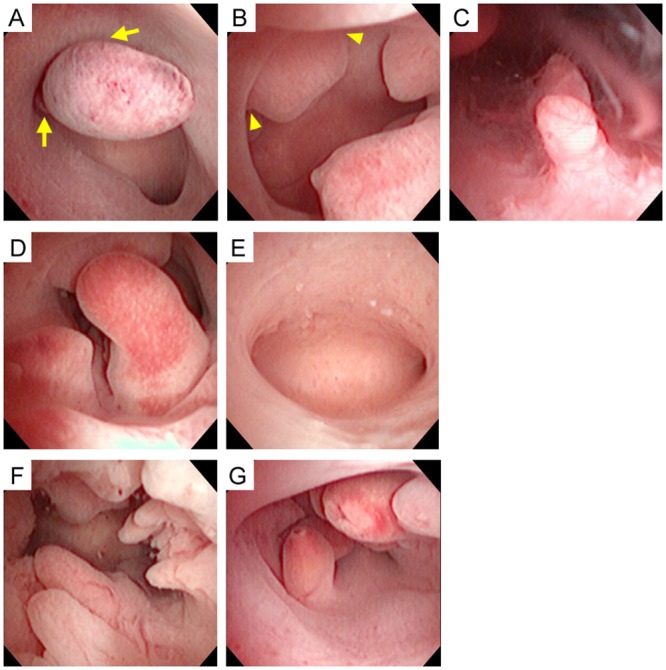
Methods: This case-series report included 168 premenopausal women who suffered from endometrial polyps and underwent hysteroscopic polypectomy. All of them were awaiting a future pregnancy. Office hysteroscopy was done before and after hysteroscopic polypectomy, in which preoperative hysteroscopy examined the number, type, and location of endometrial polyps, and postoperative hysteroscopy checked the polyp recurrence. Surgical indications, either infertility or the presentation of abnormal uterine bleeding, and follow-up duration were recorded.
Results: Seventy-three out of 168 (43%) women had polyp recurrence after hysteroscopic polypectomy. Multivariate logistic regression analysis revealed that more endometrial polyps (P = 0.015) and longer duration of follow-up (P = 0.004) were significantly associated with an increased risk of postoperative polyp recurrence. The type of endometrial polyps was not correlated with polyp recurrence potential, whereas pedunculated type endometrial polyps were closely related to the presentation of abnormal uterine bleeding (P = 0.001).
Conclusions: A higher number of endometrial polyps and longer follow-up duration are associated with a greater potential of polyp recurrence after hysteroscopic polypectomy.
Conflict of interest statement
Figures
References
-
- Peterson WF, Novak ER Endometrial polyps. Obstet Gynecol. 1956;8:40–49. - PubMed
-
- Varasteh NN, Neuwirth RS, Levin B, Keltz MD Pregnancy rates after hysteroscopic polypectomy and myomectomy in infertile women. Obstet Gynecol. 1999;94:168–171. - PubMed
-
- Perez-Medina T, Bajo-Arenas J, Salazar F, Redondo T, Sanfrutos L, Alvarez P, et al. Endometrial polyps and their implication in the pregnancy rates of patients undergoing intrauterine insemination: a prospective, randomized study. Hum Reprod. 2005;20:1632–1635. - PubMed
-
- Stamatellos I, Apostolides A, Stamatopoulos P, Bontis J Pregnancy rates after hysteroscopic polypectomy depending on the size or number of the polyps. Arch Gynecol Obstet. 2008;277:395–399. - PubMed
MeSH terms
LinkOut - more resources
Full Text Sources
Other Literature Sources
Medical
