


Characterization of three commercial Y-TZP ceramics produced for their high-translucency, high-strength and high-surface area
- PMID: 26664123
- PMCID: PMC4671392
- DOI: 10.1016/j.ceramint.2015.09.033
Characterization of three commercial Y-TZP ceramics produced for their high-translucency, high-strength and high-surface area
Abstract
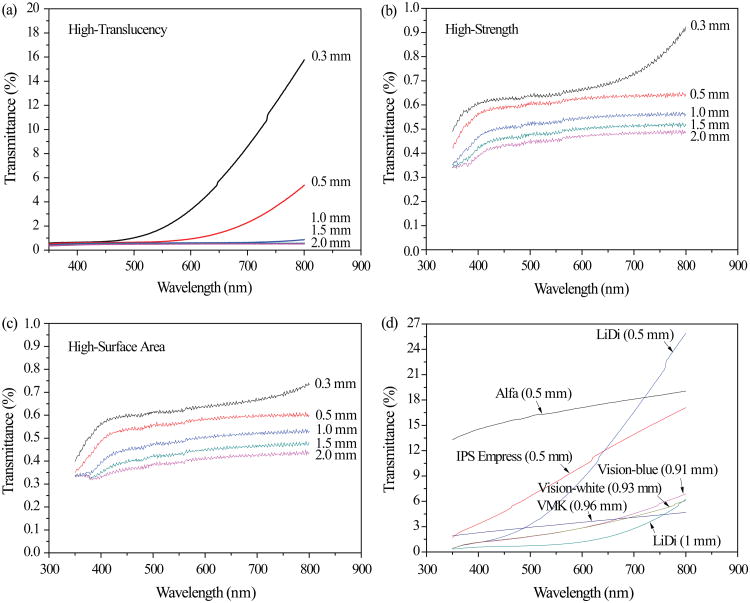
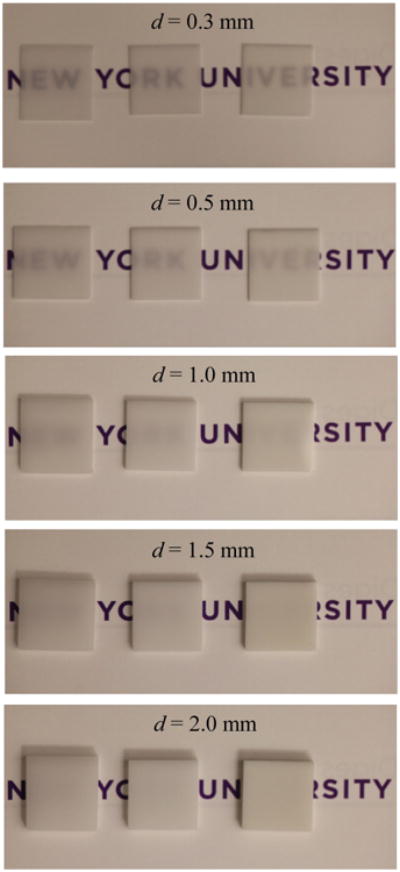
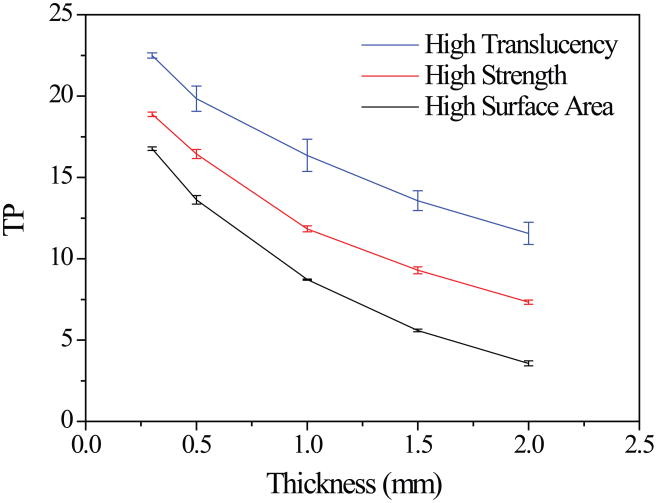
Developing yttria-stabilized tetragonal zirconia polycrystal (Y-TZP) with high strength and translucency could significantly widen the clinical indications of monolithic zirconia restorations. This study investigates the mechanical and optical properties of three Y-TZP ceramics: High-Translucency, High-Strength and High-Surface Area. The four-point bending strengths (mean ± standard error) for the three Y-TZP ceramics (n = 10) were 990 ± 39, 1416 ± 33 and 1076 ± 32 MPa for High-Translucency, High-Strength and High-Surface Area, respectively. The fracture toughness values (mean ± standard error) for the three zirconias (n = 10) were 3.24 ± 0.10, 3.63 ± 0.12 and 3.21 ± 0.14 MPa m1/2 for High-Translucency, High-Strength and High-Surface Area, respectively. Both strength and toughness values of High-Strength zirconia were significantly higher than High-Surface Area and High-Translucency zirconias. Translucency parameter values of High-Translucency zirconia were considerably higher than High-Strength and High-Surface Area zirconias. However, all three zirconias became essentially opaque when their thickness reached 1 mm or greater. Our findings suggest that there exists a delicate balance between mechanical and optical properties of the current commercial Y-TZP ceramics.
Keywords: Y-TZP; edge chipping; mechanical properties; monolithic zirconia; optical properties.
Conflict of interest statement
Figures
References
-
- Kelly JR. Dental ceramics: current thinking and trends. Dental Clinics of North America. 2004;48:513–530. - PubMed
-
- Rekow D, Thompson VP. Engineering long term clinical success of advanced ceramic prostheses. J Mater Sci Mater Med. 2007;18:47–56. - PubMed
-
- Giordano R, McLaren EA. Ceramics overview: classification by microstructure and processing methods. Compend Contin Educ Dent. 2010;31:682–684. 686, 688 passim; quiz 698, 700. - PubMed
-
- Denry I, Kelly JR. State of the art of zirconia for dental applications. Dent Mater. 2008;24:299–307. - PubMed
Grants and funding
LinkOut - more resources
Full Text Sources
Other Literature Sources