


Persistent Angiogenesis in the Autism Brain: An Immunocytochemical Study of Postmortem Cortex, Brainstem and Cerebellum
- PMID: 26667147
- PMCID: PMC4836621
- DOI: 10.1007/s10803-015-2672-6
Persistent Angiogenesis in the Autism Brain: An Immunocytochemical Study of Postmortem Cortex, Brainstem and Cerebellum
Abstract
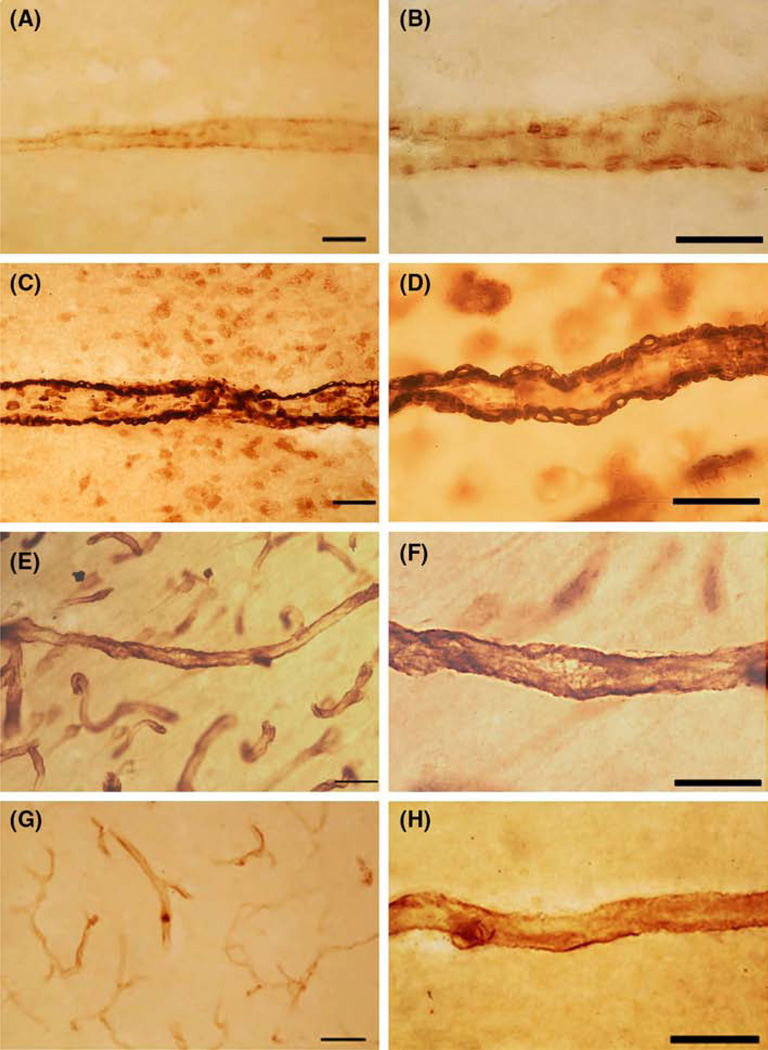
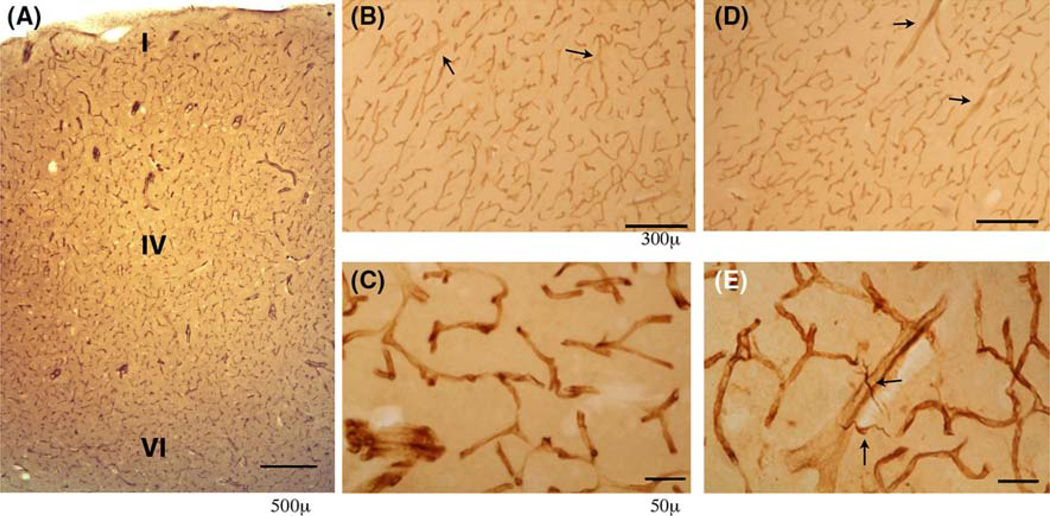
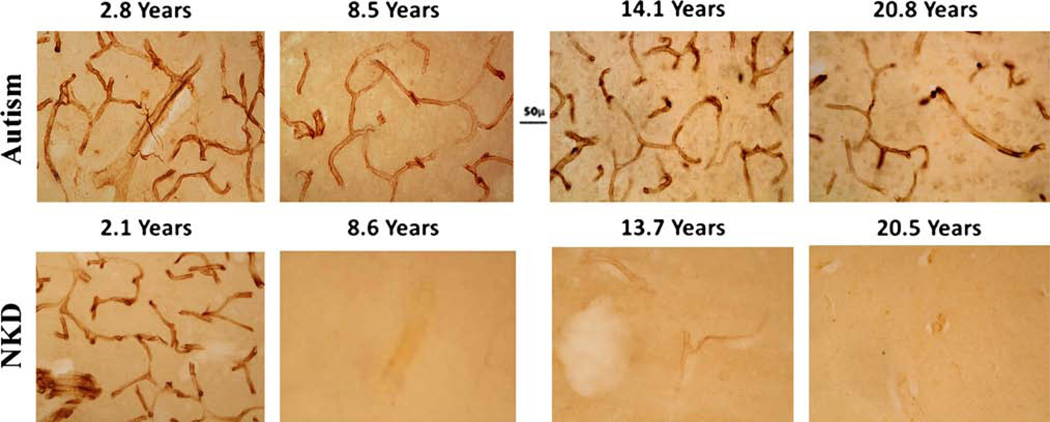
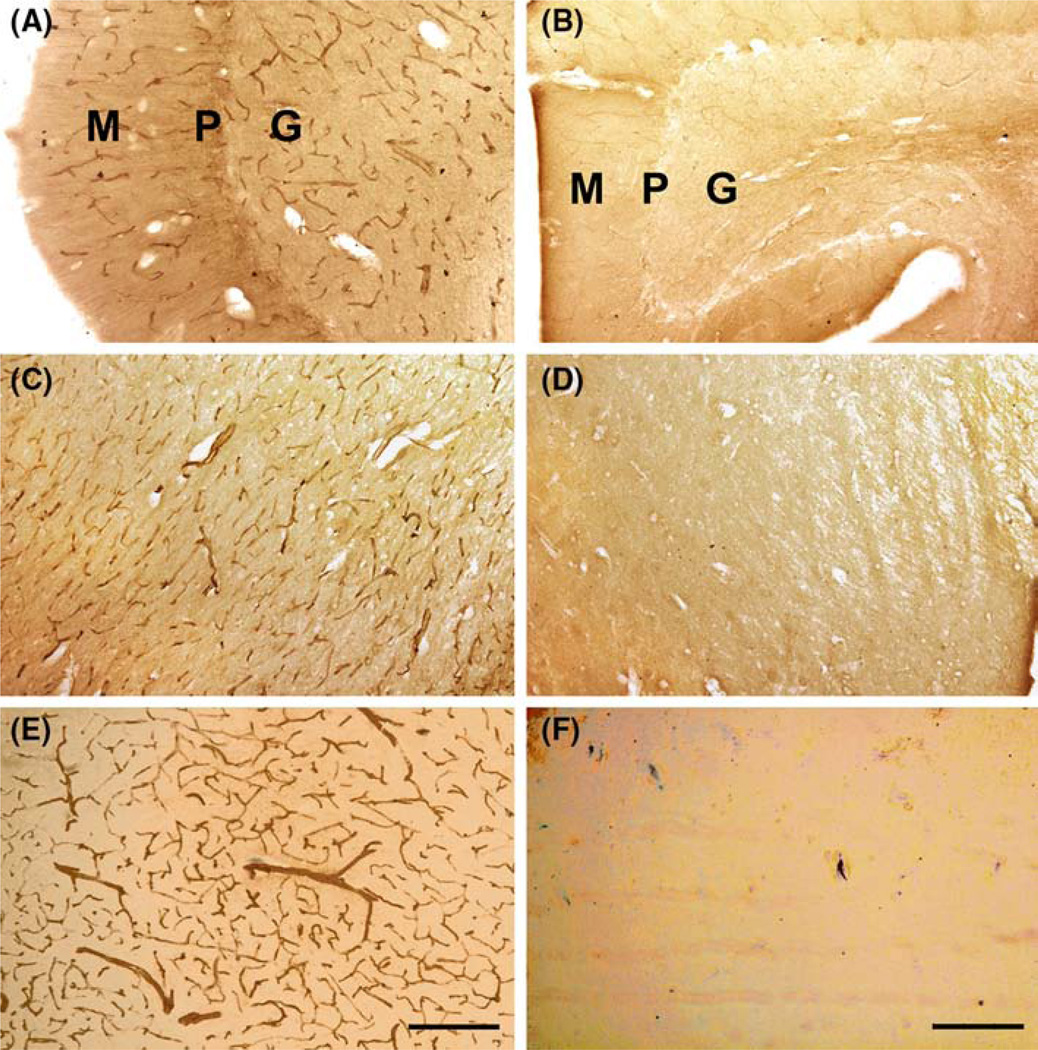
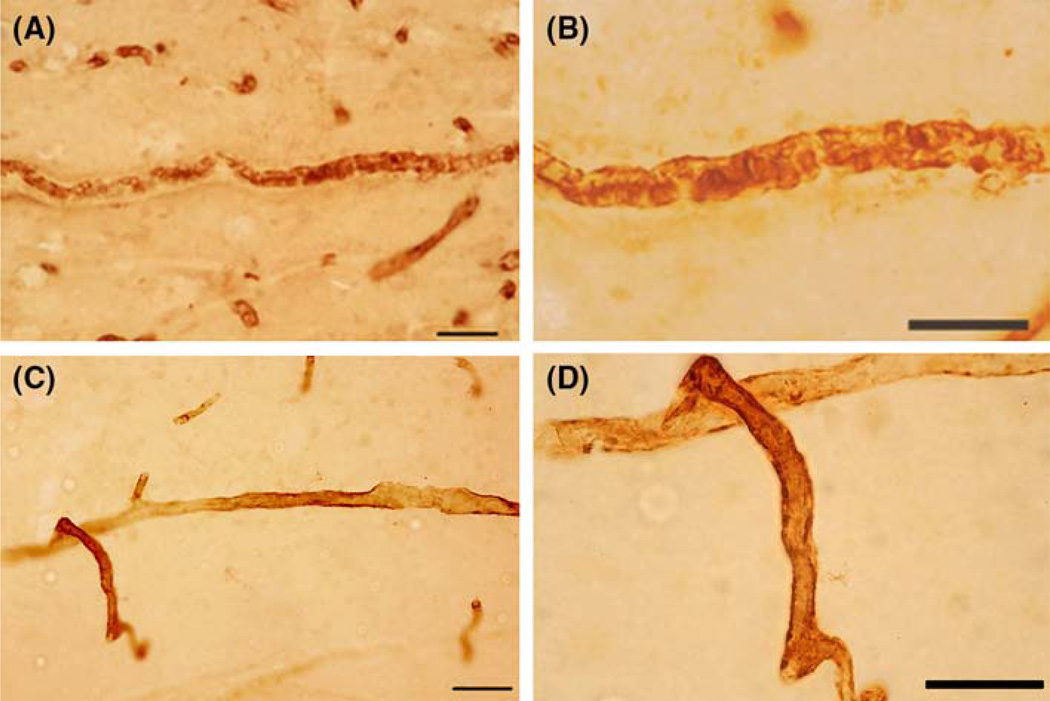
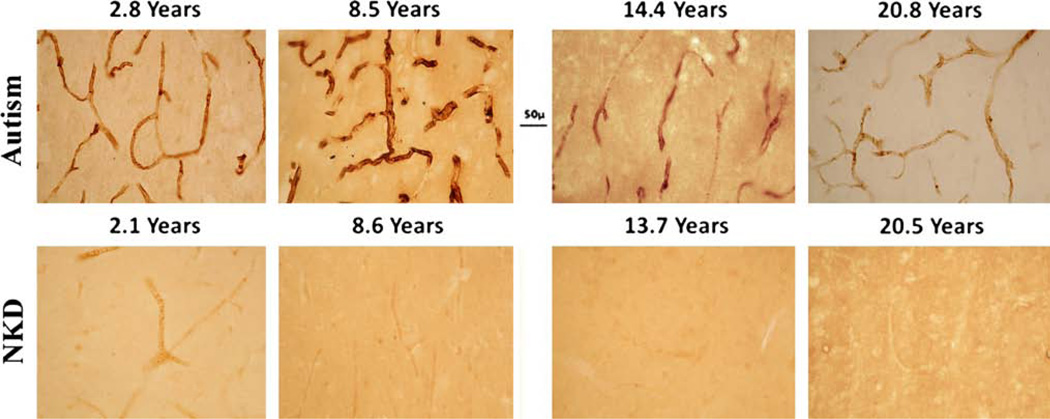
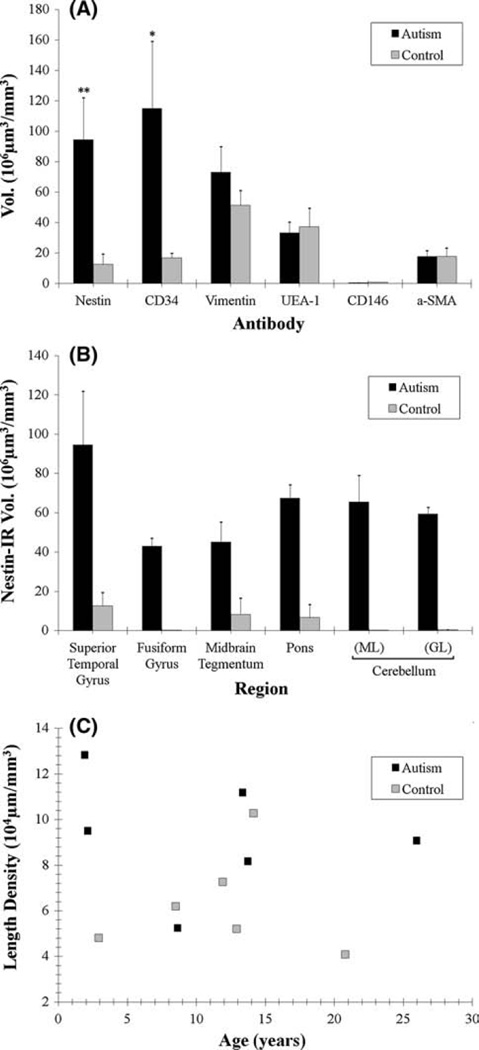
In the current work, we conducted an immunocytochemical search for markers of ongoing neurogenesis (e.g. nestin) in auditory cortex from postmortem sections of autism spectrum disorder (ASD) and age-matched control donors. We found nestin labeling in cells of the vascular system, indicating blood vessels plasticity. Evidence of angiogenesis was seen throughout superior temporal cortex (primary auditory cortex), fusiform cortex (face recognition center), pons/midbrain and cerebellum in postmortem brains from ASD patients but not control brains. We found significant increases in both nestin and CD34, which are markers of angiogenesis localized to pericyte cells and endothelial cells, respectively. This labeling profile is indicative of splitting (intussusceptive), rather than sprouting, angiogenesis indicating the blood vessels are in constant flux rather than continually expanding.
Keywords: CD34; Endothelial; Intussusceptive; Nestin; Pericytes; Superior temporal cortex.
Figures
References
-
- Akbari HM, Whitaker-Azmitia PM, Azmitia EC. Prenatal cocaine decreases the trophic factor S-100beta and induced microcephaly: Reversal by postnatal 5-HT1A receptor agonist. Neuroscience Letters. 1994;170(1):141–144. - PubMed
-
- Anderson GM. Genetics of childhood disorders: XLV. Autism, part 4: Serotonin in autism. Journal of American Academy of Child. Adolescent Psychiatry. 2002;41(12):1513–1516. - PubMed
-
- Azmitia EC, Impallomeni A. Dynamic brain changes in autism: review of telencephalic structures. Comprehensive guide to autism. 2014:695–716.
Publication types
MeSH terms
Substances
Grants and funding
LinkOut - more resources
Full Text Sources
Other Literature Sources
Medical
