


THE EFFECTS OF ANTICIPATION ON THE MECHANICS OF THE KNEE DURING SINGLE-LEG CUTTING TASKS: A SYSTEMATIC REVIEW
- PMID: 26673276
- PMCID: PMC4675193
THE EFFECTS OF ANTICIPATION ON THE MECHANICS OF THE KNEE DURING SINGLE-LEG CUTTING TASKS: A SYSTEMATIC REVIEW
Abstract
Background: ACL injuries are common in sports, which has resulted in the development of risk screening and injury prevention programs to target modifiable neuromuscular risk factors. Previous studies which have analyzed single-leg cutting tasks have reported that the anticipation status of the task (pre-planned vs. unanticipated) has a significant effect on the mechanics of the knee.
Hypothesis/purpose: The purpose of this systematic review is to assess the effect of anticipation on the mechanics of the knee in the sagittal, frontal, and transverse planes during tasks which athletes frequently perform during competition.
Study design: Systematic Review.
Methods: The following databases were searched using relevant key words and search limits: Pub Med, SPORTDiscus, CINAHL, and Web of Science. A modified version of the Downs and Black checklist was used to assess the methodological quality of the articles by two independent reviewers.
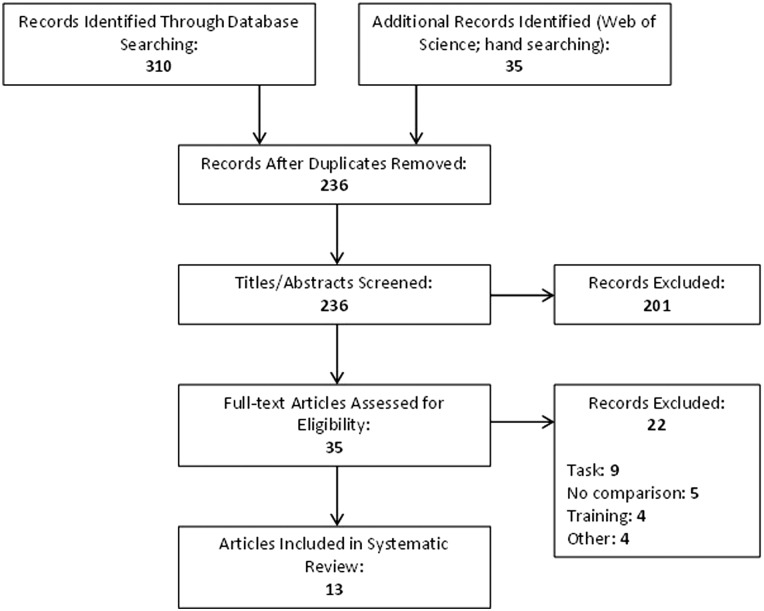
Results: 284 articles were identified during the initial database search. After a screening process, 34 articles underwent further review. Of these articles, 13 met the criteria for inclusion in this systematic review.
Conclusions: It appears that tasks which do not allow a subject to pre-plan their movement strategy promote knee mechanics which may increase an athlete's risk of injury.
Clinical relevance: Clinicians involved in the development and implementation of ACL injury risk screening and prevention programs may want to consider incorporating tasks which do not allow time for pre-planning. These unanticipated tasks may more closely mimic the demands of the sports environment and may promote mechanics which increase the risk of injury.
Level of evidence: Level 1b.
Keywords: Anterior cruciate ligament; decision‐making; knee biomechanics.
Figures
References
-
- Griffin LY Albohm MJ Arendt EA, et al. Understanding and preventing noncontact anterior cruciate ligament injuries: A review of the Hunt Valley II meeting, January 2005. Am J Sports Med. 2006;34(9):1512‐1532. - PubMed
-
- Ardern CL Webster KE Taylor NF Feller JA. Return to the preinjury level of competitive sport after anterior cruciate ligament reconstruction surgery: Two‐thirds of patients have not returned by 12 months after surgery. Am J Sports Med. 2011;39(3):538‐543. - PubMed
-
- Gilchrist J Mandelbaum BR Melancon H, et al. A randomized controlled trial to prevent noncontact anterior cruciate ligament injury in female collegiate soccer players. Am J Sports Med. 2008;36(8):1476‐1483. - PubMed
LinkOut - more resources
Full Text Sources
Miscellaneous