


Pathophysiology of anorexia in the cancer cachexia syndrome
- PMID: 26675762
- PMCID: PMC4670736
- DOI: 10.1002/jcsm.12059
Pathophysiology of anorexia in the cancer cachexia syndrome
Abstract
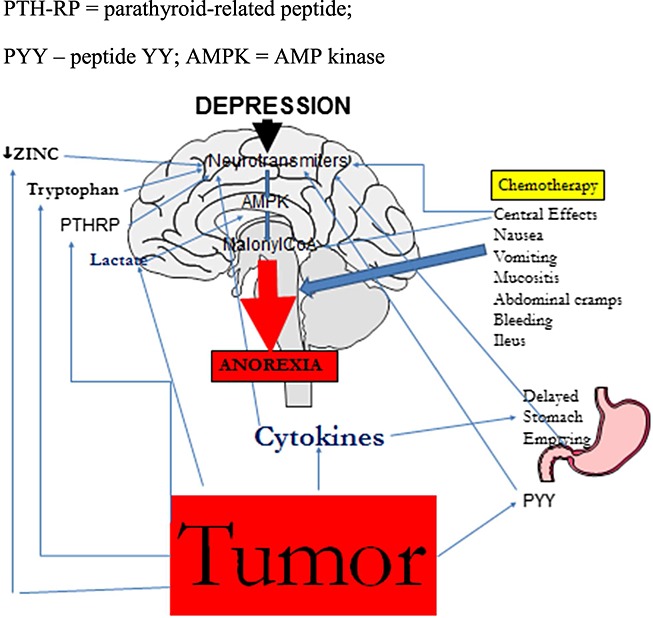
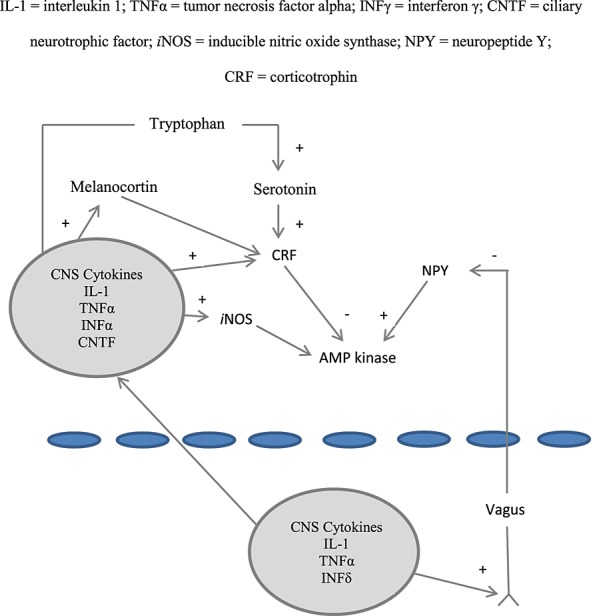
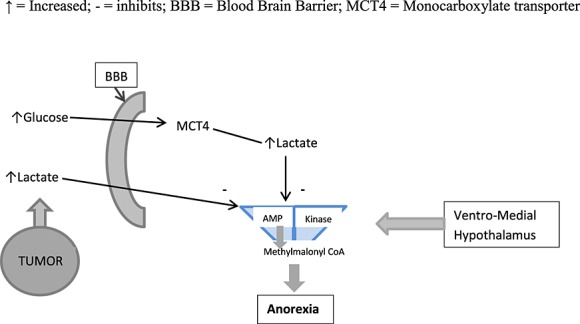
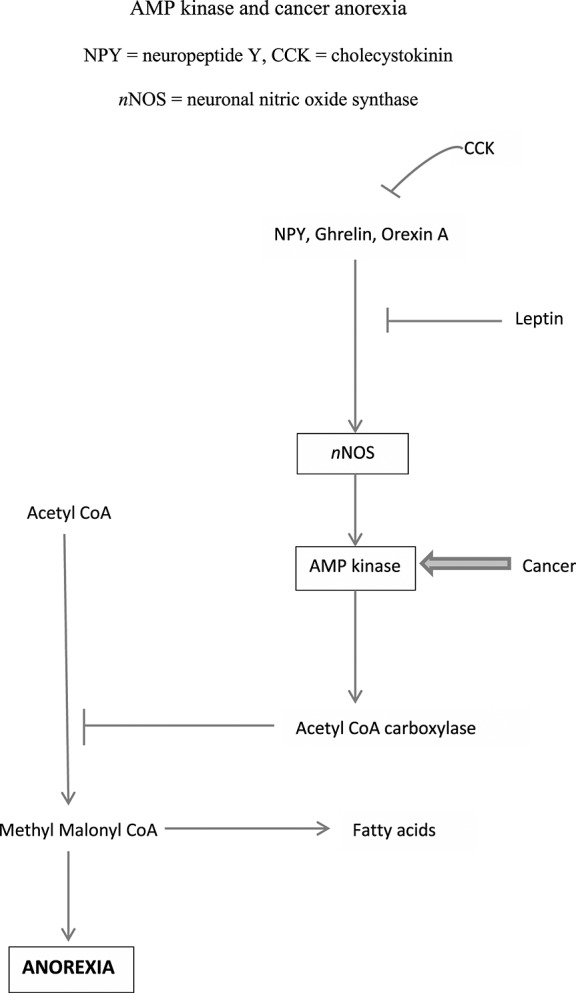
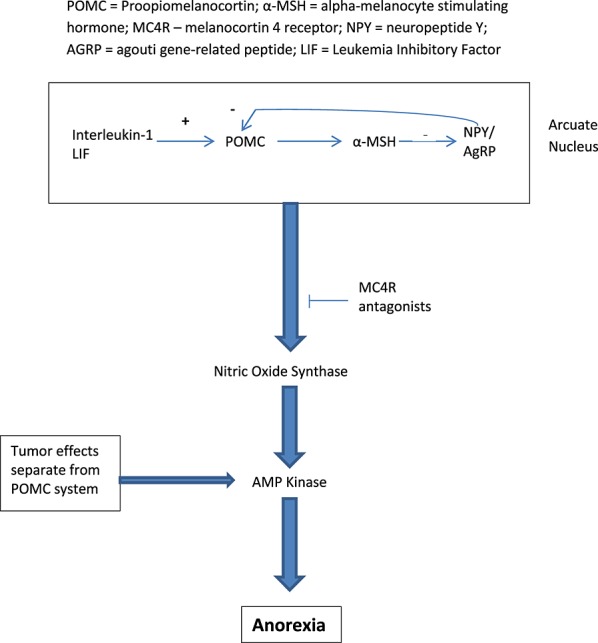
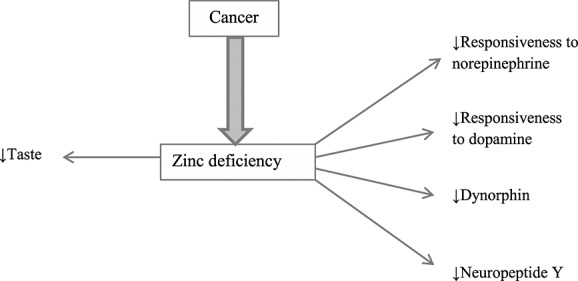
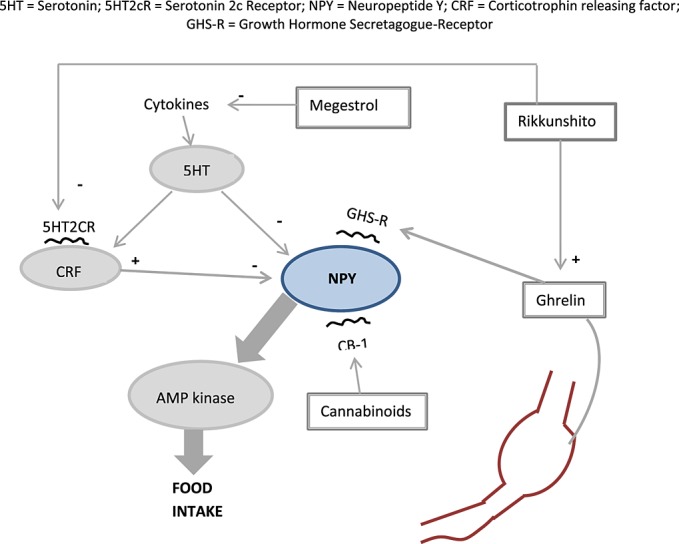
Anorexia is commonly present in persons with cancer and a major component of cancer cachexia. There are multiple causes of anorexia in cancer. Peripherally, these can be due to (i) substances released from or by the tumour, e.g. pro-inflammatory cytokines, lactate, and parathormone-related peptide; (ii) tumours causing dysphagia or altering gut function; (iii) tumours altering nutrients, e.g. zinc deficiency; (iv) tumours causing hypoxia; (v) increased peripheral tryptophan leading to increased central serotonin; or (vi) alterations of release of peripheral hormones that alter feeding, e.g. peptide tyrosine tyrosine and ghrelin. Central effects include depression and pain, decreasing the desire to eat. Within the central nervous system, tumours create multiple alterations in neurotransmitters, neuropeptides, and prostaglandins that modulate feeding. Many of these neurotransmitters appear to produce their anorectic effects through the adenosine monophosphate kinase/methylmalonyl coenzyme A/fatty acid system in the hypothalamus. Dynamin is a guanosine triphosphatase that is responsible for internalization of melanocortin 4 receptors and prostaglandin receptors. Dynamin is up-regulated in a mouse model of cancer anorexia. A number of drugs, e.g. megestrol acetate, cannabinoids, and ghrelin agonists, have been shown to have some ability to be orexigenic in cancer patients.
Keywords: Anorexia; Cancer cachexia syndrome; Loss of appetite; Pathophysiology.
Figures
References
-
- Amitani M, Asakawa A, Amitani H, Inui A. Control of food intake and muscle wasting in cachexia. Int J Biochem Cell Biol. 2013;45:2179–85. Oct. - PubMed
-
- Morley JE, Thomas DR, Wilson MM. Cachexia: Pathophysiology and clinical relevance. Am J Clin Nutr. 2006;83:735–743. - PubMed
-
- Asakawa A, Fujimiya M, Niijima A, Fujino K, Kodama N, Sato Y, Kato I, Nanba H, Laviano A, Mequid MM, Inui A. Parathyroid hormone-related protein has an anorexigenic activity via activation of hypothalamic urocortins 2 and 3. Psychoneuroendocrinology. 2010;35:1178–1186. - PubMed
-
- DeWys WD. Anorexia in cancer patients. Cancer Res. 1977;37:2354–2358. - PubMed
Publication types
LinkOut - more resources
Full Text Sources
Other Literature Sources
Medical
