


Web-Based and Mobile Delivery of an Episodic Future Thinking Intervention for Overweight and Obese Families: A Feasibility Study
- PMID: 26678959
- PMCID: PMC4704914
- DOI: 10.2196/mhealth.4603
Web-Based and Mobile Delivery of an Episodic Future Thinking Intervention for Overweight and Obese Families: A Feasibility Study
Abstract
Background: The bias toward immediate gratification is associated with maladaptive eating behaviors and has been cross-sectionally and prospectively related to obesity. Engaging in episodic future thinking, which involves mental self-projection to pre-experience future events, reduces this bias and energy intake in overweight/obese adults and children. To examine how episodic future thinking can be incorporated into clinical interventions, a Web-based system was created to provide training for adults and children in their everyday lives.
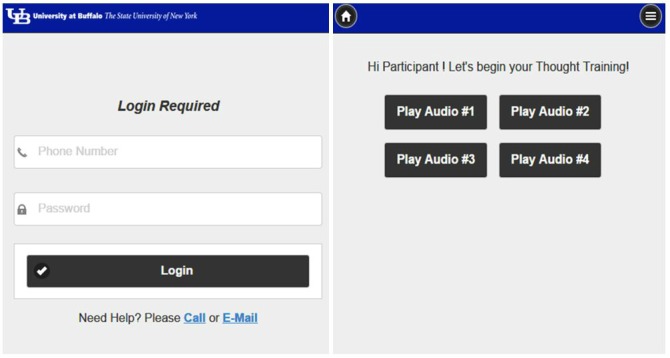
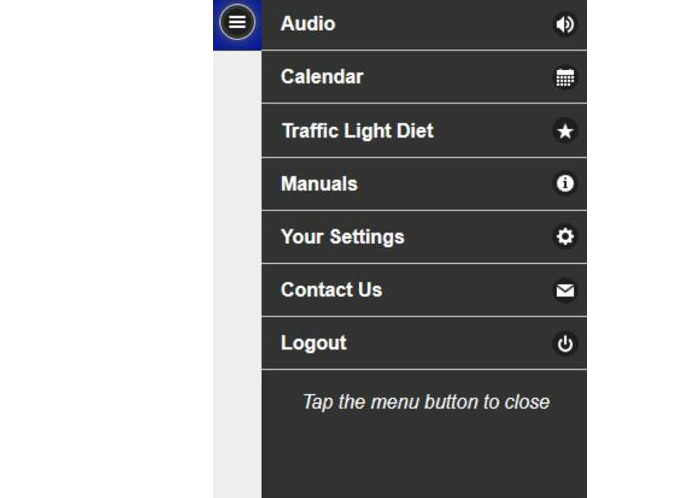
Objective: Our study examined the technical feasibility, usability, and acceptability of a Web-based system that is accessible by mobile devices and adapts episodic future thinking for delivery in family-based obesity interventions.
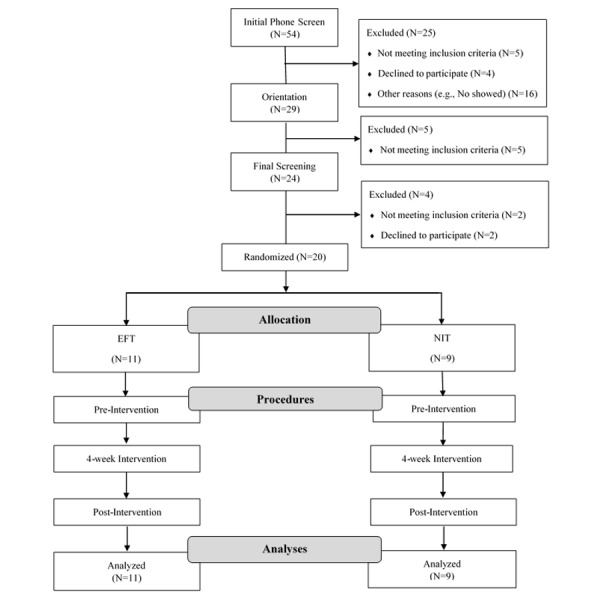
Methods: We recruited 20 parent-child dyads (N=40) from the surrounding community and randomized to episodic future thinking versus a nutritional information thinking control to test the feasibility of a 4-week Web-based intervention. Parents were 44.1 (SD 7.8) years of age with BMI of 34.2 (SD 6.8) kg/m(2). Children were 11.0 (SD 1.3) years of age with BMI percentile of 96.0 (SD 1.8). Families met weekly with a case manager for 4 weeks and used the system daily. Adherence was collected through the Web-based system, and perceived acceptance of the Web-based system was assessed postintervention. Measurements of body composition and dietary intake were collected at baseline and after the 4 weeks of intervention.
Results: All 20 families completed the intervention and attended all sessions. Results showed parents and children had high adherence to the Web-based system and perceived it to be easy to use, useful, and helpful. No differences between conditions were found in adherence for parents (P=.65) or children (P=.27). In addition, results suggest that basic nutrition information along with episodic future thinking delivered through our Web-based system may reduce energy intake and weight.
Conclusions: We showed that our Web-based system is an accepted technology and a feasible utility. Furthermore, results provide initial evidence that our system can be incorporated into family-based treatments targeting behaviors related to weight control. These results show promising utility in using our Web-based system in interventions.
Keywords: Web-based; ecological momentary intervention; episodic future thinking; health behavior; obesity.
Conflict of interest statement
Conflicts of Interest: LHE is a consultant and has equity in Kurbo. Others have no conflicts of interest to declare.
Figures
References
-
- Hill JO, Wyatt HR, Peters JC. Energy balance and obesity. Circulation. 2012 Jul 3;126(1):126–132. doi: 10.1161/CIRCULATIONAHA.111.087213. http://circ.ahajournals.org/cgi/pmidlookup?view=long&pmid=22753534 126/1/126 - DOI - PMC - PubMed
-
- Appelhans BM, Waring ME, Schneider KL, Pagoto SL, DeBiasse MA, Debiasse MA, Whited MC, Lynch EB. Delay discounting and intake of ready-to-eat and away-from-home foods in overweight and obese women. Appetite. 2012 Oct;59(2):576–584. doi: 10.1016/j.appet.2012.07.009. http://europepmc.org/abstract/MED/22819735 S0195-6663(12)00233-4 - DOI - PMC - PubMed
Grants and funding
LinkOut - more resources
Full Text Sources
Other Literature Sources
Medical
Miscellaneous
