Defining the earliest pathological changes of Alzheimer's disease
- PMID: 26679855
- PMCID: PMC4917817
- DOI: 10.2174/1567205013666151218150322
Defining the earliest pathological changes of Alzheimer's disease
Abstract
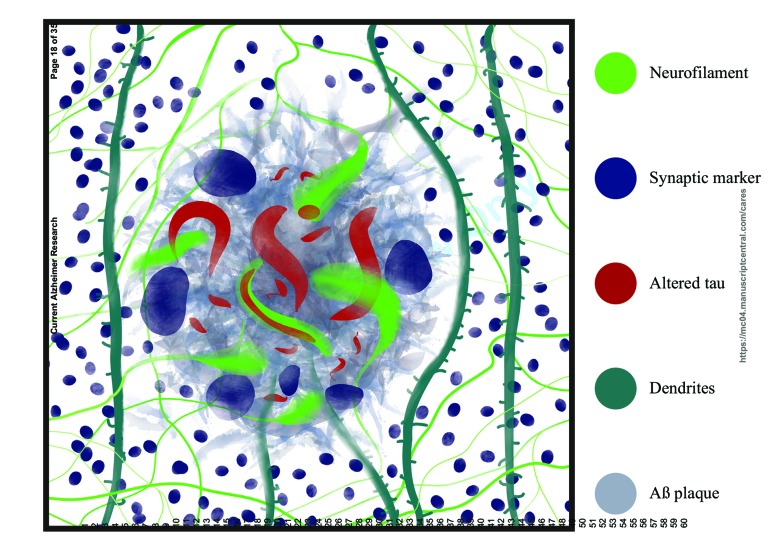
The prospects for effectively treating well-established dementia, such as Alzheimer's disease (AD), are slim, due to the destruction of key brain pathways that underlie higher cognitive function. There has been a substantial shift in the field towards detecting conditions such as AD in their earliest stages, which would allow preventative or therapeutic approaches to substantially reduce risk and/or slow the progression of disease. AD is characterized by hallmark pathological changes such as extracellular Aβ plaques and intracellular neurofibrillary pathology, which selectively affect specific subclasses of neurons and brain circuits. Current evidence indicates that Aβ plaques begin to form many years before overt dementia, a gradual and progressive pathology which offers a potential target for early intervention. Early Aβ changes in the brain result in localized damage to dendrites, axonal processes and synapses, to which excitatory synapses and the processes of projection neurons are highly vulnerable. Aβ pathology is replicated in a range of transgenic models overexpressing mutant human familial AD genes (e.g. APP and presenilin 1). Studying the development of aberrant regenerative and degenerative changes in neuritic processes associated with Aβ plaques may represent the best opportunity to understand the relationship between the pathological hallmarks of AD and neuronal damage, and to develop early interventions to prevent, slow down or mitigate against Aβ pathology and/or the neuronal alterations that leads to cognitive impairment.
Figures
References
-
- Vickers J.C., King A.E., Woodhouse A., Kirkcaldie M.T., Staal J.A., McCormack G.H., et al. Axonopathy and cytoskeletal disruption in degenerative diseases of the central nervous system. Brain Res. Bull. 2010;80:217–223. - PubMed
-
- Fiala J.C. Mechanisms of amyloid plaque pathogenesis. Acta Neuropathol. 2007;114:551–571. - PubMed
-
- Dickson T.C., Vickers J.C. The morphological phenotype of β-amyloid plaques and associated neuritic changes in Alzheimer’s disease. Neuroscience. 2001;105:99–107. - PubMed
Publication types
MeSH terms
Substances
LinkOut - more resources
Full Text Sources
Other Literature Sources
Medical
Research Materials