Review
. 2016 Feb;36(2):226-35.
doi: 10.1161/ATVBAHA.115.301926. Epub 2015 Dec 17.

Regression of Atherosclerosis: The Journey From the Liver to the Plaque and Back

Affiliations
Review

Regression of Atherosclerosis: The Journey From the Liver to the Plaque and Back

Edward A Fisher. Arterioscler Thromb Vasc Biol. 2016 Feb.

Abstract

Cardinal events in atherogenesis are the retention of apolipoprotein B-containing lipoproteins in the arterial wall and the reaction of macrophages to these particles. My laboratory has been interested in both the cell biological events producing apolipoprotein B-containing lipoproteins, as well as in the reversal of the damage they cause in the plaques formed in the arterial wall. In the 2013 George Lyman Duff Memorial Lecture, as summarized in this review, I covered 3 areas of my past, present, and future interests, namely, the regulation of hepatic very low density lipoprotein production by the degradation of apolipoprotein B100, the dynamic changes in macrophages in the regression of atherosclerosis, and the application of nanoparticles to both image and treat atherosclerotic plaques.

Keywords: apolipoproteins B; atherosclerosis; autophagy; macrophages; nanoparticle.


Figures

Figure 1
Figure 1. ApoB Degradation and the Pathway to VLDL
The nascent apoB100 polypeptide becomes associated with lipids transferred by MTP during its translocation across the ER membrane. When there is an insufficient level of either lipid synthesis or MTP activity, much of apoB100 gets shunted to the ERAD/proteasome pathway. The immature VLDL particles (pre-VLDL) are transported in vesicles to the Golgi, where they either 1) complete their maturation to fully lipidated VLDL particles, or 2) VLDL particles that fail to normally mature (because of metabolic circumstances, such as treatment with fish oils or insulin) get shunted from the Golgi to autophagosomes, which eventually fuse with lysosomes as part of autophagy. There is yet another opportunity to “intercept” VLDL particles before they enter the systemic circulation- namely at the cell surface through interactions with either LDL receptors or HSPGs, in a re-uptake process. MTP, microsomal triglyceride transfer protein; PDI, protein disulfide isomerase; PERPP, post-ER, pre-secretory proteolysis; TG, triglyceride; VLDL, very low density lipoproteins.
Figure 2
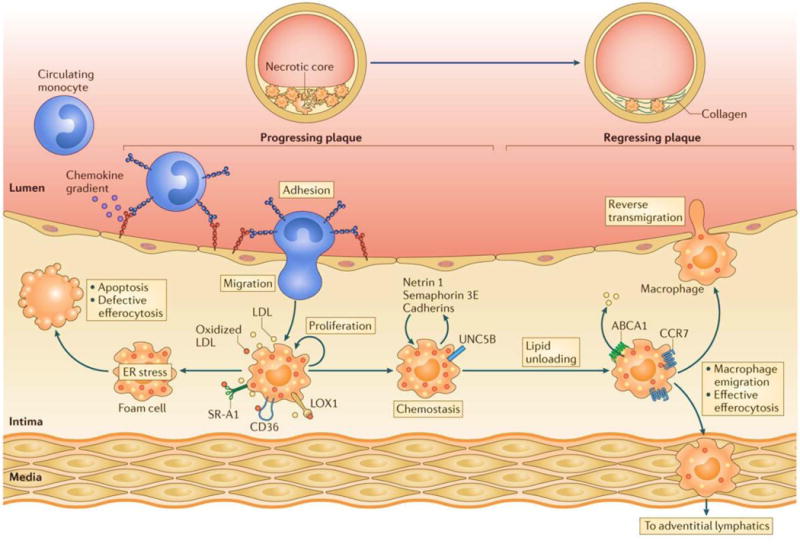
Figure 2. Macrophage-related events in the arterial wall during atherosclerosis progression and regression
Hyperlipidemia increases the number of circulating GR1+LY6Chi monocytes, which constitute 80% of the monocytes recruited to mouse atherosclerotic plaques in a multi-step proccess involving chemokine–chemokine receptor pairs, endothelial adhesion molecules, including selectins, and adhesion molecules 1. The recruited monocytes differentiate into macrophages or dendritic cells in the intima, where they take up atherogenic lipoproteins via macropinocytosis or scavenger receptor-mediated pathways. The resulting foam cells secrete pro-inflammatory cytokines and chemokines, as well as retention factors (such as netrin 1, semaphorin 3E, and cadherins) that amplify the inflammatory response and promote macrophage chemostasis. These accumulating macrophages experience endoplasmic reticulum (ER) stress, which, if prolonged, results in apoptosis. This cell death, coupled with defective efferocytosis, results in the formation of the necrotic core that is characteristic of advanced plaques. The mechanisms that promote lipid unloading of the foam cell, including the factors that upregulate ATP-binding cassette subfamily A member 1 (ABCA1) expression on plaque macrophages and cholesterol efflux, reverse the accumulation of these foam cells. In some mouse models, this plaque regression is characterized by an upregulation of CC-chemokine receptor 7 (CCR7) on myeloid-derived cells, a decrease in the expression of retention factors, and reduced monocyte recruitment. The accumulating evidence summarized in our recent review (ref. 19) supports the idea that the regulation of macrophage the retention/migration factors contributes to macrophage emigration from the plaque through reverse transmigration to the lumen or through trafficking to the adventitial lymphatics. LDL, low-density lipoprotein; LOX1, lectin-like oxidized LDL receptor 1; SR-A1, scavenger receptor A1; UNC5B, a receptor for netrin 1. Figure and much of this legend were originally published in ref. and is used by permission.
Figure 3
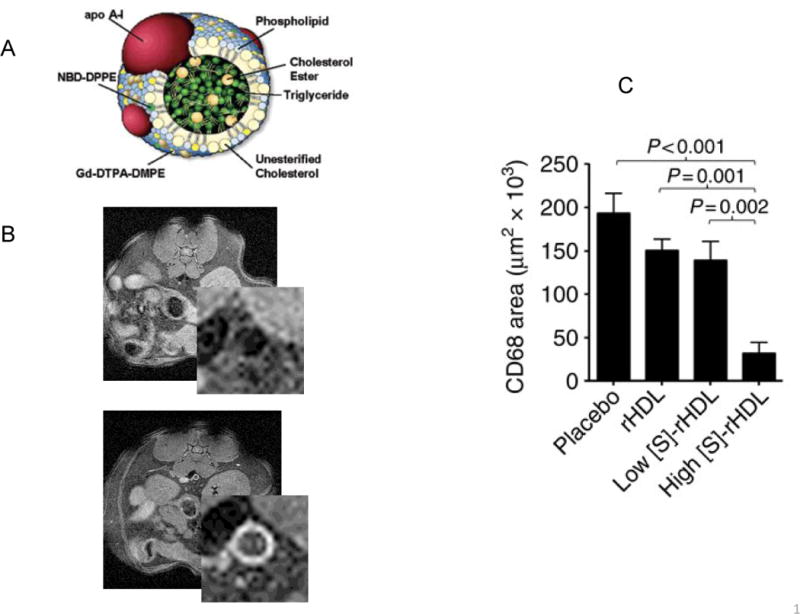
Figure 3. Building theranostic HDL particles and their applications
A) Shown in cross section is a typical spherical HDL particle. The MR imaging agent Gd has been incorporated as a chelate with DTPA conjugated to PE. There is also a fluorescent dye (NBD), also incorporated as a conjugate with PE. Other imaging agents (such as quantum dots, gold, and iron oxide particles), as well as drugs (statin, LXR agonists) can be placed in the core, where the lipid esters usually are. B) ApoE-deficient mice were fed the western diet for 48 weeks, then imaged by MR without (pre) or 24 h after injection with HDL reconstituted with Gd. The lower power MR images are abdominal cross sections, the higher power inserts show more clearly the aortae. The bright signals in the Gd-HDL injected mouse correlated with plaque macrophage content on subsequent immunohistochemistry. C) ApoE-deficient mice were fed the western diet for 27 weeks, after which they received every other day injections over a week of the indicated materials (rHDL, reconstituted control HDL; low or high [S]-rHDL; HDL reconstituted with simvastatin, but administered at 2 different dose levels). ApoA-I, apolipoprotein A-I; DMPE, di-myristoyl PE; DTPA, diethylene triamine penta-acetic acid; Gd, gadolinium; NBD, nitro-2,1,3-benzoxadiazol; PE, phosphatidylethanolamine. Panels A and B are reprinted with permission from ref. (copyright 2004, American Chemical Society), and panel C is from ref. , also used with permission.
Figure 4
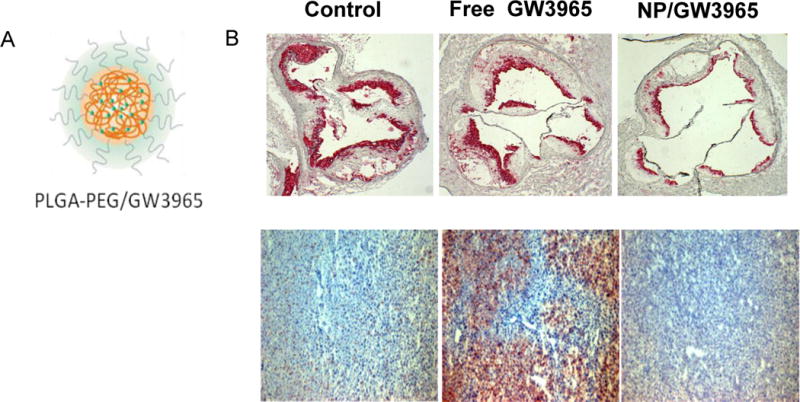
Figure 4. Nanoparticles (NPs) containing LXR agonist GW3965 favorably affect the plaque while sparing the liver
A) Chemical structure of GW3965-containing NP’s. The particle consists of an outer PEG surface, and a biodegradable polymer matrix (PLGA, golden wavy lines) loaded with GW3965 (green circles). B) Top: ApoE-deficient mice were fed western diet for 16 weeks, then treated 3X/week for 2 weeks with buffer (control), free GW3965, or NPs containing GW3965 at the same dose. The aortic roots were sectioned and stained for macrophages (CD68+ cells, in red). Note in the representative images that both free drug and NP-GW3965 decreased plaque macrophage content. Bottom: In contrast, when liver sections were stained from the corresponding mice, the oil Red O positive area, which represents triglyceride content, was obviously higher in the free GW3965 treatment group. PEG, polyethylene glycol; PLGA, poly lactic-co-glycolic acid

References

    1. Meex SJ, Andreo U, Sparks JD, Fisher EA. Huh-7 or hepg2 cells: Which is the better model for studying human apolipoprotein-b100 assembly and secretion? J Lipid Res. 2011;52:152–158. - PMC - PubMed
    1. Ginsberg HN, Fisher EA. The ever-expanding role of degradation in the regulation of apolipoprotein b metabolism. J Lipid Res. 2009;50(Suppl):S162–166. - PMC - PubMed
    1. Brodsky JL, Fisher EA. The many intersecting pathways underlying apolipoprotein b secretion and degradation. Trends Endocrinol Metab. 2008;19:254–259. - PMC - PubMed
    1. Wang H, Chen X, Fisher EA. N-3 fatty acids stimulate intracellular degradation of apoprotein b in rat hepatocytes. J Clin Invest. 1993;91:1380–1389. - PMC - PubMed
    1. Fisher EA, Pan M, Chen X, Wu X, Wang H, Jamil H, Sparks JD, Williams KJ. The triple threat to nascent apolipoprotein b. Evidence for multiple, distinct degradative pathways. J Biol Chem. 2001;276:27855–27863. - PubMed