


Weight Loss and Decrease of Body Mass Index during Allogeneic Stem Cell Transplantation Are Common Events with Limited Clinical Impact
- PMID: 26683031
- PMCID: PMC4689501
- DOI: 10.1371/journal.pone.0145445
Weight Loss and Decrease of Body Mass Index during Allogeneic Stem Cell Transplantation Are Common Events with Limited Clinical Impact
Abstract
Purpose: Weight loss in cancer patients has been attributed with significant morbidity and mortality. During allogeneic stem cell transplantation (SCT), oral nutrition is often hampered and hence total parenteral nutrition (TPN) is necessary. We therefore investigated the course of weight during stem cell transplantation and the clinical consequences of weight change.
Methods: 180 consecutive patients who received allogeneic SCT between January 2010 and December 2011 at our center were analyzed for weight loss, laboratory and clinical parameters.
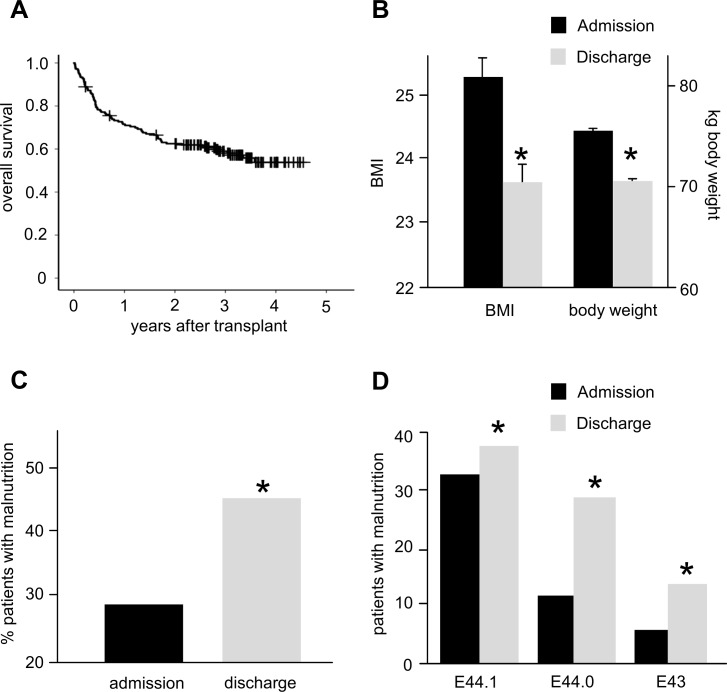
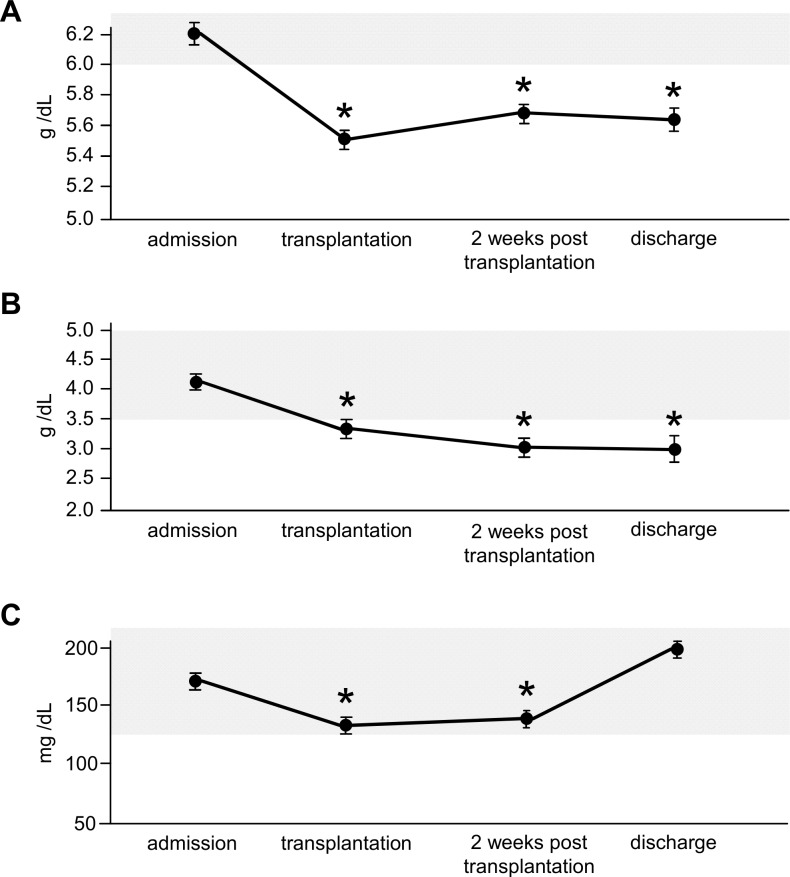
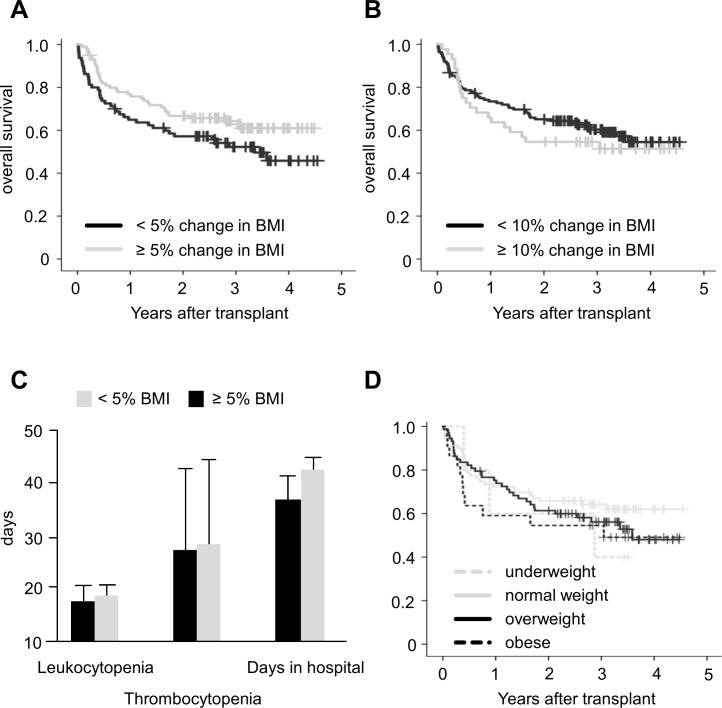
Results: During SCT, a median decrease of 6.6% of body mass index (BMI) was observed for the whole population (from 25.3 at admission to 23.6 at discharge), and a 1.6fold increase of malnutrition despite use of TPN (28.3% to 45.0%). 55.6% of patients experienced a significant weight loss of ≥5% with a median decrease of 9.2% in BMI. Serum levels of albumin, total protein and cholesterol rapidly decreased during conditioning therapy. After a median of 2.4 years, the median BMI was still only 23.4 (not different from discharge). However, we did not observe a meaningful difference in side effects and survival between patients that did or did not lose weight.
Conclusion: Weight loss is commonly observed during allogeneic SCT despite TPN, but the clinical consequences thereof seem limited: we observed no significant impact on patients with a decrease ≥ 5% in BMI on transplant outcome, side effects or survival.
Conflict of interest statement
Figures

References
-
- Thomas ED, Blume KG. Historical markers in the development of allogeneic hematopoietic cell transplantation. Biol Blood Marrow Transplant. 1999;5: 341–346. - PubMed
-
- Masszi T, Mank A. Supportive Care In: Apperley J, Carreras E, Gluckman E, Masszi T, editors. The EBMT Handbook (6th Edition). Paris: European School of Haematology; 2012. pp. 156–175.
-
- Weisdorf SA, Lysne J, Wind D, Haake RJ, Sharp HL, Goldman A, et al. Positive effect of prophylactic total parenteral nutrition on long-term outcome of bone marrow transplantation. Transplantation. 1987;43: 833–838. - PubMed
MeSH terms
LinkOut - more resources
Full Text Sources
Other Literature Sources
Research Materials
