. 2015 Dec 18;10(12):e0145660.
doi: 10.1371/journal.pone.0145660. eCollection 2015.

Soybean Aphid Infestation Induces Changes in Fatty Acid Metabolism in Soybean

Affiliations

Soybean Aphid Infestation Induces Changes in Fatty Acid Metabolism in Soybean

Charles Kanobe et al. PLoS One. .

Abstract

The soybean aphid (Aphis glycines Matsumura) is one of the most important insect pests of soybeans in the North-central region of the US. It has been hypothesized that aphids avoid effective defenses by inhibition of jasmonate-regulated plant responses. Given the role fatty acids play in jasmonate-induced plant defenses, we analyzed the fatty acid profile of soybean leaves and seeds from aphid-infested plants. Aphid infestation reduced levels of polyunsaturated fatty acids in leaves with a concomitant increase in palmitic acid. In seeds, a reduction in polyunsaturated fatty acids was associated with an increase in stearic acid and oleic acid. Soybean plants challenged with the brown stem rot fungus or with soybean cyst nematodes did not present changes in fatty acid levels in leaves or seeds, indicating that the changes induced by aphids are not a general response to pests. One of the polyunsaturated fatty acids, linolenic acid, is the precursor of jasmonate; thus, these changes in fatty acid metabolism may be examples of "metabolic hijacking" by the aphid to avoid the induction of effective defenses. Based on the changes in fatty acid levels observed in seeds and leaves, we hypothesize that aphids potentially induce interference in the fatty acid desaturation pathway, likely reducing FAD2 and FAD6 activity that leads to a reduction in polyunsaturated fatty acids. Our data support the idea that aphids block jasmonate-dependent defenses by reduction of the hormone precursor.


Conflict of interest statement

Competing Interests: The authors have the following interests: This research was supported in part by the Iowa Soybean Association and the soybean checkoff. There are no patents, products in development or marketed products to declare. This does not alter the authors' adherence to all the PLOS ONE policies on sharing data and materials.

Figures

Fig 1
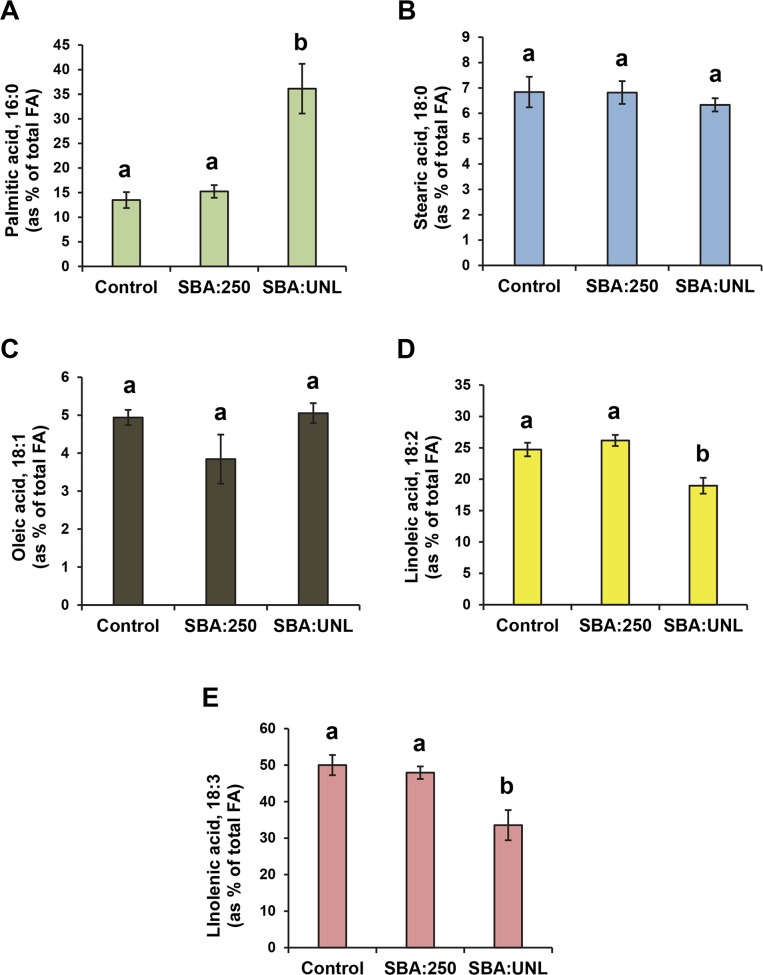
Fig 1. Effect of soybean aphid infestation on soybean leaf fatty acid levels.
Soybean plants were infested with the soybean aphid (SBA) in 2008 and 2009. Leaves were collected six weeks after SBA infestation and fatty acid composition was analyzed. The “SBA:UNL” treatment corresponds to plants in which the aphid population was allowed to grow freely. In the “SBA: 250” treatment, plants were treated with insecticide when they reached the 250 aphids plant-1, as per IPM recommendations (see Material and Methods for details). Control plants were kept free of aphids throughout the whole experiment. Different letters indicate statistically significant differences (p< 0.05) among treatments.
Fig 2
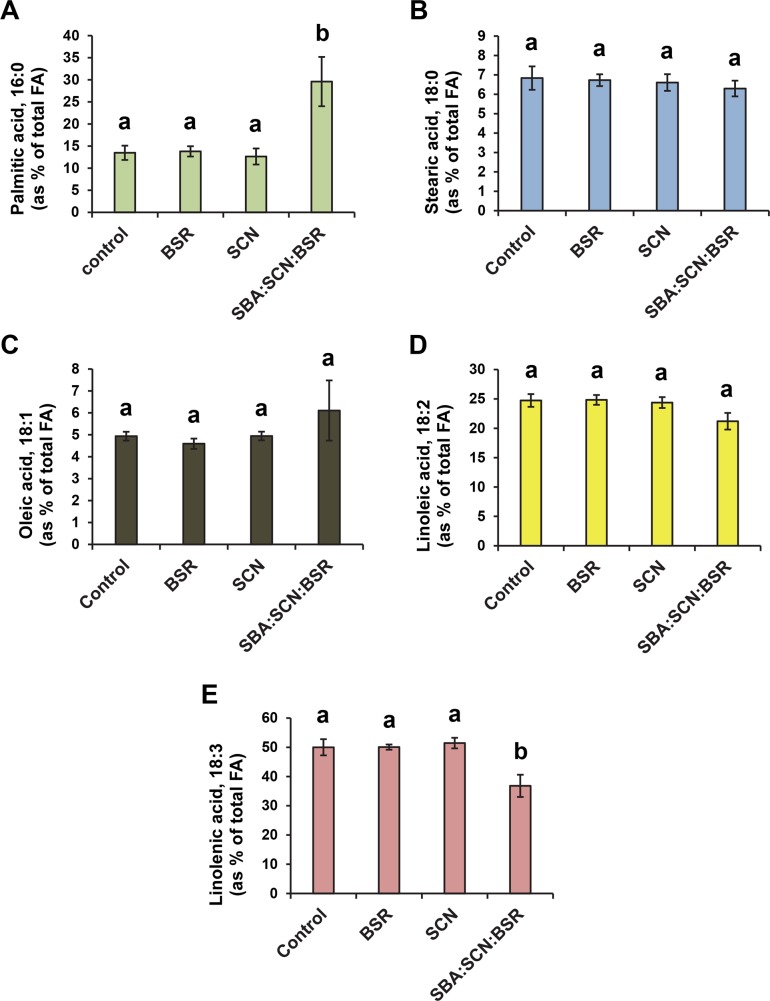
Fig 2. Effect of SCN and BSR fungus infections on soybean leaf fatty acid levels.
For two seasons (2008 and 2009), soybean plants were infested with soybean cyst nematode (SCN), the brown stem rot (BSR) fungus or the two in combination with soybean aphid (SBA). At 6 weeks after SBA infestation, leaf samples were picked and fatty acid composition was analyzed. Control plants were kept free of aphids throughout the whole experiment. Different letters indicate statistically significant differences (p< 0.05) among treatments.
Fig 3
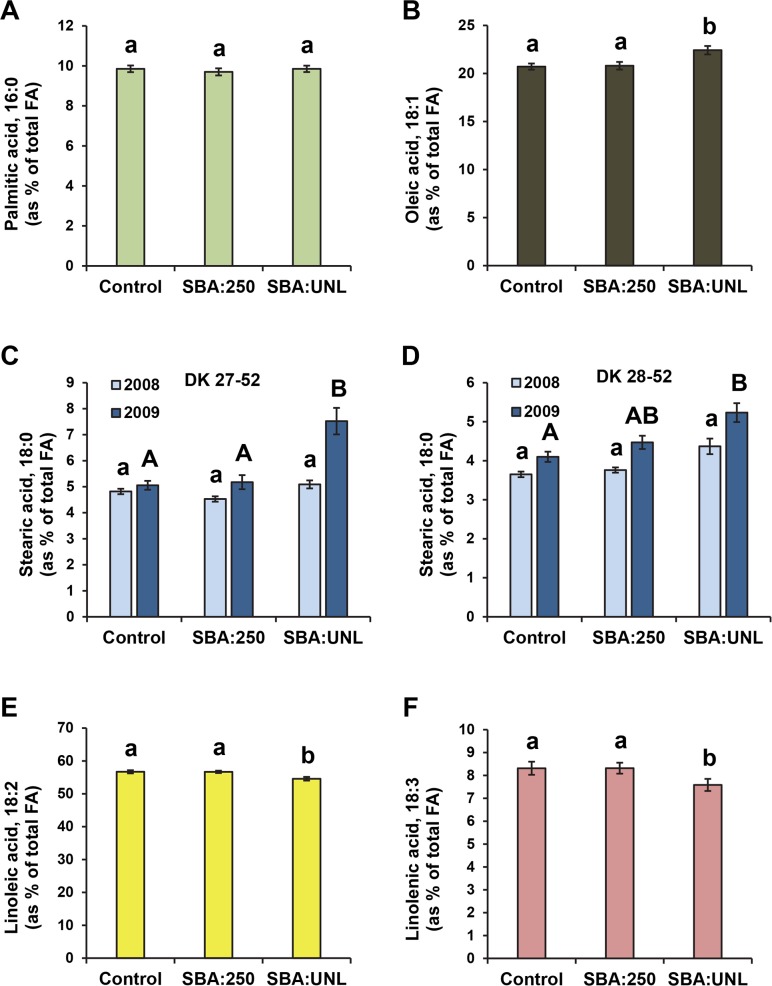
Fig 3. Effect of aphid infestation on fatty acids levels in soybean seeds.
Seeds from soybean plants challenged with the soybean aphid were collected at the end of each of two seasons (2008 and 2009), and fatty acid analysis was carried out. Statistical analysis indicated a significant treatment*year*variety interaction only for stearic acid levels. Thus, for 18:0 (C-D), results are shown for both years and varieties separately; for other fatty acids (A, 16:0; B, 18:1; E, 18:2; F, 18:3) the results from both years and varieties were combined. Different letters indicate statistically significant differences (p< 0.05) among treatments.
Fig 4
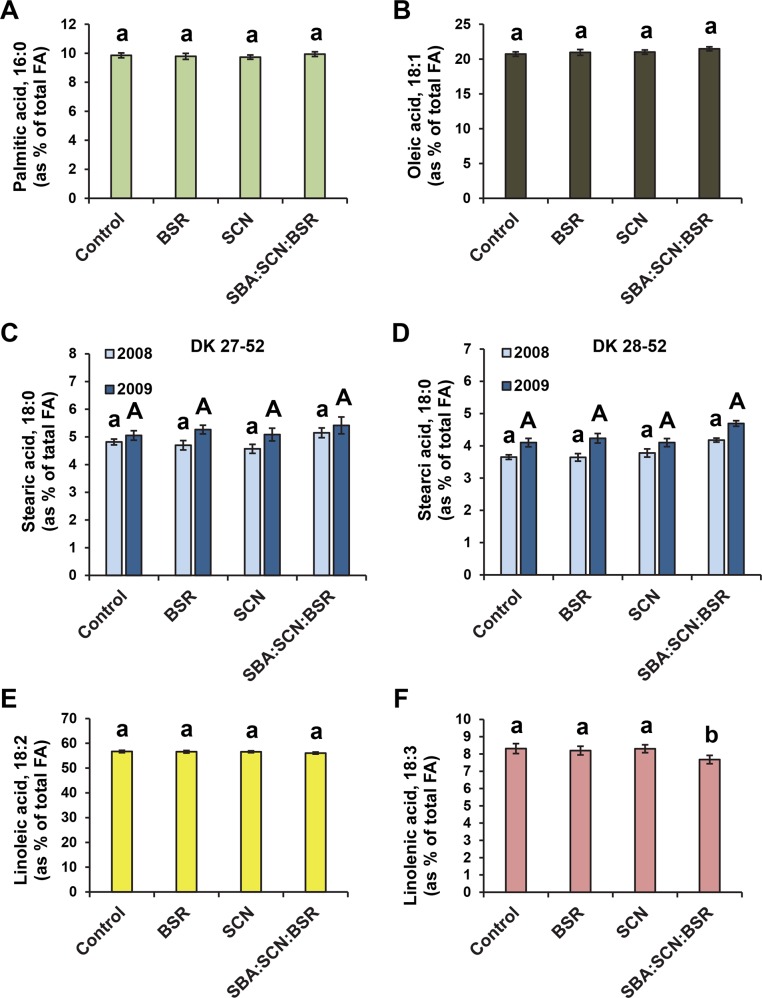
Fig 4. Effect of SCN and BSR fungus infections on fatty acid levels in soybean seeds.
For two seasons (2008 and 2009), soybean plants were challenged with soybean cyst nematode (SCN), the brown stem rot (BSR) fungus, or the two in combination with soybean aphid (SBA). Seeds were then collected at harvest and fatty acid analysis was carried out. Statistical analysis indicated a significant treatment*year*variety interaction only for stearic acid levels. Thus, for 18:0 (C-D), results are shown for both years and varieties separately; for other fatty acids (A, 16:0; B, 18:1; E, 18:2; F, 18:3) the results from both years and varieties were combined. Different letters indicate statistically significant differences (p< 0.05) among treatments.
Fig 5
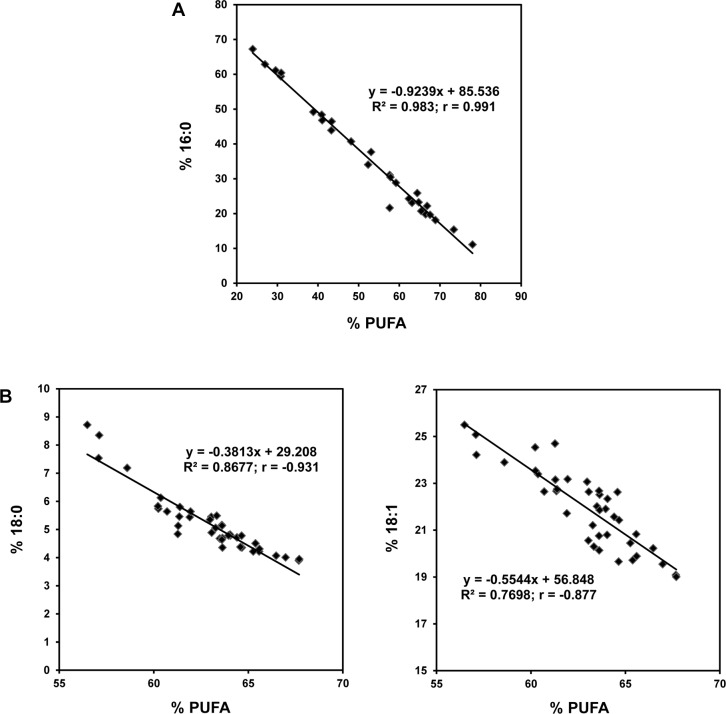
Fig 5. Correlations between reduction in PUFAs and increase in saturated and monounsaturated fatty acids.
Strong negative correlation was observed between levels of 16:0 and PUFAs soybean leaves (A) and between levels of 18:0 and PUFAs and 18:1 and PUFAs in soybean seeds (B). PUFA levels correspond to the added percentage for 18:2 and 18:3 in each case.
Fig 6
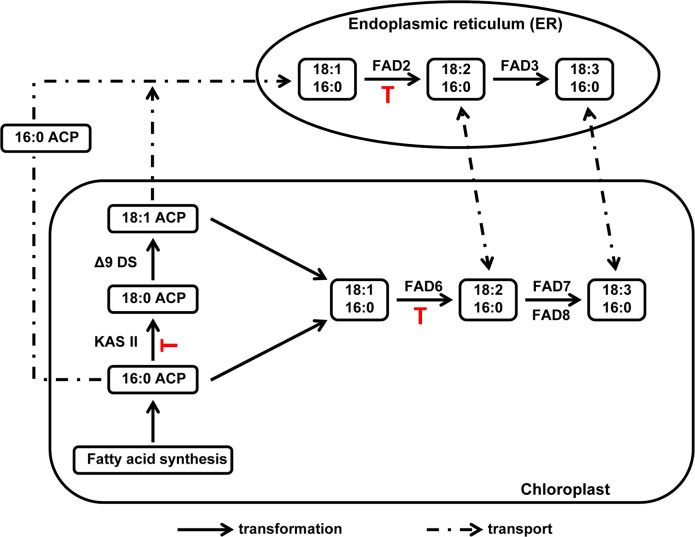
Fig 6. Fatty acid pathway in soybean, and potential points of regulation triggered by aphid infestation.
Our working hypothesis suggests that interfering with desaturation by reduction of FAD2 activity in the ER leads to reduction in 18:2 content and consequently 18:3 content in seeds, with a corresponding increase in 18:0 as seen in soybean seeds from aphid-infested plants. In the aphid-infested leaves, we observed increase in 16:0 and reduction in 18:2 and 18:3. These changes could result from a block in FAD6 and negative feedback inhibition of KASII that causes an increase in 16:0 rather than increases in 18:0 and 18:1. Alternatively, KASII and FAD6 could be independently affected by aphid infestation. Putative points of regulation in response to aphid feeding are marked with a red symbol. Only relevant enzymatic reactions and transport events are shown for simplicity.

References

    1. Bari R, Jones J. Role of plant hormones in plant defence responses. Plant Mol Biol. 2009;69(4):473–488. 10.1007/s11103-008-9435-0 - DOI - PubMed
    1. Grant M, Lamb C. Systemic immunity. Curr Opin Plant Biol. 2006;9(4):414–420. - PubMed
    1. Zarate SI, Kempema LA, Walling LL. Silverleaf whitefly induces salicylic acid defenses and suppresses effectual jasmonic acid defenses. Plant Physiol. 2007;143(2):866–875. 10.1104/pp.106.090035 - DOI - PMC - PubMed
    1. Howe GA. Jasmonates as signals in the wound response. J Plant Growth Regul. 2004;23(3):223–237.
    1. Botella MA, Xu Y, Prabha TN, Zhao Y, Narasimhan ML, Wilson KA, et al. Differential expression of soybean cysteine proteinase inhibitor genes during development and in response to wounding and methyl jasmonate. Plant Physiol. 1996;112(3):1201–1210. 10.1104/pp.112.3.1201 - DOI - PMC - PubMed

Publication types

LinkOut - more resources