. 2016 Mar;17(3):359-73.
doi: 10.1016/j.jpain.2015.11.006. Epub 2015 Dec 12.

Pioglitazone Inhibits the Development of Hyperalgesia and Sensitization of Spinal Nociresponsive Neurons in Type 2 Diabetes

Affiliations

Pioglitazone Inhibits the Development of Hyperalgesia and Sensitization of Spinal Nociresponsive Neurons in Type 2 Diabetes

Ryan B Griggs et al. J Pain. 2016 Mar.

Abstract

Thiazolidinedione drugs (TZDs) such as pioglitazone are approved by the U.S. Food and Drug Administration for the treatment of insulin resistance in type 2 diabetes. However, whether TZDs reduce painful diabetic neuropathy (PDN) remains unknown. Therefore, we tested the hypothesis that chronic administration of pioglitazone would reduce PDN in Zucker Diabetic Fatty (ZDF(fa/fa) [ZDF]) rats. Compared with Zucker Lean (ZL(fa/+)) controls, ZDF rats developed: (1) increased blood glucose, hemoglobin A1c, methylglyoxal, and insulin levels; (2) mechanical and thermal hyperalgesia in the hind paw; (3) increased avoidance of noxious mechanical probes in a mechanical conflict avoidance behavioral assay, to our knowledge, the first report of a measure of affective-motivational pain-like behavior in ZDF rats; and (4) exaggerated lumbar dorsal horn immunohistochemical expression of pressure-evoked phosphorylated extracellular signal-regulated kinase. Seven weeks of pioglitazone (30 mg/kg/d in food) reduced blood glucose, hemoglobin A1c, hyperalgesia, and phosphorylated extracellular signal-regulated kinase expression in ZDF. To our knowledge, this is the first report to reveal hyperalgesia and spinal sensitization in the same ZDF animals, both evoked by a noxious mechanical stimulus that reflects pressure pain frequently associated with clinical PDN. Because pioglitazone provides the combined benefit of reducing hyperglycemia, hyperalgesia, and central sensitization, we suggest that TZDs represent an attractive pharmacotherapy in patients with type 2 diabetes-associated pain.

Perspective: To our knowledge, this is the first preclinical report to show that: (1) ZDF rats exhibit hyperalgesia and affective-motivational pain concurrent with central sensitization; and (2) pioglitazone reduces hyperalgesia and spinal sensitization to noxious mechanical stimulation within the same subjects. Further studies are needed to determine the anti-PDN effect of TZDs in humans.

Keywords: Zucker Diabetic Fatty rat; neuropathic pain; painful diabetic neuropathy; peroxisome proliferator-activated receptor gamma.


Conflict of interest statement

DISCLOSURES:

The authors declare there are no conflicts of interest.

Figures
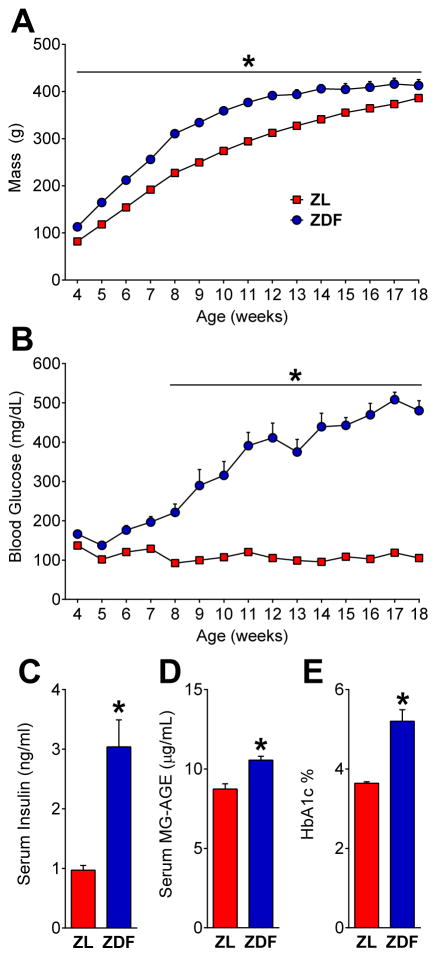
Fig. 1
Fig. 1. ZDF rats develop a type 2 diabetes phenotype
(A) Body mass (n=12) and (B) blood glucose levels (n=12), serum (C) insulin (n=6) at 19 wks, (D) methylglyoxal-derived advanced glycation end-products (MG-AGE; n=3) at 19 weeks and (E) HbA1c at 12 weeks of age (n=10) in Zucker Diabetic Fatty (ZDF) and Zucker Lean (ZL) controls. * p < 0.05, ZDF vs. ZL.
Fig. 2
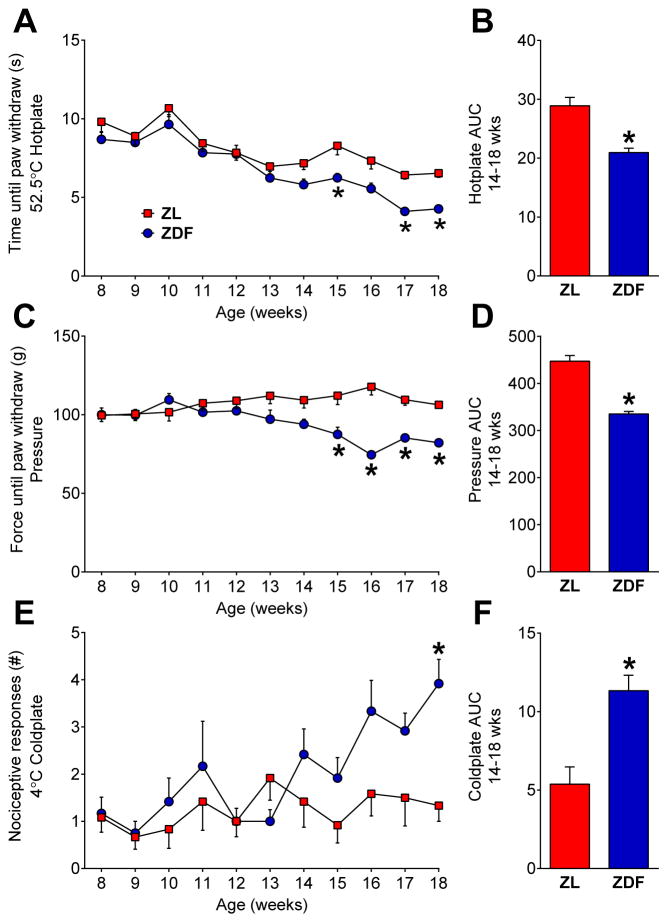
Fig. 2. ZDF rats develop hyperalgesia
Paw withdraw responses to (A–B) heat, (C–D) pressure, and (E–F) cold stimuli in ZL and ZDF rats. Area under the curve (AUC) analyses for 14–18 wks are shown. n=12 per group. * p < 0.05, ZDF vs. ZL.
Fig. 3
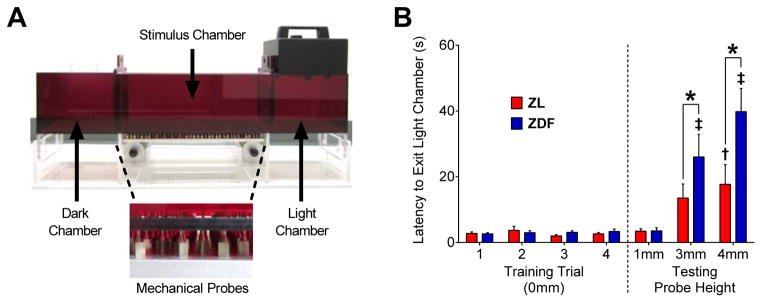
Fig. 3. Diabetes increases the avoidance of mechanical probes
(A) Diagram of the mechanical conflict avoidance system (MCS) used as a measure of affective-motivational pain in ZL and ZDF rats. MCS behavioral testing began at 17 wks of age and consisted of three stages: familiarization (1 d), training (4 d), and testing (3 d). Familiarization: Animals were initially placed in the light chamber and allowed free access to explore the entire MCS apparatus. Training: Animals were trained to move from the light chamber, through the stimulus chamber with mechanical probes set to a height of 0 mm (i.e. no probes), and into the dark chamber. Each animal underwent four training trials on each of the four consecutive training days. Testing: Animals were placed in the light chamber and allowed to cross the stimulus chamber at probe heights of 1 mm, 3 mm, and 4 mm. Each animal was tested for 3 trials at each probe height with only one probe height tested on each of the three testing days. (B) The latency to exit the light chamber (latency) in ZL and ZDF rats is shown for the 4 d of training (left) and 3 d of testing (right). The latency was similar in the absence of mechanical probes (probe height = 0 mm) during training and at a 1 mm probe height during testing. Raising the testing probe height increased the latency in ZL at 3 mm and ZDF at 3 and 4 mm. The latency was greater in ZDFs compared to ZLs at the 3 and 4 mm probe height. n=9–10 per group. * p < 0.05. † p<0.05 vs. ZL at 1mm. ‡ p<0.05 vs. ZDF at 1 mm.
Fig. 4
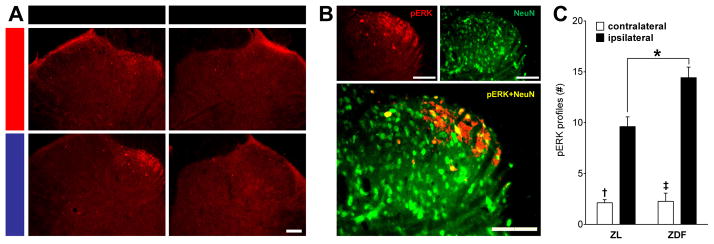
Fig. 4. Diabetes exacerbates noxious pressure-induced activation of dorsal horn neurons
Pressure-evoked pERK expression and colabeling with NeuN in the L4/5 dorsal horn at 18 wks of age in ZL and ZDF rats. Representative images of pERK (A) in the stimulated (ipsilateral) or unstimulated (contralateral) side and (B) colabeling with the neuronal marker NeuN in the medial portion of the ipsilateral lumbar dorsal horn after pressure stimulation. (C) Quantification of cell-like profiles labeled with pERK in laminae I-II. n=6 per group. † p<0.05 vs. ZL ipsilateral. ‡ p<0.05 vs. ZDF ipsilateral. * p<0.05. Scale bars = 100 μm.
Fig. 5
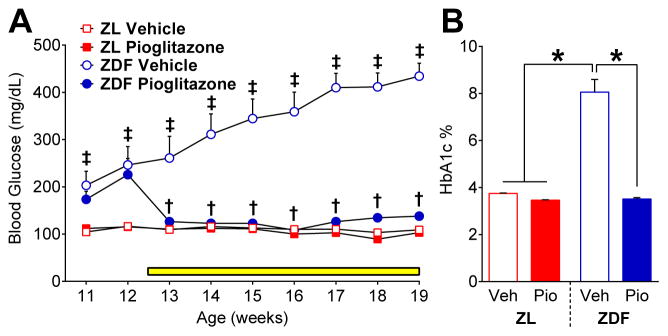
Fig. 5. Pioglitazone reduces pathological signs of type 2 diabetes
Effect of vehicle or pioglitazone (administered in food, yellow bar) on blood levels of (A) glucose (n=9–10 per group) from 11 to 19 wks and (B) HbA1c (n=9–10 per group) at 19 wks of age in ZL and ZDF rats. ‡ p<0.05 vs. both ZL groups. † p<0.05, ZDF Pioglitazone vs. ZDF Vehicle. * p<0.05.
Fig. 6
Fig. 6. Pioglitazone attenuates pain-like behavior
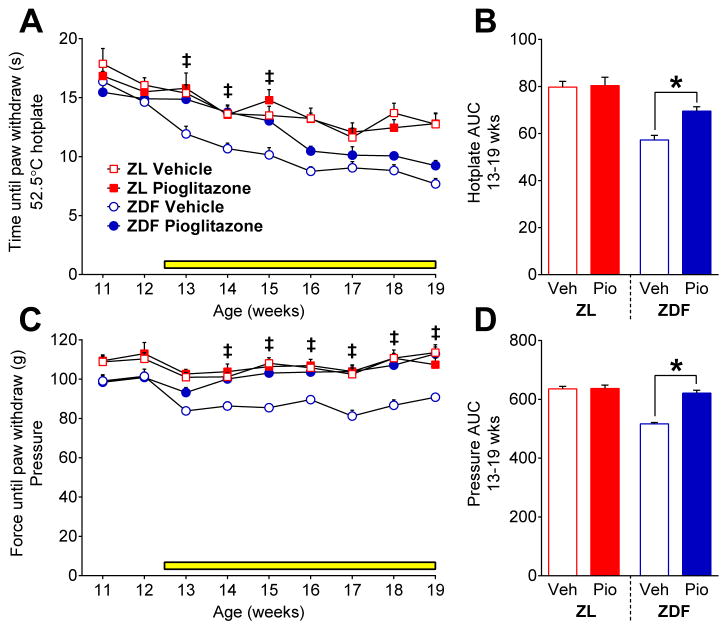
Effect vehicle or pioglitazone in food (yellow bar) on the development of (A–B) heat and (C–D) mechanical hyperalgesia (n=9–10 per group). Pioglitazone inhibits the development of heat and mechanical hyperalgesia in ZDF. ‡ p<0.05 ZDF Vehicle vs. all other groups. * p<0.05.
Fig. 7
Fig. 7. Pioglitazone attenuates dorsal horn neuron activation
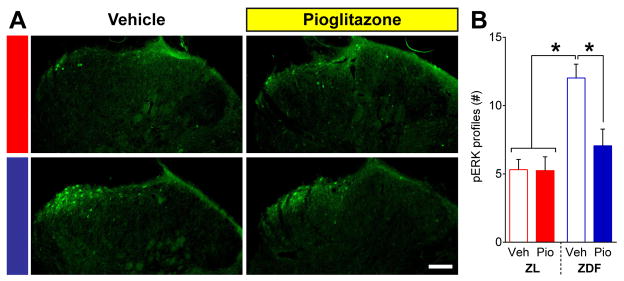
Noxious pressure-evoked expression of pERK in the lumbar superficial dorsal horn of ZL and ZDF rats at 19 wks of age following a 7 wk treatment with vehicle or pioglitazone administered in chow. (A) Representative images of pERK immunostaining. (B) Pioglitazone reduced pERK expression in ZDFs to the level of ZLs. n=5–6 per group. * p<0.05. Scale bar = 100 μm.

References

    1. Abbott CA, Malik RA, van Ross ER, Kulkarni J, Boulton AJ. Prevalence and characteristics of painful diabetic neuropathy in a large community-based diabetic population in the U.K. Diabetes Care. 2011;34:2220–2224. - PMC - PubMed
    1. Ahmed N. Methylglyoxal-Derived Hydroimidazolone Advanced Glycation End-Products of Human Lens Proteins. Investigative Ophthalmology & Visual Science. 2003;44:5287–5292. - PubMed
    1. Aronoff S, Rosenblatt S, Braithwaite S, Egan JW, Mathisen AL, Schneider RL. Pioglitazone hydrochloride monotherapy improves glycemic control in the treatment of patients with type 2 diabetes: a 6-month randomized placebo-controlled dose-response study. The Pioglitazone 001 Study Group. Diabetes Care. 2000;23:1605–1611. - PubMed
    1. Basbaum AI, Bautista DM, Scherrer G, Julius D. Cellular and molecular mechanisms of pain. Cell. 2009;139:267–284. - PMC - PubMed
    1. Bierhaus A, Fleming T, Stoyanov S, Leffler A, Babes A, Neacsu C, Sauer SK, Eberhardt M, Schnolzer M, Lasitschka F, Neuhuber WL, Kichko TI, Konrade I, Elvert R, Mier W, Pirags V, Lukic IK, Morcos M, Dehmer T, Rabbani N, Thornalley PJ, Edelstein D, Nau C, Forbes J, Humpert PM, Schwaninger M, Ziegler D, Stern DM, Cooper ME, Haberkorn U, Brownlee M, Reeh PW, Nawroth PP. Methylglyoxal modification of Nav1.8 facilitates nociceptive neuron firing and causes hyperalgesia in diabetic neuropathy. Nat Med. 2012;18:926–933. - PubMed

Publication types

MeSH terms