


Heavy Metals and Human Health: Mechanistic Insight into Toxicity and Counter Defense System of Antioxidants
- PMID: 26690422
- PMCID: PMC4691126
- DOI: 10.3390/ijms161226183
Heavy Metals and Human Health: Mechanistic Insight into Toxicity and Counter Defense System of Antioxidants
Abstract
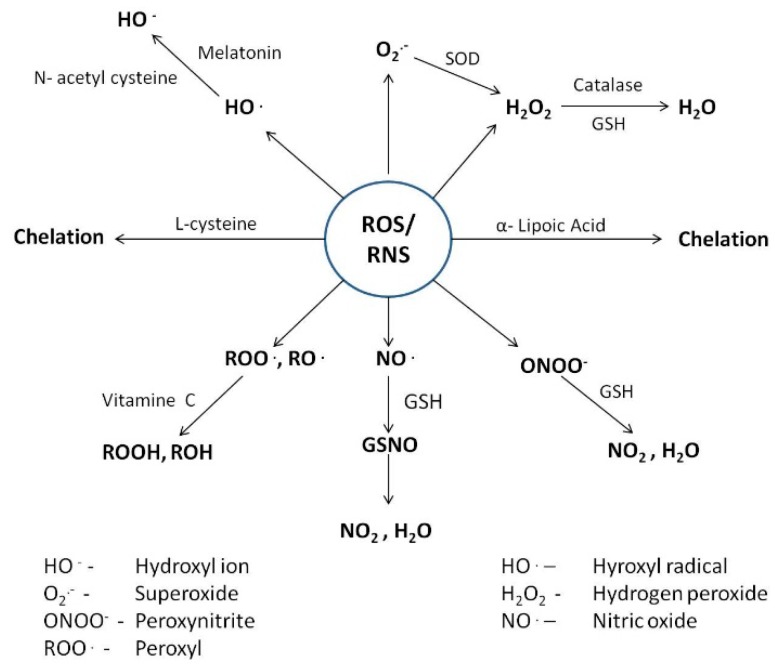
Heavy metals, which have widespread environmental distribution and originate from natural and anthropogenic sources, are common environmental pollutants. In recent decades, their contamination has increased dramatically because of continuous discharge in sewage and untreated industrial effluents. Because they are non-degradable, they persist in the environment; accordingly, they have received a great deal of attention owing to their potential health and environmental risks. Although the toxic effects of metals depend on the forms and routes of exposure, interruptions of intracellular homeostasis include damage to lipids, proteins, enzymes and DNA via the production of free radicals. Following exposure to heavy metals, their metabolism and subsequent excretion from the body depends on the presence of antioxidants (glutathione, α-tocopherol, ascorbate, etc.) associated with the quenching of free radicals by suspending the activity of enzymes (catalase, peroxidase, and superoxide dismutase). Therefore, this review was written to provide a deep understanding of the mechanisms involved in eliciting their toxicity in order to highlight the necessity for development of strategies to decrease exposure to these metals, as well as to identify substances that contribute significantly to overcome their hazardous effects within the body of living organisms.
Keywords: biomolecules; dietary antioxidants; free radicals; heavy metals.
Figures
References
-
- Ikhuoria E.U., Okieimen F.E. Scavenging cadmium, copper, lead, nickel and zinc ions from aqueous solution by modified cellulosic sorbent. Int. J. Environ. Stud. 2000;57:401–409. doi: 10.1080/00207230008711284. - DOI
-
- Sahu R.K., Arora N.K. Bioassay as a tool for assessing susceptibility and resistant plant species for field contaminated with industrial effluents. World J. Microbiol. Biotechnol. 2008;24:143–148. doi: 10.1007/s11274-007-9448-x. - DOI
-
- Jaishankar M., Mathew B.B., Shah M.S., Murthy K.T.P., Gowda S.K.R. Biosorption of few heavy metal ions using agricultural wastes. J. Environ. Pollut. Hum. Health. 2014;2:1–6.
-
- Nagajyoti P.C., Lee K.D., Sreekanth T.V.M. Heavy metals, occurrence and toxicity for plants: A review. Environ. Chem. Lett. 2010;8:199–216. doi: 10.1007/s10311-010-0297-8. - DOI
Publication types
MeSH terms
Substances
LinkOut - more resources
Full Text Sources
Other Literature Sources
Medical
