


The Metabolic Effects of Oats Intake in Patients with Type 2 Diabetes: A Systematic Review and Meta-Analysis
- PMID: 26690472
- PMCID: PMC4690088
- DOI: 10.3390/nu7125536
The Metabolic Effects of Oats Intake in Patients with Type 2 Diabetes: A Systematic Review and Meta-Analysis
Abstract
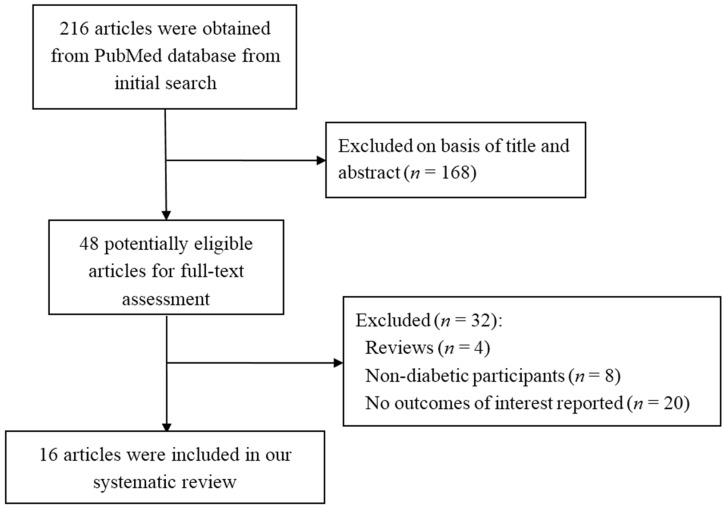
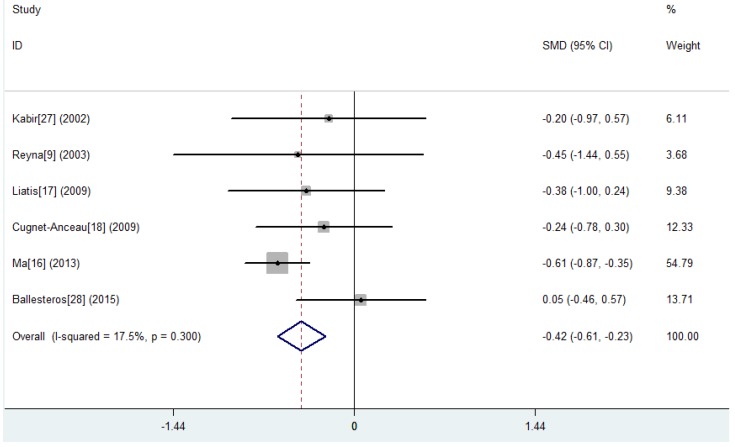
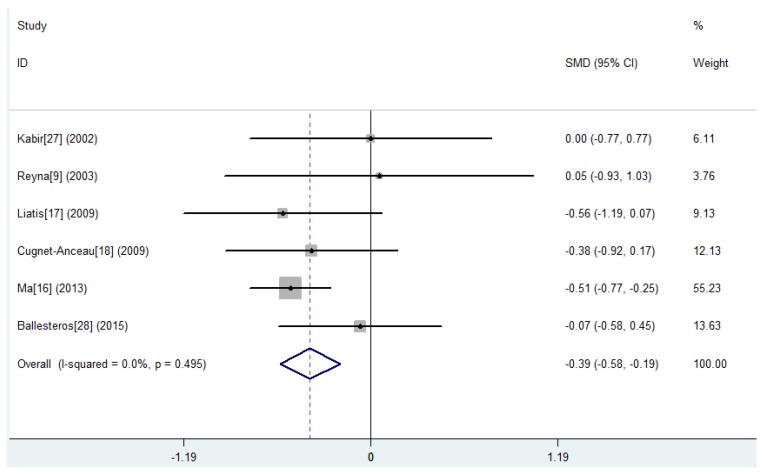
The present study aimed to comprehensively assess if oats intake is beneficial for diabetic patients. The literature search was conducted in PubMed database up to 23 August 2015. Fourteen controlled trials and two uncontrolled observational studies were included. Compared with the controls, oats intake significantly reduced the concentrations of glycosylated hemoglobin A1c (HbA1c) (MD, -0.42%; 95% CI, -0.61% to -0.23%), fasting blood glucose (FBG) (MD, -0.39 mmol/L; 95% CI, -0.58 to -0.19 mmol/L), total cholesterol (TC) (MD, -0.49 mmol/L; 95% CI, -0.86 to -0.12 mmol/L), low-density lipoprotein cholesterol (LDL-C) (MD, -0.29 mmol/L; 95% CI, -0.48 to -0.09 mmol/L). Oatmeal significantly reduced the acute postprandial glucose and insulin responses compared with the control meal. The present study has revealed a beneficial effect of oats intake on glucose control and lipid profiles in type 2 diabetic patients. Further investigations of oats intake in patients with type 1 diabetes and the safety of oats consumption are required.
Keywords: cholesterol; glycemic control; meta-analysis; oats; systematic review; type 2 diabetes mellitus; β-glucan.
Figures
References
-
- Evert A.B., Boucher J.L., Cypress M., Dunbar S.A., Franz M.J., Mayer-Davis E.J., Neumiller J.J., Nwankwo R., Verdi C.L., Urbanski P., et al. Nutrition therapy recommendations for the management of adults with diabetes. Diabetes Care. 2014;37(Suppl. S1):S120–S143. doi: 10.2337/dc14-S120. - DOI - PubMed
Publication types
MeSH terms
Substances
LinkOut - more resources
Full Text Sources
Other Literature Sources
Medical
Molecular Biology Databases
