An evaluation of the prescribing patterns for under-five patients at a Tertiary Paediatric Hospital in Sierra Leone
- PMID: 26692736
- PMCID: PMC4660481
- DOI: 10.4103/0976-0105.168051
An evaluation of the prescribing patterns for under-five patients at a Tertiary Paediatric Hospital in Sierra Leone
Abstract
Purpose: There is limited information on pediatric prescribing in Sierra Leone. This study evaluated prescribing patterns for under-five patients at Ola During Children's Hospital (ODCH) and assessed the extent of rational prescribing.
Methods: A descriptive, cross-sectional, retrospective study of 294 prescriptions, selected by systematic random sampling was conducted at the outpatient department of ODCH. The World Health Organisation prescribing indicators were analyzed using the SPSS package 16.0. The index of rational drug prescribing (IRDP) was calculated to assess rational prescribing.
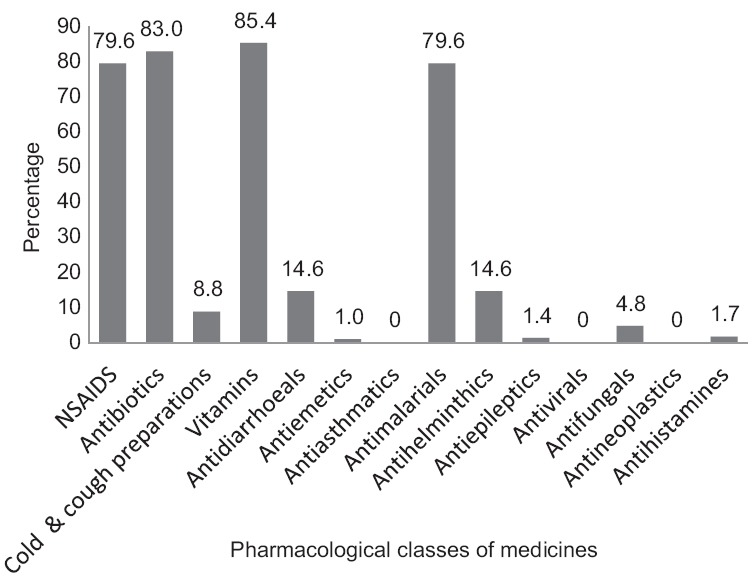
Results: The average number of medicines per prescription was 3.77. The percentage of medicines prescribed by generic names was 71.0%, while 74.8% and 21.1% of prescriptions had an antibiotic and injection, respectively. The percentage of medicines prescribed from the national essential medicines list was 70.6%. The most commonly prescribed pharmacological groups of medicines were vitamins (85.37%) and antibiotics (82.99%). The IRDP was 2.71, instead of the ideal value of 5.
Conclusion: Pediatric prescribing patterns at the outpatient department of ODCH cannot be said to be entirely rational, especially with regards to antibiotic and injection prescribing.
Keywords: Antibiotics; essential medicines list; generics; injections; rational prescribing; under-five.
Conflict of interest statement
Figures
References
-
- Geneva: WHO; 1987. WHO. The Rational Use of Drugs. Report of a Conference of Experts, Nairobi, 25-29 November 1985.
-
- Teferra A, Zeruesenay D, Asfawossen GY. Prescribing pattern of drugs in medical wards of three hospitals in northwest Ethiopia. J Ethiop Med Pract. 2002;4:8–13.
-
- Geneva: WHO; 2002. WHO. Promoting rational use of medicines: Core components. WHO Policy Perspectives on Medicines; pp. 1–6.
-
- Washington, D C: World Bank; 1994. World Bank. The importance of pharmaceutical and essential drug programs: Better Health in Africa, Experience and Lessons Learned.
LinkOut - more resources
Full Text Sources
Other Literature Sources