


Combination Therapy Using Chelating Agent and Zinc for Wilson's Disease
- PMID: 26692828
- PMCID: PMC4666238
- DOI: 10.1007/s40846-015-0087-7
Combination Therapy Using Chelating Agent and Zinc for Wilson's Disease
Abstract
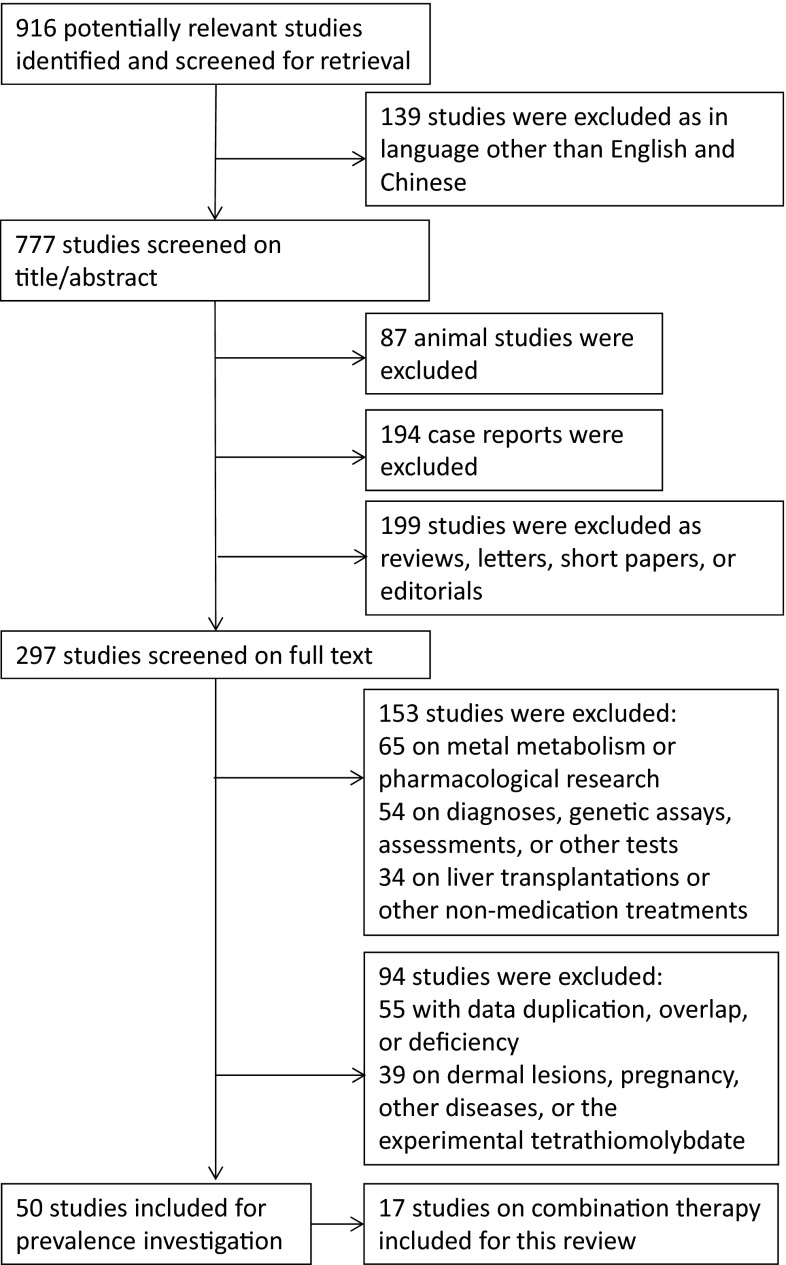
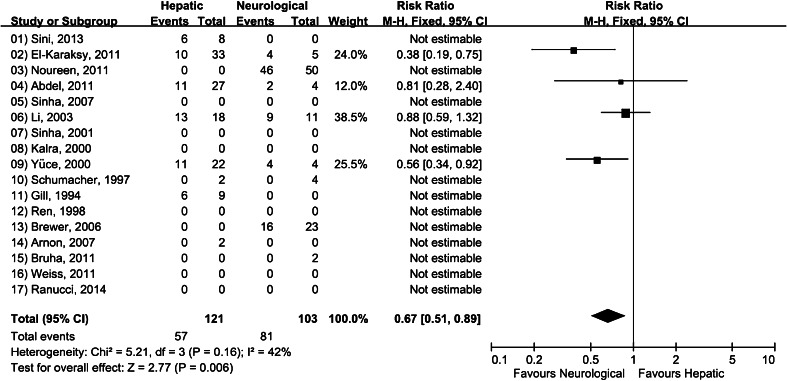
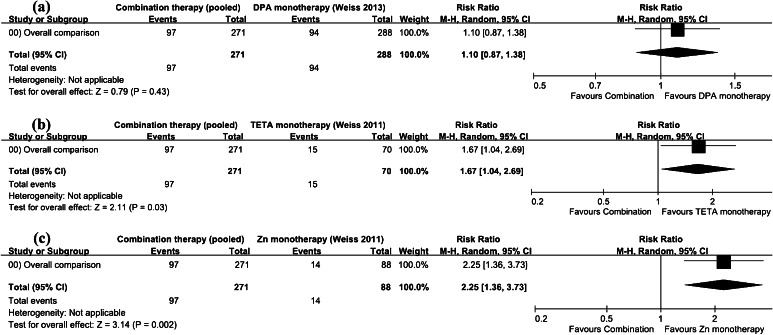
There is no clear international consensus regarding the optimal medication therapy for treating Wilson's disease (WD). This study systematically reviews the effectiveness of various medication therapies in common use, specifically focusing on preliminary findings concerning the combination of a chelating agent and zinc. A systematic PubMed search was executed to locate original studies on the effectiveness of commonly used medications for WD published between January 1989 and August 2014. The results were used to conduct a systematic review of studies on combination therapies. A total of 17 combination therapy studies involving 1056 patients were reviewed. These were analyzed in terms of data on effectiveness, adverse effects, and mortality. Results from a pooled analysis indicate that combination therapies for hepatic patients were significantly less effective than the same therapies for neurological manifestations (47.1 vs. 78.6 %; pooled relative risk ratio (RR): 0.63, 95 % confidence interval CI 0.43-0.94; p = 0.02). Data from a subgroup analysis show that the combination therapy of penicillamine plus zinc sulfate resulted in a significantly higher mortality rate compared to all other combination therapy types (16.3 vs. 4.7 %; RR: 3.51, 95 % CI 1.54-8.00; p < 0.001). The use of combination therapies involving zinc and a chelator should be carefully monitored with close clinical observations and frequent biochemical tests, especially for WD patients with hepatic manifestations.
Keywords: Biomedical informatics; Combination therapy; Effectiveness; Safety; Wilson’s disease.
Figures




References
-
- Sini M, Sorbello O, Sanna F, Battolu F, Civolani A, Fanni D, Faa G, Demelia L. Histologic evolution and long-term outcome of Wilson’s disease: Results of a single-center experience. European Journal of Gastroenterology and Hepatology. 2013;25:111–117. doi: 10.1097/MEG.0b013e328358f7da. - DOI - PubMed
-
- El-Karaksy H, Fahmy M, El-Raziky MS, El-Hawary M, El-Sayed R, El-Koofy N, El-Mougy F, El-Hennawy A, El-Shabrawi M. A clinical study of Wilson’s disease: The experience of a single Egyptian Paediatric Hepatology Unit. Arab Journal of Gastroenterology. 2011;12:125–130. doi: 10.1016/j.ajg.2011.07.007. - DOI - PubMed
-
- Noureen N, Rana MT. Neurological Wilson disease in children: A three years experience from Multan. Journal of the Pakistan Medical Association. 2011;61:743–748. - PubMed
Publication types
LinkOut - more resources
Full Text Sources
Other Literature Sources