


A pilot randomized controlled clinical trial to improve antiepileptic drug adherence in young children with epilepsy
- PMID: 26693964
- PMCID: PMC4783218
- DOI: 10.1111/epi.13289
A pilot randomized controlled clinical trial to improve antiepileptic drug adherence in young children with epilepsy
Abstract
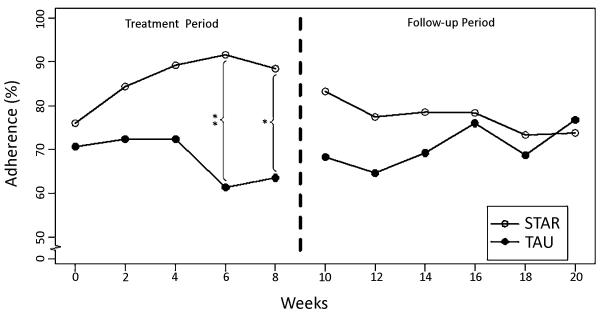
The primary aim was to examine the preliminary efficacy of a family tailored problem-solving intervention to improve antiepileptic drug (AED) adherence in families of children with new-onset epilepsy. Secondary aims were to assess changes in targeted mechanisms and treatment feasibility and acceptability. Fifty families (M(age) = 7.6 ± 3.0; 80% Caucasian; 42% idiopathic localization related) completed baseline questionnaires and were given an electronic monitor to observe daily AED adherence. If adherence was ≤ 95% in the first 7 months of the study, families were randomized (Supporting Treatment Adherence Regimens (STAR): n = 11; Treatment as Usual (TAU): n = 12). Twenty-one families were not randomized due to adherence being ≥95%. The STAR intervention included four face-to-face and two telephone problem-solving sessions over 8 weeks. Significant group differences in adherence were found during active intervention (weeks 4-6; TAU = -12.0 vs. STAR = 18.1, p < 0.01; and weeks session 6-8: TAU = -9.7 vs. STAR = 15.3, p < 0.05). Children who received the STAR intervention exhibited improved adherence compared to children in the TAU group during active treatment. Significant changes in epilepsy knowledge and management were noted for the STAR group. Families expressed benefitting from the STAR intervention. Future studies should include a larger sample size and booster intervention sessions to maintain treatment effects over time.
Keywords: Compliance; Intervention; Pediatric epilepsy; Problem solving; Self-management.
Wiley Periodicals, Inc. © 2015 International League Against Epilepsy.
Figures
References
Publication types
MeSH terms
Substances
Grants and funding
LinkOut - more resources
Full Text Sources
Other Literature Sources
Medical
