


Review article: the global emergence of Helicobacter pylori antibiotic resistance
- PMID: 26694080
- PMCID: PMC5064663
- DOI: 10.1111/apt.13497
Review article: the global emergence of Helicobacter pylori antibiotic resistance
Abstract
Background: Helicobacter pylori is one of the most prevalent global pathogens and can lead to gastrointestinal disease including peptic ulcers, gastric marginal zone lymphoma and gastric carcinoma.
Aim: To review recent trends in H. pylori antibiotic resistance rates, and to discuss diagnostics and treatment paradigms.
Methods: A PubMed literature search using the following keywords: Helicobacter pylori, antibiotic resistance, clarithromycin, levofloxacin, metronidazole, prevalence, susceptibility testing.
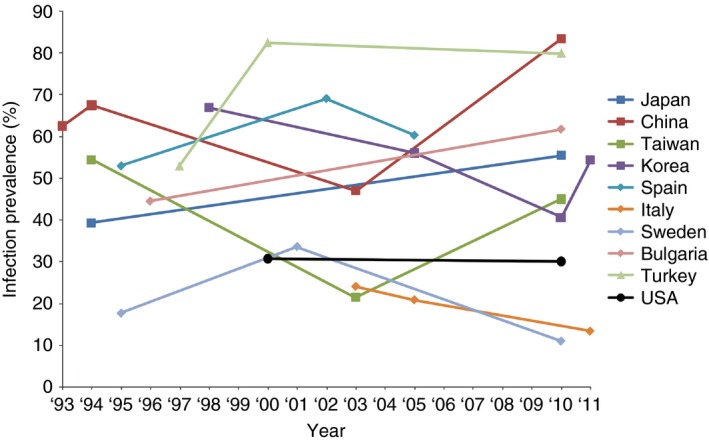
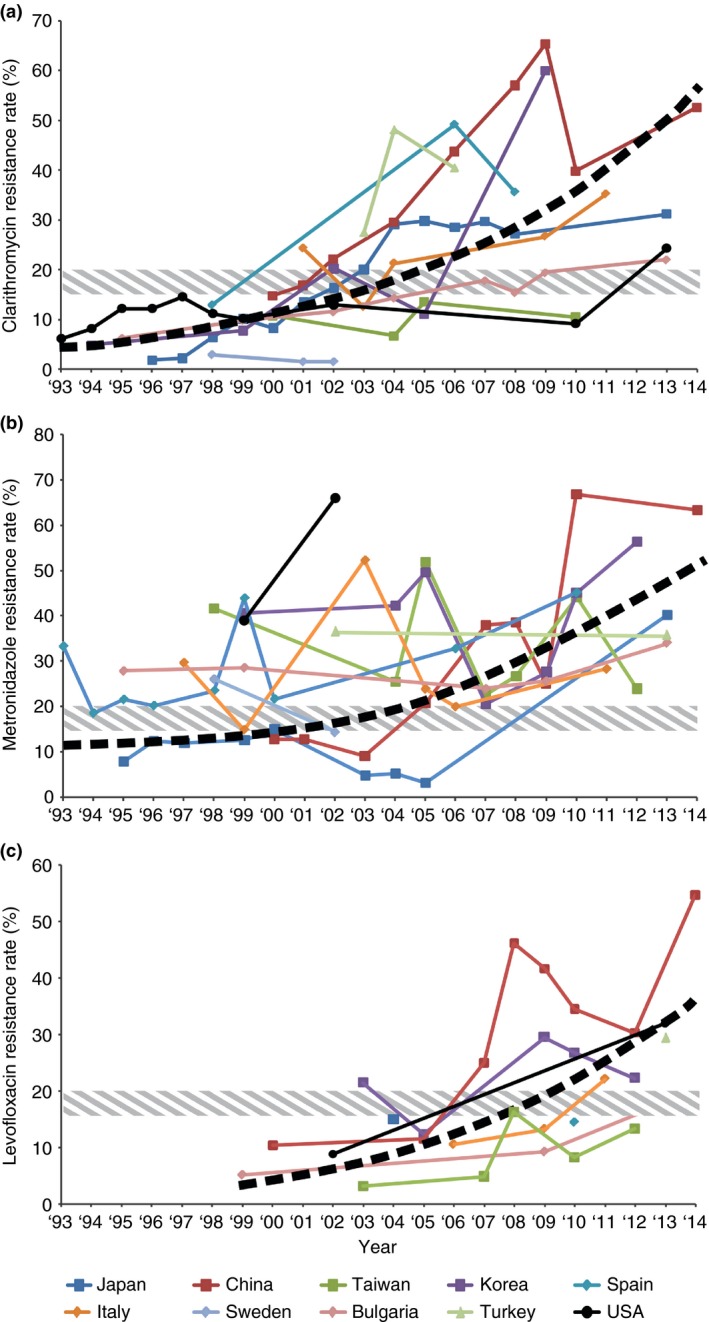
Results: The prevalence of bacterial antibiotic resistance is regionally variable and appears to be markedly increasing with time in many countries. Concordantly, the antimicrobial eradication rate of H. pylori has been declining globally. In particular, clarithromycin resistance has been rapidly increasing in many countries over the past decade, with rates as high as approximately 30% in Japan and Italy, 50% in China and 40% in Turkey; whereas resistance rates are much lower in Sweden and Taiwan, at approximately 15%; there are limited data in the USA. Other antibiotics show similar trends, although less pronounced.
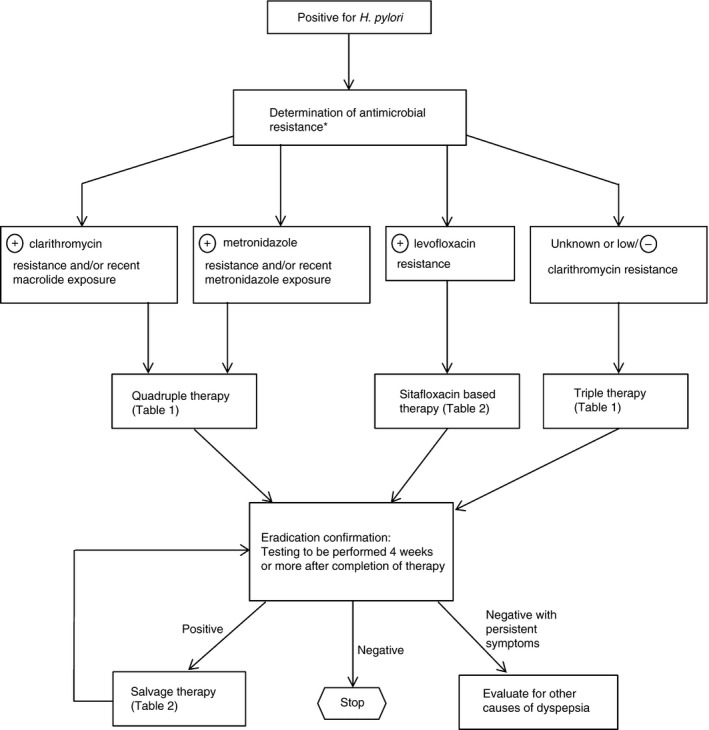
Conclusions: Since the choice of empiric therapies should be predicated on accurate information regarding antibiotic resistance rates, there is a critical need for determination of current rates at a local scale, and perhaps in individual patients. Such information would not only guide selection of appropriate empiric antibiotic therapy but also inform the development of better methods to identify H. pylori antibiotic resistance at diagnosis. Patient-specific tailoring of effective antibiotic treatment strategies may lead to reduced treatment failures and less antibiotic resistance.
© 2015 The Authors. Alimentary Pharmacology & Therapeutics published by John Wiley & Sons Ltd.
Figures
Comment in
-
Letter: global emergence of Helicobacter pylori antibiotic resistance - unanswered questions.Aliment Pharmacol Ther. 2016 Jun;43(11):1249. doi: 10.1111/apt.13612. Aliment Pharmacol Ther. 2016. PMID: 27137738 No abstract available.
-
Letter: global emergence of Helicobacter pylori antibiotic resistance - unanswered questions. Authors' reply.Aliment Pharmacol Ther. 2016 Jun;43(11):1249-50. doi: 10.1111/apt.13625. Aliment Pharmacol Ther. 2016. PMID: 27137739 No abstract available.
References
-
- Malfertheiner P, Megraud F, O'Morain CA, et al Management of Helicobacter pylori infection–the Maastricht IV/Florence consensus report. Gut 2012; 61: 646–64. - PubMed
-
- Williams MP, Pounder RE. Helicobacter pylori: from the benign to the malignant. Am J Gastroenterol 1999; 94(11 Suppl.): S11–6. - PubMed
-
- Dinis‐Ribeiro M, Areia M, de Vries AC, et al Management of precancerous conditions and lesions in the stomach (MAPS): guideline from the European Society of Gastrointestinal Endoscopy (ESGE), European Helicobacter Study Group (EHSG), European Society of Pathology (ESP), and the Sociedade Portuguesa. Endoscopy 2012; 44: 74–94. - PMC - PubMed
-
- Marshall BJ, Warren JR. Unidentified curved bacilli in the stomach of patients with gastritis and peptic ulceration. Lancet 1984; 1: 1311–5. - PubMed
Publication types
MeSH terms
Substances
LinkOut - more resources
Full Text Sources
Other Literature Sources
Medical
Miscellaneous