A computer model for the simulation of nanoparticle deposition in the alveolar structures of the human lungs
- PMID: 26697441
- PMCID: PMC4671876
- DOI: 10.3978/j.issn.2305-5839.2015.11.01
A computer model for the simulation of nanoparticle deposition in the alveolar structures of the human lungs
Abstract
Background: According to epidemiological and experimental studies, inhalation of nanoparticles is commonly believed as a main trigger for several pulmonary dysfunctions and lung diseases. Concerning the transport and deposition of such nano-scale particles in the different structures of the human lungs, some essential questions are still in need of a clarification. Therefore, main objective of the study was the simulation of nanoparticle deposition in the alveolar region of the human respiratory tract (HRT).
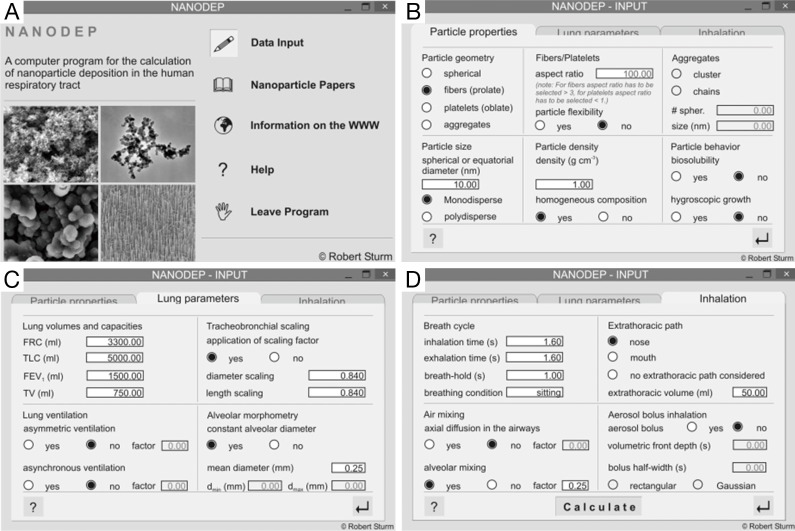
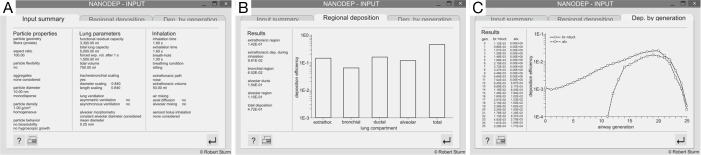
Methods: Respective factors describing the aerodynamic behavior of spherical and non-spherical particles in the inhaled air stream (i.e., Cunningham slip correction factors, dynamic shape factors, equivalent-volume diameters, aerodynamic diameters) were computed. Alveolar deposition of diverse nanomaterials according to several known mechanisms, among which Brownian diffusion and sedimentation play a superior role, was approximated by the use of empirical and analytical formulae. Deposition calculations were conducted with a currently developed program, termed NANODEP, which allows the variation of numerous input parameters with regard to particle geometry, lung morphometry, and aerosol inhalation.
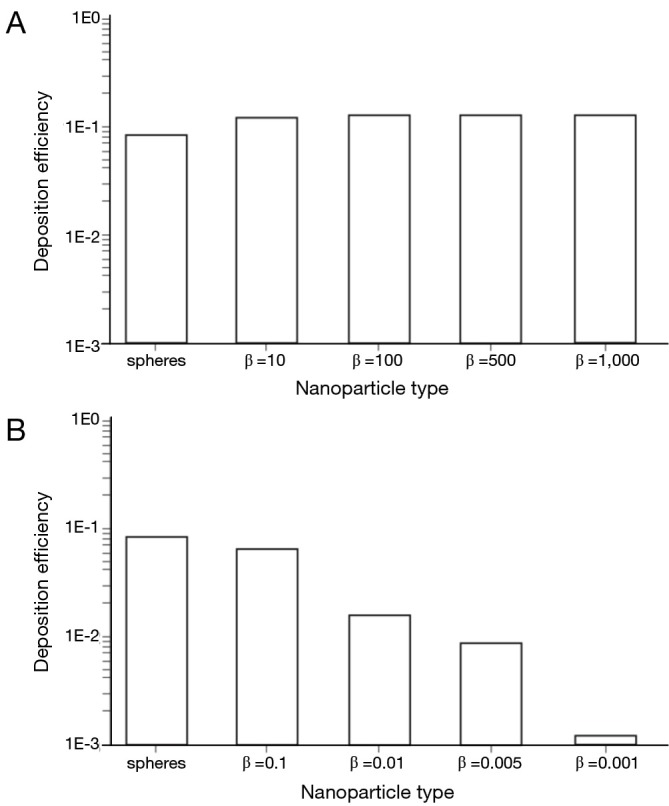
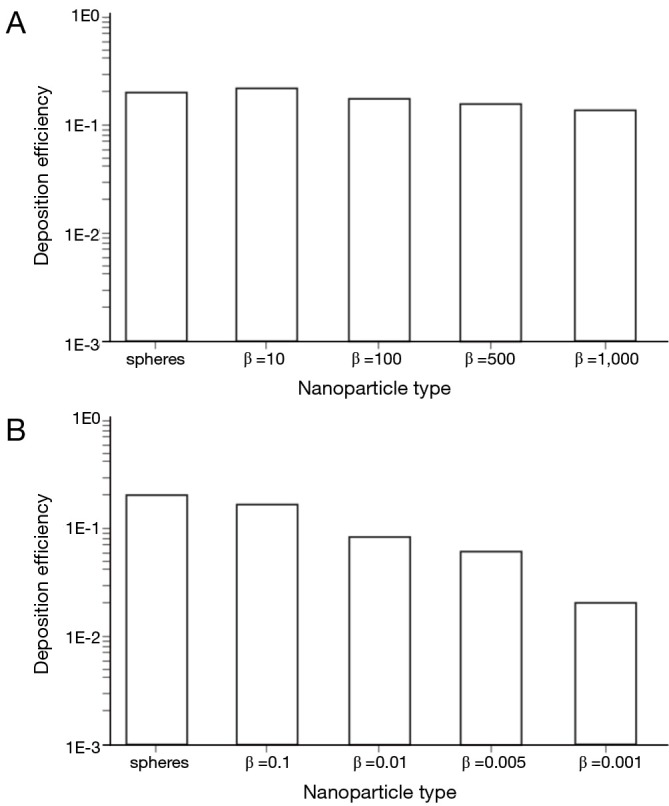
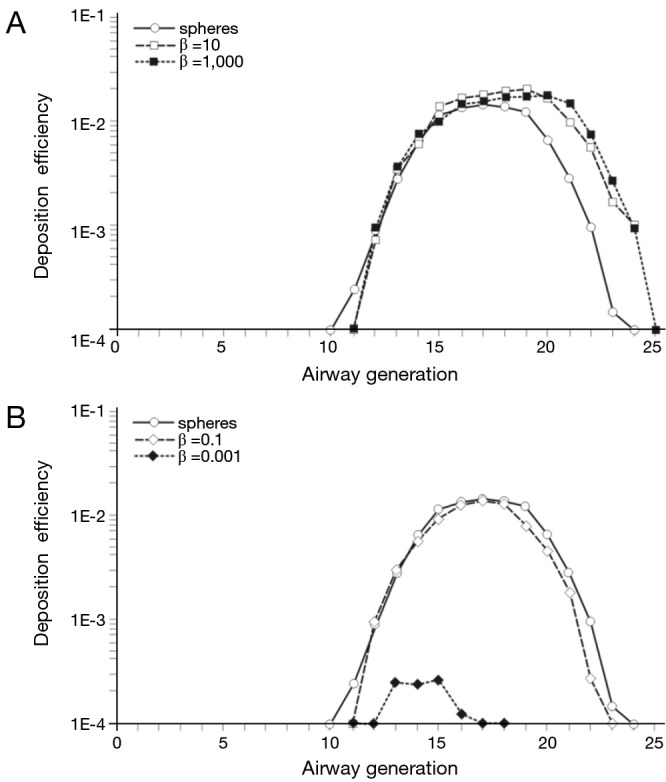
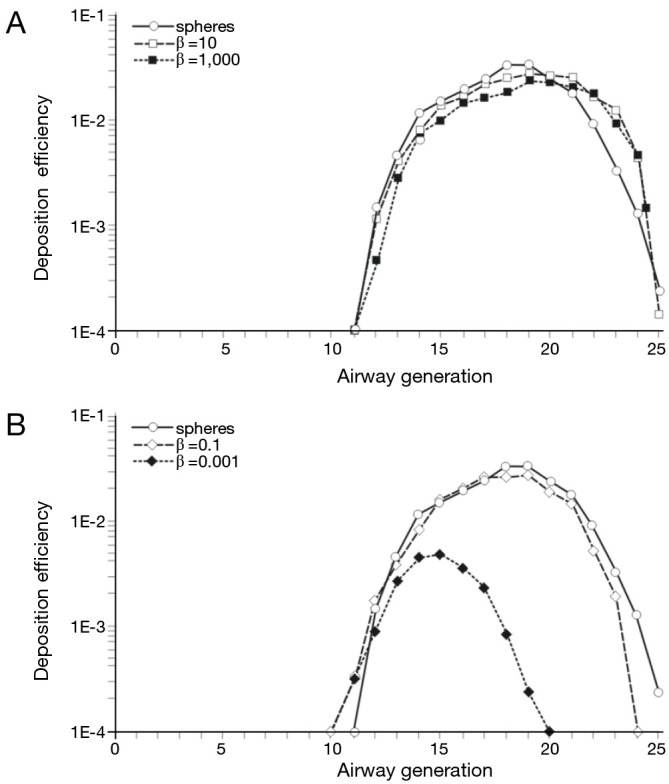
Results: Generally, alveolar deposition of nanoparticles concerned for this study varies between 0.1% and 12.4% during sitting breathing and between 2.0% and 20.1% during heavy-exercise breathing. Prolate particles (e.g., nanotubes) exhibit a significant increase in deposition, when their aspect ratio is enhanced. In contrast, deposition of oblate particles (e.g., nanoplatelets) is remarkably declined with any reduction of the aspect ratio.
Conclusions: The study clearly demonstrates that alveolar deposition of nanoparticles represents a topic certainly being of superior interest for physicists and respiratory physicians in future.
Keywords: Nanoparticles; alveolar region; computer model; deposition; human respiratory tract (HRT); stochastic lung.
Conflict of interest statement
Figures
References
-
- Maynard AD, Aitken RJ, Butz T, et al. Safe handling of nanotechnology. Nature 2006;444:267-9. - PubMed
-
- Donaldson K, Aitken R, Tran L, et al. Carbon nanotubes: a review of their properties in relation to pulmonary toxicology and workplace safety. Toxicol Sci 2006;92:5-22. - PubMed
-
- Högberg SM. Modeling nanofiber transport and deposition in human airways. PhD dissertation, Dept Appl Phys Mech Eng, Tech Univ Lulea, Lulea, Sweden, 2010.
-
- Long CM, Suh HH, Koutrakis P. Characterization of indoor particle sources using continuous mass and size monitors. J Air Waste Manag Assoc 2000;50:1236-50. - PubMed
-
- Sturm R. Theoretical and experimental approaches to the deposition and clearance of ultrafine carcinogens in the human respiratory tract. Thoracic Cancer 2011;2:61-8. - PubMed
LinkOut - more resources
Full Text Sources