


Understanding the Rapid Reduction of Undernutrition in Nepal, 2001-2011
- PMID: 26699135
- PMCID: PMC4690594
- DOI: 10.1371/journal.pone.0145738
Understanding the Rapid Reduction of Undernutrition in Nepal, 2001-2011
Abstract
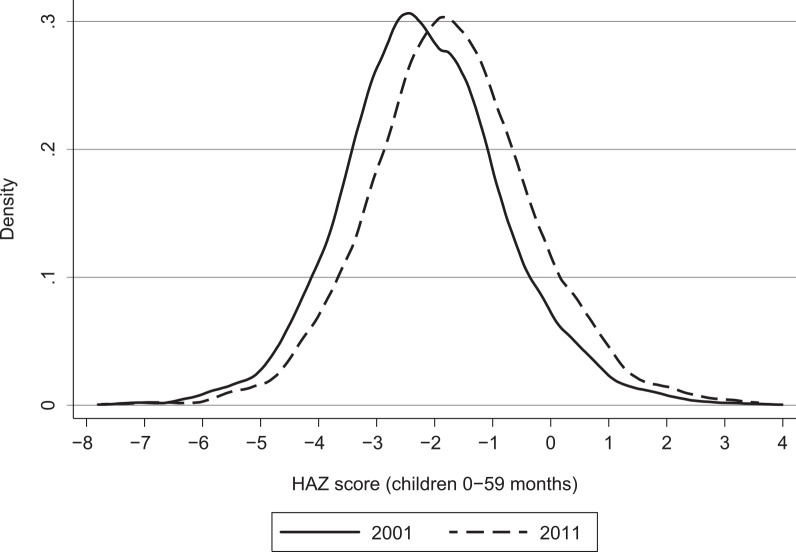
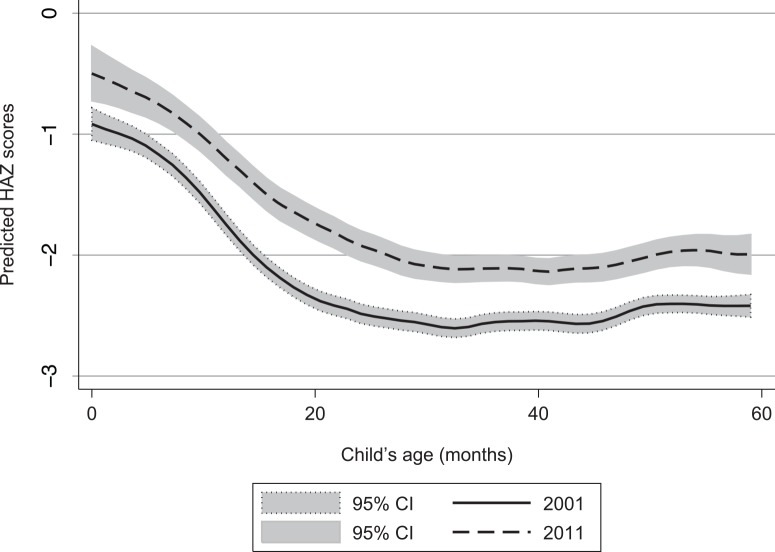
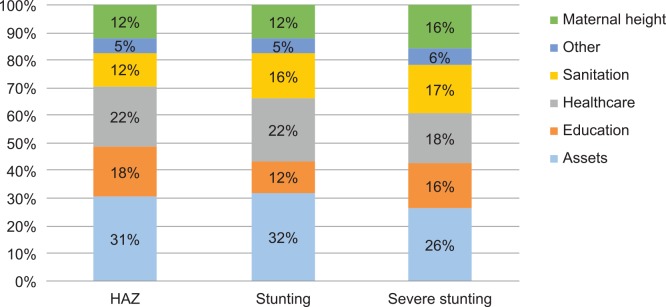
South Asia has long been synonymous with unusually high rates of undernutrition. In the past decade, however, Nepal has arguably achieved the fastest recorded decline in child stunting in the world and has done so in the midst of civil war and post-conflict political instability. Given recent interest in reducing undernutrition-particularly the role of nutrition-sensitive policies-this paper aims to quantitatively understand this surprising success story by analyzing the 2001, 2006, and 2011 rounds of Nepal's Demographic Health Surveys. To do so, we construct models of the intermediate determinants of child and maternal nutritional change and then decompose predicted changes in nutrition outcomes over time. We identify four broad drivers of change: asset accumulation, health and nutrition interventions, maternal educational gains, and improvements in sanitation. Many of these changes were clearly influenced by policy decisions, including increased public investments in health and education and community-led health and sanitation campaigns. Other factors, such as rapid growth in migration-based remittances, are more a reflection of household responses to changing political and economic circumstances.
Conflict of interest statement
Figures
References
-
- Deaton A, Dreze J. Food and Nutrition in India: Facts and Interpretations. Economic and Political Weekly. 2008:44:42–65.
-
- Headey D, Chiu A, Kadiyala S. Agriculture’s Role in the Indian Enigma: Help or Hindrance to the Malnutrition Crisis? Food Security. 2012: 4:87–102.
-
- Jayachandran S, Pande R. Why Are Indian Children Shorter than African Children? Department of Economics Working Paper. Cambridge, MA, US: Harvard University; 2013. http://www.hks.harvard.edu/fs/rpande/papers/Indianchildrenheight.pdf.
-
- Nubé M. The Asian Enigma: Predisposition for Low Adult Body Mass Index among People from South Asian Descent. Staff Working Paper WP-07-01. Amsterdam: Centre for World Food Studies; 2007.
-
- Pande R. Selective Gender Differences in Childhood Nutrition and Immunization in Rural India: The Role of Siblings. Demography. 2003: 40:395–418. - PubMed
Publication types
MeSH terms
LinkOut - more resources
Full Text Sources
Other Literature Sources
Medical
Miscellaneous
