


AHR Function in Lymphocytes: Emerging Concepts
- PMID: 26700314
- PMCID: PMC4707131
- DOI: 10.1016/j.it.2015.11.007
AHR Function in Lymphocytes: Emerging Concepts
Abstract
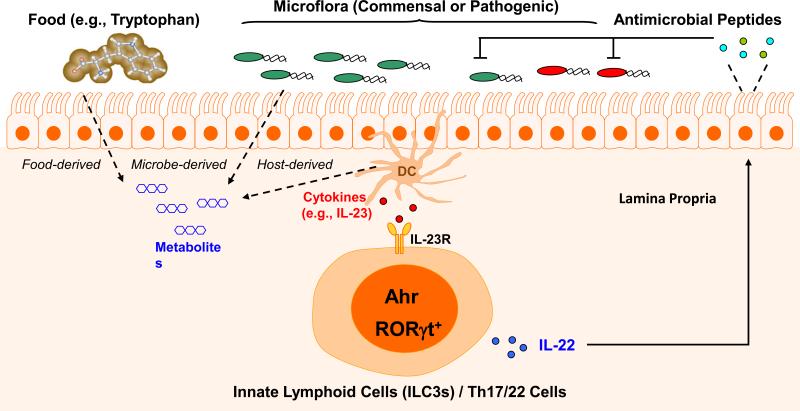
The aryl hydrocarbon receptor (AHR) is an important regulator of the development and function of both innate and adaptive immune cells through roles associated with AHR's ability to respond to cellular and dietary ligands. Recent findings have revealed tissue and context-specific functions for AHR in both homeostasis and in during an immune response. I review these findings here, and integrate them into the current understanding of the mechanisms that regulate AHR transcription and function. I propose a conceptual framework in which AHR function is determined by three factors: the amount of AHR in any given cell, the abundance and potency of AHR ligands within certain tissues, and the tissue microenvironment wherein AHR(+) cells reside. This complexity emphasizes the necessity cell-type specific genetic approaches towards the study of AHR function.
Copyright © 2015 Elsevier Ltd. All rights reserved.
Figures


References
-
- Ema M, Sogawa K, Watanabe N, Chujoh Y, Matsushita N, Gotoh O, Funae Y, Fujii-Kuriyama Y. cDNA cloning and structure of mouse putative Ah receptor. Biochemical and biophysical research communications. 1992;184:246–253. - PubMed
-
- Dolwick KM, Schmidt JV, Carver LA, Swanson HI, Bradfield CA. Cloning and expression of a human Ah receptor cDNA. Molecular pharmacology. 1993;44:911–917. - PubMed
-
- Hankinson O. The aryl hydrocarbon receptor complex. Annual review of pharmacology and toxicology. 1995;35:307–340. - PubMed
Publication types
MeSH terms
Substances
Grants and funding
LinkOut - more resources
Full Text Sources
Other Literature Sources
Molecular Biology Databases
