


Sarcospan Regulates Cardiac Isoproterenol Response and Prevents Duchenne Muscular Dystrophy-Associated Cardiomyopathy
- PMID: 26702077
- PMCID: PMC4845268
- DOI: 10.1161/JAHA.115.002481
Sarcospan Regulates Cardiac Isoproterenol Response and Prevents Duchenne Muscular Dystrophy-Associated Cardiomyopathy
Abstract
Background: Duchenne muscular dystrophy is a fatal cardiac and skeletal muscle disease resulting from mutations in the dystrophin gene. We have previously demonstrated that a dystrophin-associated protein, sarcospan (SSPN), ameliorated Duchenne muscular dystrophy skeletal muscle degeneration by activating compensatory pathways that regulate muscle cell adhesion (laminin-binding) to the extracellular matrix. Conversely, loss of SSPN destabilized skeletal muscle adhesion, hampered muscle regeneration, and reduced force properties. Given the importance of SSPN to skeletal muscle, we investigated the consequences of SSPN ablation in cardiac muscle and determined whether overexpression of SSPN into mdx mice ameliorates cardiac disease symptoms associated with Duchenne muscular dystrophy cardiomyopathy.
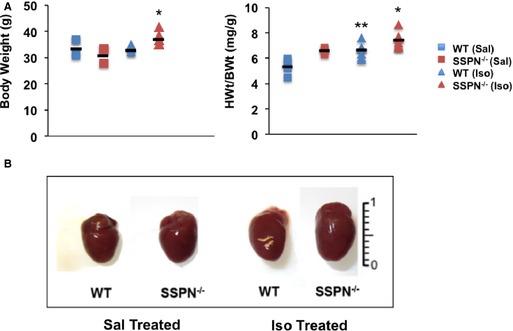
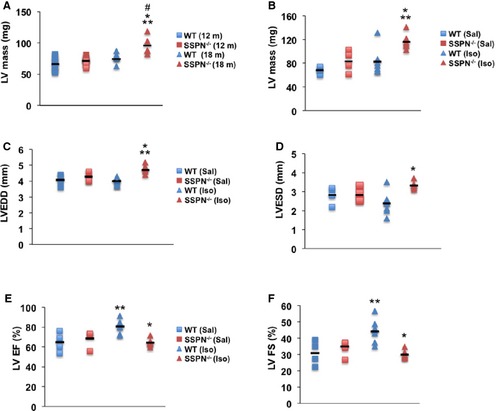
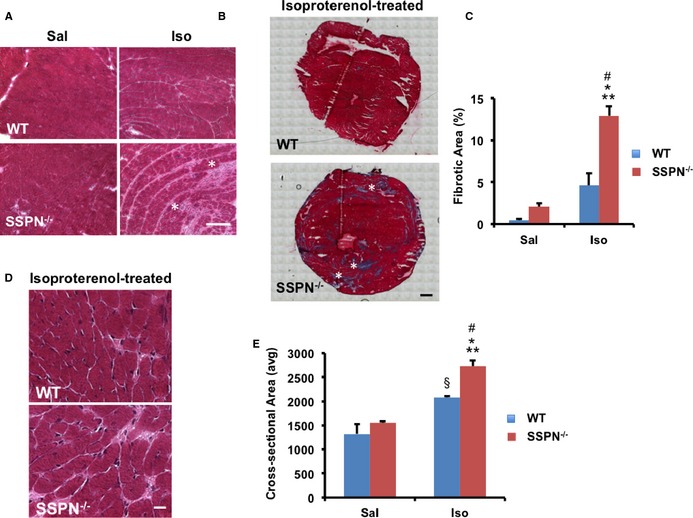
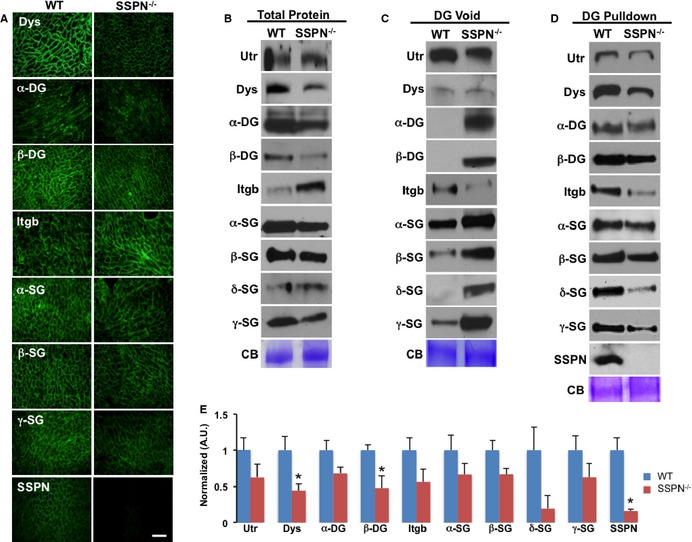
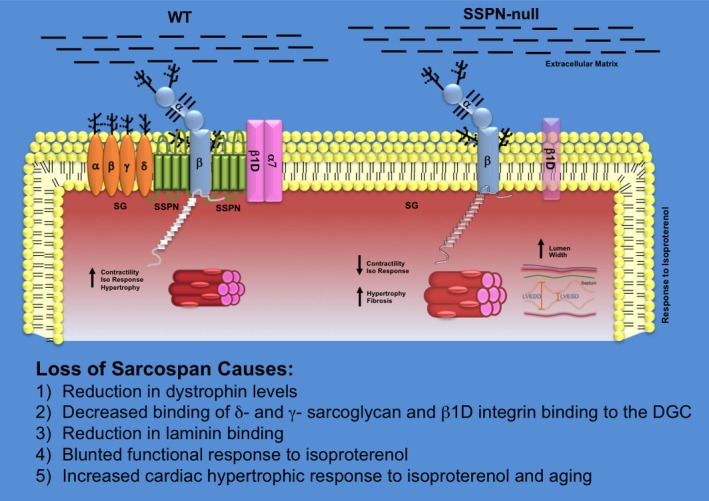
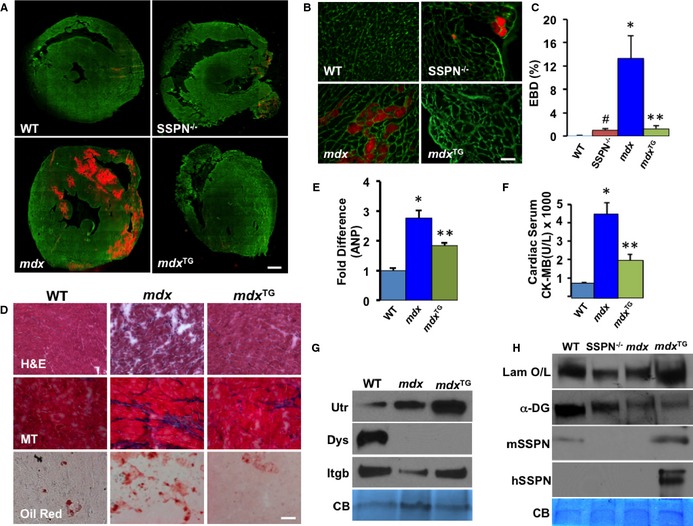
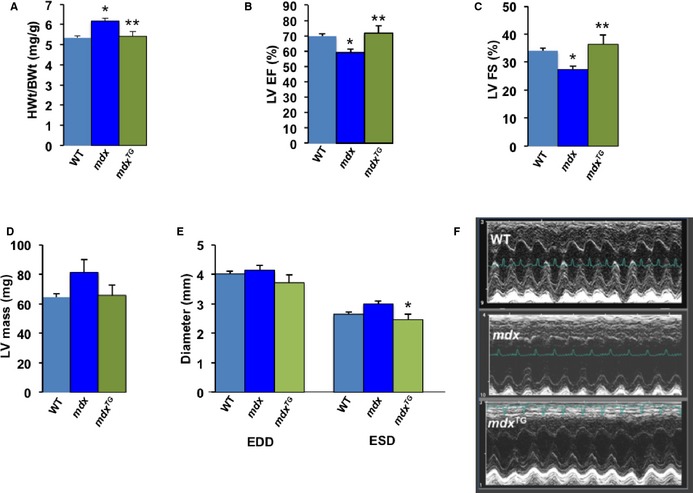
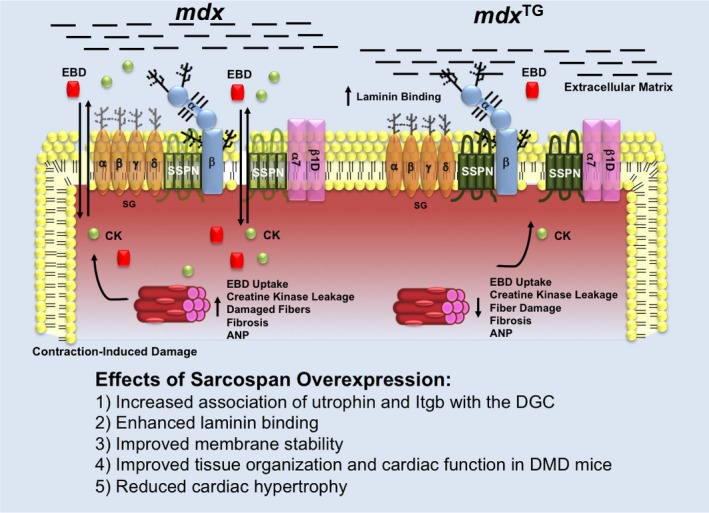
Methods and results: SSPN-null mice exhibited cardiac enlargement, exacerbated cardiomyocyte hypertrophy, and increased fibrosis in response to β-adrenergic challenge (isoproterenol; 0.8 mg/day per 2 weeks). Biochemical analysis of SSPN-null cardiac muscle revealed reduced sarcolemma localization of many proteins with a known role in cardiomyopathy pathogenesis: dystrophin, the sarcoglycans (α-, δ-, and γ-subunits), and β1D integrin. Transgenic overexpression of SSPN in Duchenne muscular dystrophy mice (mdx(TG)) improved cardiomyofiber cell adhesion, sarcolemma integrity, cardiac functional parameters, as well as increased expression of compensatory transmembrane proteins that mediate attachment to the extracellular matrix.
Conclusions: SSPN regulates sarcolemmal expression of laminin-binding complexes that are critical to cardiac muscle function and protects against transient and chronic injury, including inherited cardiomyopathy.
Keywords: Duchenne muscular dystrophy; cardiac hypertrophy; cell adhesion molecules; gene therapy.
© 2015 The Authors. Published on behalf of the American Heart Association, Inc., by Wiley Blackwell.
Figures
Comment in
-
Mending a Broken Heart: The Role of Sarcospan in Duchenne Muscular Dystrophy-Associated Cardiomyopathy.J Am Heart Assoc. 2015 Dec 23;4(12):e002928. doi: 10.1161/JAHA.115.002928. J Am Heart Assoc. 2015. PMID: 26702081 Free PMC article. No abstract available.
References
-
- Hoffman EP, Brown RH, Kunkel LM. Dystrophin: the protein product of the Duchenne muscular dystrophy locus. Cell. 1987;51:919–928. - PubMed
-
- Campbell KP, Kahl SD. Association of dystrophin and an integral membrane glycoprotein. Nature. 1989;338:259–262. - PubMed
-
- Ervasti JM, Ohlendieck K, Kahl SD, Gaver MG, Campbell KP. Deficiency of a glycoprotein component of the dystrophin complex in dystrophic muscle. Nature. 1990;345:315–319. - PubMed
Publication types
MeSH terms
Substances
Grants and funding
LinkOut - more resources
Full Text Sources
Other Literature Sources
Medical
Molecular Biology Databases
Miscellaneous
