. 2016 Jun;16(6):1726-38.
doi: 10.1111/ajt.13688. Epub 2016 Mar 25.

Antibody-Mediated Rejection in Sensitized Nonhuman Primates: Modeling Human Biology

Affiliations

Antibody-Mediated Rejection in Sensitized Nonhuman Primates: Modeling Human Biology

C K Burghuber et al. Am J Transplant. 2016 Jun.

Abstract

We have established a model of sensitization in nonhuman primates and tested two immunosuppressive regimens. Animals underwent fully mismatched skin transplantation, and donor-specific antibody (DSA) response was monitored by flow cross-match. Sensitized animals subsequently underwent kidney transplantation from their skin donor. Immunosuppression included tacrolimus, mycophenolate, and methylprednisolone. Three animals received basiliximab induction; compared with nonsensitized animals, they showed a shorter mean survival time (4.7 ± 3.1 vs. 187 ± 88 days). Six animals were treated with T cell depletion (anti-CD4/CD8 mAbs), which prolonged survival (mean survival time 21.6 ± 19.0 days). All presensitized animals showed antibody-mediated rejection (AMR). In two of three basiliximab-injected animals, cellular rejection (ACR) was prominent. After T cell depletion, three of six monkeys experienced early acute rejection within 8 days with histological evidence of thrombotic microangiopathy and AMR. The remaining three monkeys survived 27-44 days, with mixed AMR and ACR. Most T cell-depleted animals experienced a rebound of DSA that correlated with deteriorating kidney function. We also found an increase in proliferating memory B cells (CD20(+) CD27(+) IgD(-) Ki67(+) ), lymph node follicular helper T cells (ICOS(+) PD-1(hi) CXCR5(+) CD4(+) ), and germinal center (GC) response. Depletion controlled cell-mediated rejection in sensitized nonhuman primates better than basiliximab, yet grafts were rejected with concomitant DSA rise. This model provides an opportunity to test novel desensitization strategies.


Conflict of interest statement

Disclosure

The authors of this manuscript have no conflicts of interest to disclose as described by the American Journal of Transplantation.

Figures
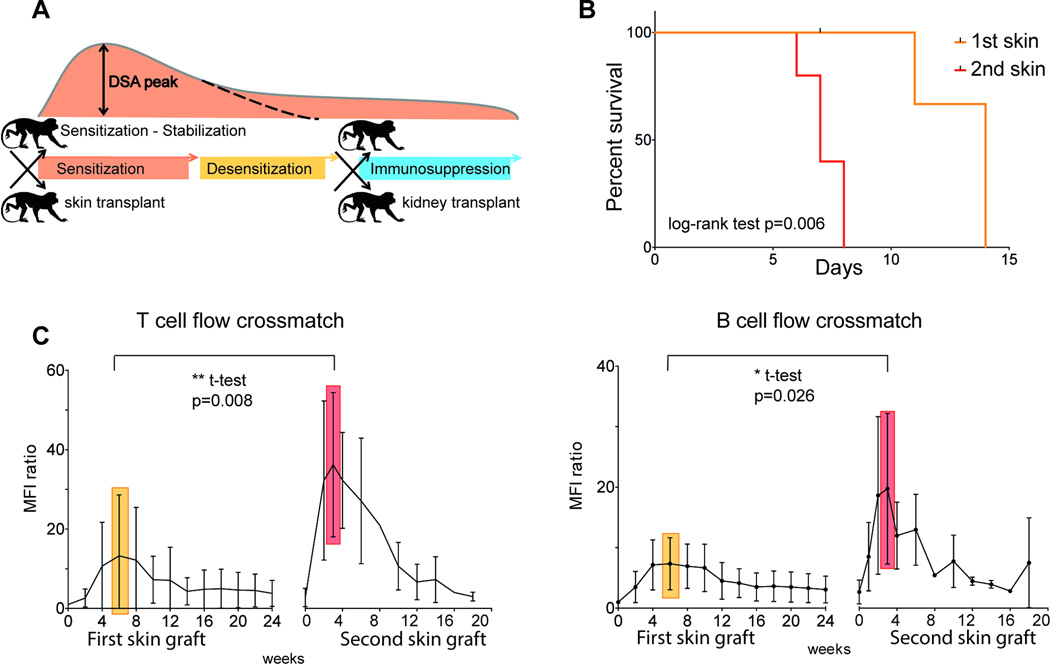
Figure 1
Figure 1. Sensitization by skin transplants and course of DSA
(A) Model scheme: skin transplant for sensitization; planned desensitization after stabilization of DSA level; kidney transplant to prove efficacy of therapy using clinically relevant immunosuppression. B) Survival time of first and second skin grafts (n=5 in each group). C) T cell/B cell FXM of recipient serum with donor T/B cells at serial time points after first (n=11) and second (n=7) skin graft. Results are expressed as MFI ratio to baseline. The mean maximum was reached at week 6 (yellow) and 3 (red) respectively. The mean peak after second skin graft was significantly higher (t-test with Welch correction for unequal variances). DSA, Donor specific antibody; FXM, flow cytometry crossmatch; MFI, mean fluorescence intensity;
Figure 2
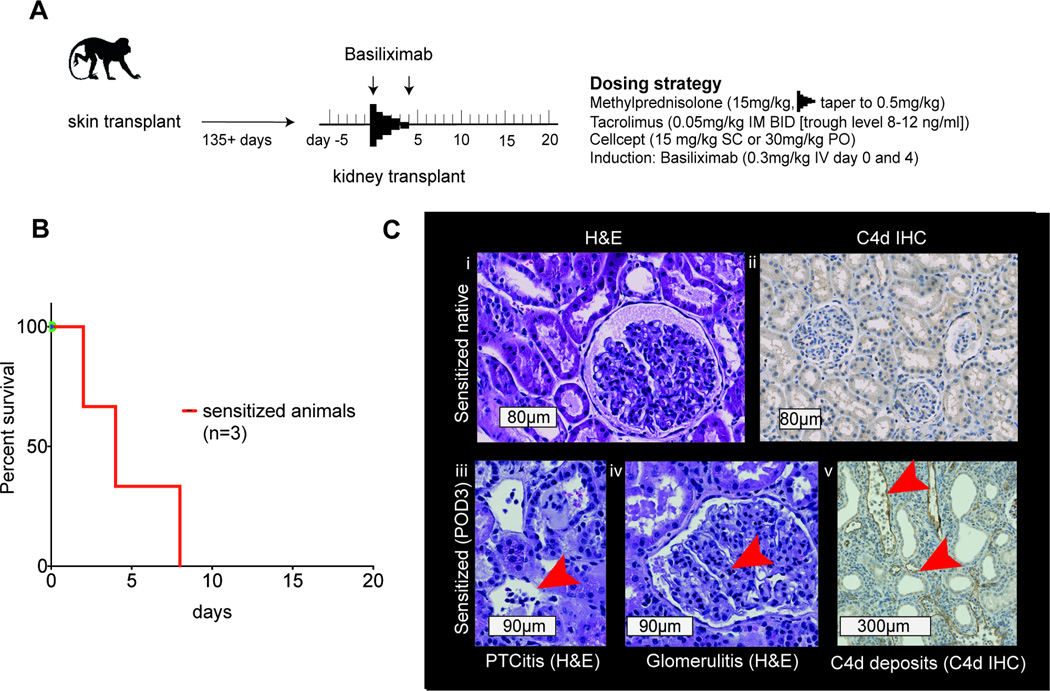
Figure 2. Kidney transplants in sensitized NHP with basiliximab induction - BAS-group
A) Scheme and dosing strategy; B) Survival of sensitized animals after kidney transplant with basiliximab induction; C) (text boxes represent scale bars): i) native kidney from sensitized animal (H&E); ii) C4d negative native kidney from sensitized animal. Features of rejection: iii) peritubular capillaritis (H&E, arrow at inflammatory cells in PTC); iv) glomerulitis (H&E, arrow at inflammatory cell in capillary); v) C4d staining of peritubular capillaries (arrows at staining of C4d deposition in PTC wall). NHP, nonhuman primates; mAb, monoclonal antibody; PTC, peritubular capillary
Figure 3
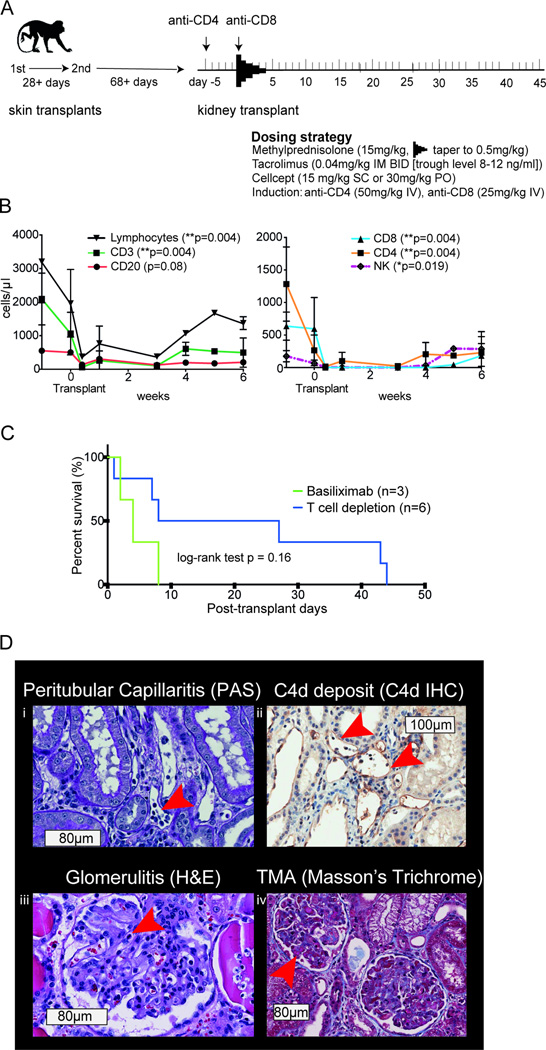
Figure 3. Kidney transplants in sensitized NHP with T cell depleting rhesus anti-CD4 and anti-CD8 mAb induction - DEPL-group
A) Scheme and dosing strategy. B) Numbers of lymphocytes, T, B and NK cells after depletion with anti-CD4 and anti-CD8 antibodies (p-values show differences at time points prior and the first week after depletion; paired t-test). C) Mean survival time after depletion compared to basiliximab induction. D) (boxes represent scale bars): Histologic phenotype after rejection: i) peritubular capillaritis (PAS, arrow at inflammatory cells in PTC); ii) C4d staining of peritubular capillaries (arrows at staining of C4d deposition in PTC wall); iii) glomerulitis (H&E, arrow at inflammatory cell in capillary); iv) thrombotic microangiopathy [TMA] (Masson’s Trichrome, arrow at fibrin thrombi). NHP, nonhuman primates; mAb, monoclonal antibody; PTC, peritubular capillary
Figure 4
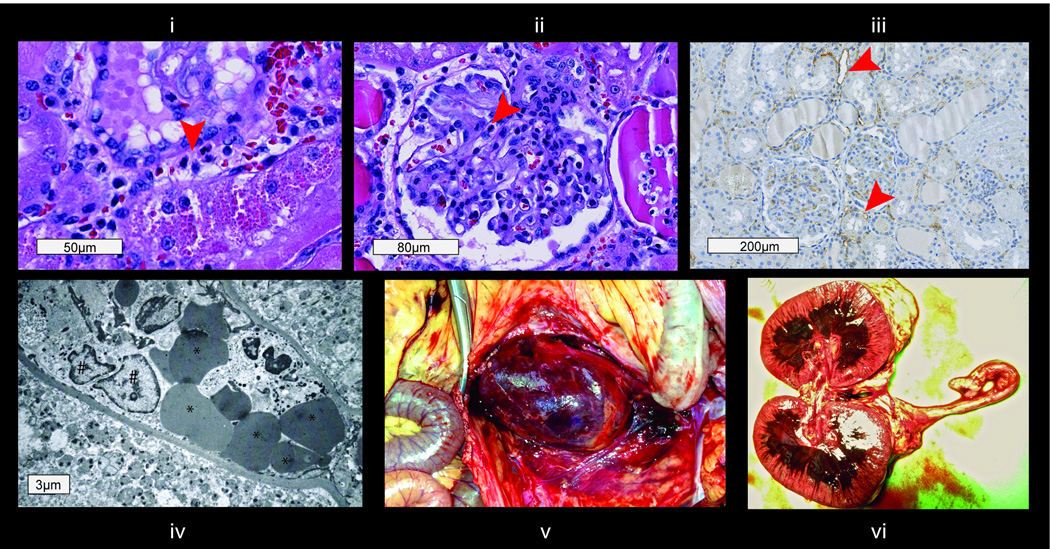
Figure 4. Phenotype after hyperacute rejection (boxes represent scale bars)
i) Peritubular capillaritis (H&E, arrow at inflammatory cells in PTC); ii) glomerulitis (H&E, arrow at inflammatory cell in capillary); iii) C4d staining of peritubular capillaries (arrows at staining of C4d deposition in PTC wall); iv) electron microscopy image with inflammatory cells (#), erythrocytes (*) and detritus in the peritubular space; v) hemorrhagic graft around 22 hours after perfusion. ptc, peritubular capillary inflammation (Banff score);
Figure 5
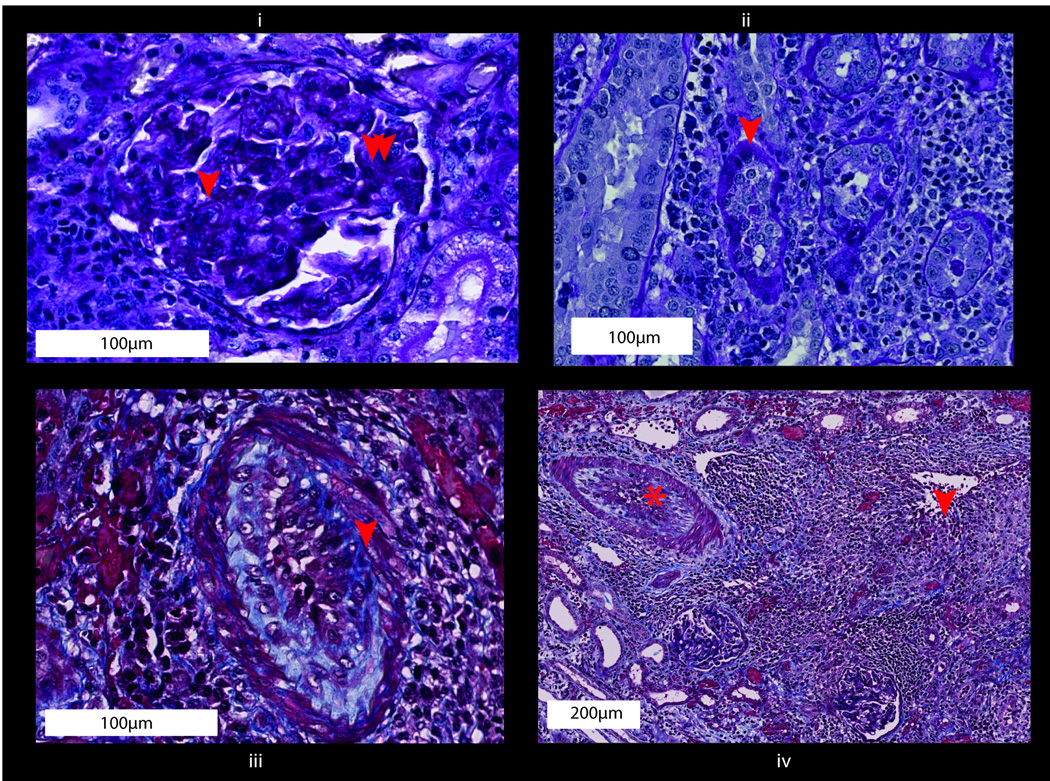
Figure 5. Histological features in T cell depleted (DEPL-group) intermediate rejectors compatible with chronic rejection as established by Banff score (boxes represent scale bars)
(i) Glomerular basement membrane duplication is compatible with cg1 glomerulopathy (arrow); Mesangial expansion was present in some glomeruli, considered mm1 for purposes of Banff scoring (double arrow) (PAS). (ii) Focal tubular atrophy was present, compatible with a Banff ct1 score (PAS). (iii) Arteritis is superimposed upon arterial intimal thickening leading to at least moderate stenosis of the arterial lumen, considered cv2 for purposes of Banff scoring (Trichrome). (iv) Areas of interstitial fibrosis/scarring are present, considered Banff ci1 overall (arrow), accompanied by admixed tubular atrophy and adjacent arteritis (*) (Trichrome). cg, allograft glomerulopathy (Banff score); mm, mesangial matrix increase (Banff score); cv, vascular fibrous intimal thickening (Banff score); ci, interstitial fibrosis (Banff score).
Figure 6
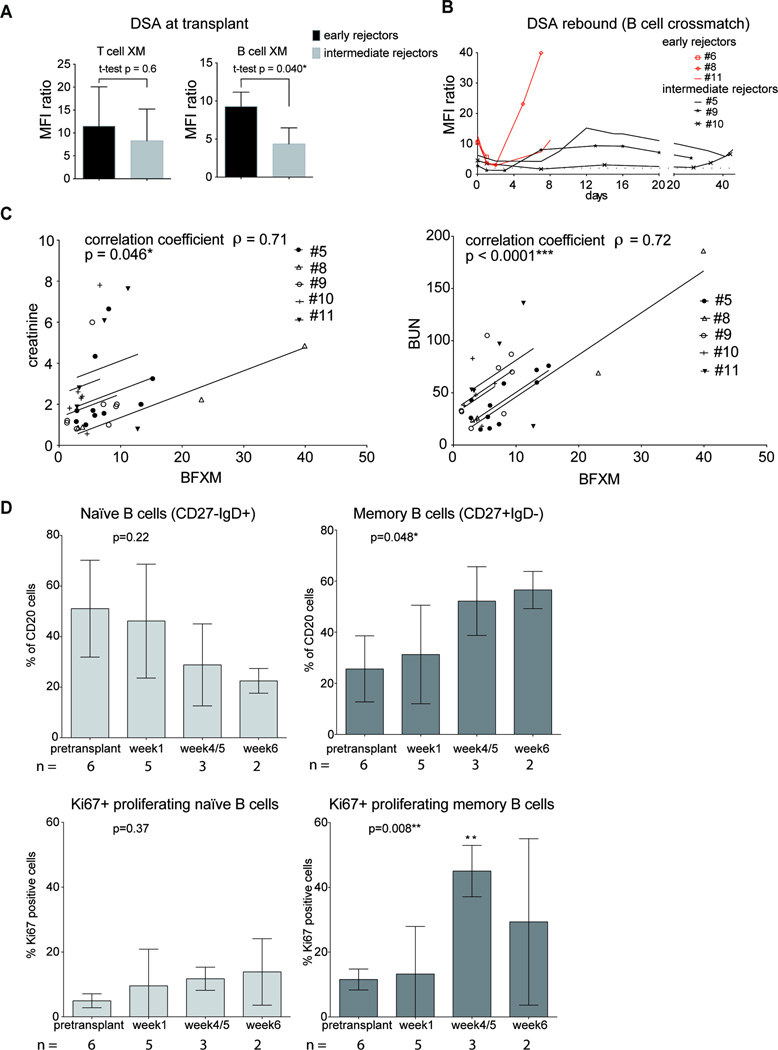
Figure 6. Posttransplant DSA, correlation with kidney function and memory B cells in sensitized NHP with T cell depleting induction - DEPL-group (for gating strategy see Supplemental figure 3)
(A) DSA level at transplant, early (n=3)versus intermediate (n=3) rejectors: early rejectors were found to have higher DSA at transplant than intermediate rejectors in B cell flow crossmatch (BFXM), no significant difference in T cell flow crossmatch (TFXM). B) DSA course over posttransplant period, curve ends at sacrifice; early rejectors in red: DSA rebound was common within days after transplantation, early rejectors failed at the first peak. C) Correlation of BFXM with creatinine and BUN readings (linear model; BFXM vs. serum creatinine and BUN respectively: parallel lines fitted for each subject): increase/decrease in DSA measured by BFXM were well correlated with increases/decreases in serum creatinine and BUN. D) Changes in proportions of naïve (CD20+CD27IgD+) and memory (CD20+CD27+IgD) B cell subtypes and Ki67 marker expression in these subtypes posttransplant (one-way ANOVA with Dunnett’s test; * significance in Dunnett’s test). Memory B cells increased at the cost of naïve B cells posttransplant, a maximum in proliferation by Ki67-expression was found at time point week 4/5. N, number of monkeys available for analysis; DSA, Donor specific antibody; NHP, nonhuman primates; BUN, blood urea nitrogen.
Figure 7
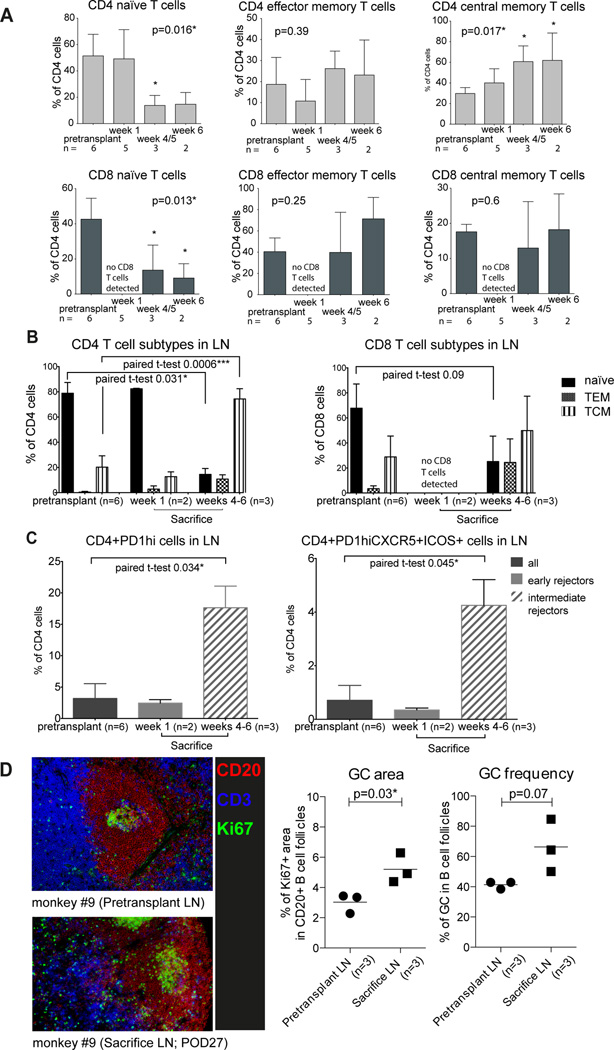
Figure 7. T cell subtypes and T follicular helper cells in sensitized NHP with T cell depleting induction - DEPL-group (for gating strategy see Figure S3)
(A) Reconstitution of T cell repertoire in peripheral blood after T cell depletion: shift from naïve cells to memory cell subtypes (one-way ANOVA with Dunnett’s test; *significance in Dunnett’s test; week 1 was excluded in CD8 analysis due to lack of cells). (B) T cell subtypes in lymph nodes pretransplant and at sacrifice: reconstitution favored memory cell subtypes at 4–6 weeks. (C) Comparison of CD4+PD1high cells and CD4+PD1highCXCR5+ICOS+ cells between pretransplant and sacrifice time points in lymph nodes; week 1: no change in early rejectors, week 4–6: increase in intermediate rejectors. (D) Germinal center staining: in B cell follicles germinal center area and frequency increased at sacrifice compared to the pretransplant time point (t-test). N, number of monkeys available for analysis; NHP, non-human primates.

References

    1. Matas AJ, Smith JM, Skeans MA, Thompson B, Gustafson SK, Schnitzler MA, et al. OPTN/SRTR 2012 Annual Data Report: Kidney. Am J Transplant. 2013;14(S1):1–44. - PubMed
    1. Eurotransplant International Foundation; 2014. May 17, ANNUAL REPORT 2013. http://www.eurotransplant.org: Report No.
    1. Vo AA, Sinha A, Haas M, Choi J, Mirocha J, Kahwaji J, et al. Factors Predicting Risk for Antibody-mediated Rejection and Graft Loss in Highly Human Leukocyte Antigen Sensitized Patients Transplanted After Desensitization. Transplantation. 2015;99(7):1423–1430. - PubMed
    1. Cecka JM, Kucheryavaya AY, Reinsmoen NL, Leffell MS. Calculated PRA: initial results show benefits for sensitized patients and a reduction in positive crossmatches. Am J Transplant. 2011;11(4):719–724. - PubMed
    1. Israni AK, Salkowski N, Gustafson S, Snyder JJ, Friedewald JJ, Formica RN, et al. New national allocation policy for deceased donor kidneys in the United States and possible effect on patient outcomes. J Am Soc Nephrol. 2014;25(8):1842–1848. - PMC - PubMed

Publication types