


Adherence to acne treatment guidelines in the military environment - a descriptive, serial cross-sectional study
- PMID: 26705477
- PMCID: PMC4690295
- DOI: 10.1186/s40779-015-0063-0
Adherence to acne treatment guidelines in the military environment - a descriptive, serial cross-sectional study
Abstract
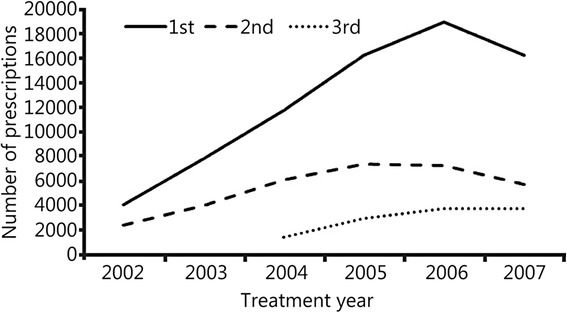
Background: Acne vulgaris, a common skin disease, affects up to 80 % of the population. Moderate to severe acne requires treatment with a combination of topical and oral drugs such as antibiotics, hormones and retinoids. Retinoids have many contraindications and adverse effects requiring close monitoring. The study's objectives were to describe prescribing trends in acne medication over time in a military setting, and assess physician adherence to guidelines for acne treatment, including drug precautions, clinical monitoring, and treatment progression.
Methods: We conducted a descriptive, serial cross-sectional study of acne drugs prescribed in the Israel Defense Forces (IDF) in the years 2002-2007, analyzing the classes of drugs prescribed and patient characteristics. In addition, the clinical quality of the medical encounter was assessed by examining physician adherence to IDF guidelines.
Results: Between 2002 and 2007, 64,281 patients were treated for acne. Treatment courses generally persisted for 1-2 months. Over 70 % of female patients receiving oral retinoids were not concomitantly receiving oral contraceptives.
Conclusion: This study provides a unique perspective of acne treatment in a military setting, overall displaying good adherence to general guidelines. The common prescription of oral retinoids to young females without concomitant contraception is alarming.
Keywords: Acne; Guidelines; Medications; Military; Treatment.
Figures
References
-
- Beers MH, Fletcher AJ, Jones TV, Porter R, Berkwits M, Kaplan JL. The merck manual of medical information - home edition. New Jersey: Merck Research Laboratories; 2003.
LinkOut - more resources
Full Text Sources
Other Literature Sources
