


Clinical significance of OCT4 and SOX2 protein expression in cervical cancer
- PMID: 26706028
- PMCID: PMC4691290
- DOI: 10.1186/s12885-015-2015-1
Clinical significance of OCT4 and SOX2 protein expression in cervical cancer
Abstract
Background: Cancer stem cell markers have become a major research focus because of their relationship with radiation or chemotherapy resistance in cancer therapy. Cancer stem cell markers including OCT4 and SOX2 have been found in various solid tumors. Here, we investigate the expression and clinical significance of OCT4 and SOX2 in cervical cancer.
Methods: To define the clinical significance of OCT4 and SOX2 expression, we performed immunohistochemistry for OCT4 and SOX2 on 305 normal cervical epithelium samples, 289 cervical intraepithelial neoplasia samples, and 161 cervical cancer cases and compared the data with clinicopathologic factors, including survival rates of patients with cervical cancer.
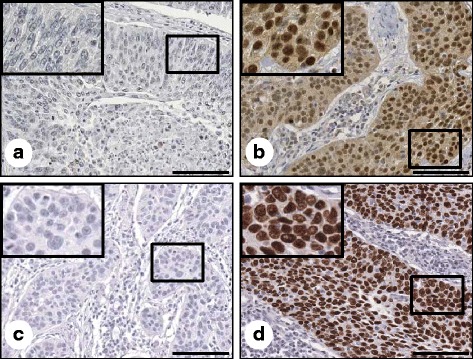
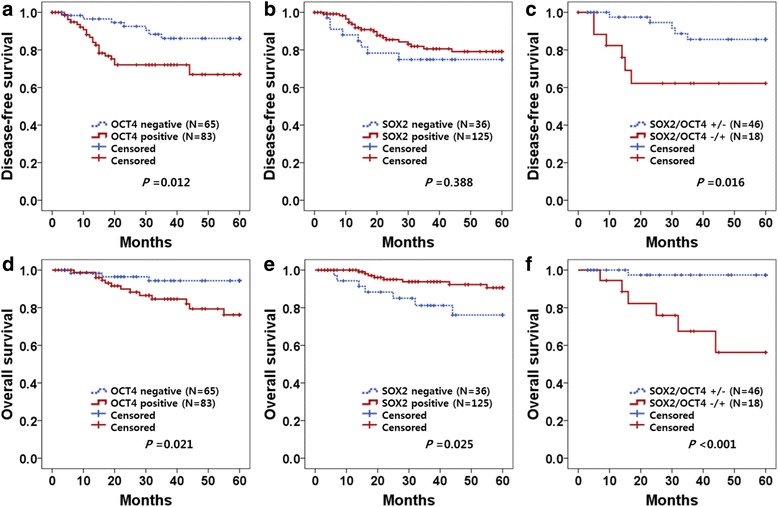
Results: OCT4 and SOX2 expression was higher in cervical cancer than normal cervix (both p < 0.001). OCT4 overexpression was associated with lymphovascular space invasion (p = 0.045), whereas loss of SOX2 expression was correlated with large tumor size (p = 0.015). Notably, OCT4 and SOX2 were significantly co-expressed in premalignant cervical lesions, but not in malignant cervical tumor. OCT4 overexpression showed worse 5-year disease-free and overall survival rates (p = 0.012 and p = 0.021, respectively) when compared to the low-expression group, while SOX2 expression showed favorable overall survival (p = 0.025). Cox regression analysis showed that OCT4 was an independent risk factor (hazard ratio = 11.23, 95 % CI, 1.31 - 95.6; p = 0.027) for overall survival while SOX2 overexpression showed low hazard ratio for death (hazard ratio = 0.220, 95 % CI, 0.06-0.72; p = 0.013).
Conclusions: These results suggest that OCT4 overexpression and loss of SOX2 expression are strongly associated with poor prognosis in patients with cervical cancer.
Figures
References
-
- Feng D, Peng C, Li C, Zhou Y, Li M, Ling B, et al. Identification and characterization of cancer stem-like cells from primary carcinoma of the cervix uteri. Oncol Rep. 2009;22:1129–34. - PubMed
Publication types
MeSH terms
Substances
Grants and funding
LinkOut - more resources
Full Text Sources
Other Literature Sources
Medical
