. 2015 Dec 28;10(12):e0145850.
doi: 10.1371/journal.pone.0145850. eCollection 2015.

Catabolism of Branched Chain Amino Acids Contributes Significantly to Synthesis of Odd-Chain and Even-Chain Fatty Acids in 3T3-L1 Adipocytes

Affiliations

Catabolism of Branched Chain Amino Acids Contributes Significantly to Synthesis of Odd-Chain and Even-Chain Fatty Acids in 3T3-L1 Adipocytes

Scott B Crown et al. PLoS One. .

Abstract

The branched chain amino acids (BCAA) valine, leucine and isoleucine have been implicated in a number of diseases including obesity, insulin resistance, and type 2 diabetes mellitus, although the mechanisms are still poorly understood. Adipose tissue plays an important role in BCAA homeostasis by actively metabolizing circulating BCAA. In this work, we have investigated the link between BCAA catabolism and fatty acid synthesis in 3T3-L1 adipocytes using parallel 13C-labeling experiments, mass spectrometry and model-based isotopomer data analysis. Specifically, we performed parallel labeling experiments with four fully 13C-labeled tracers, [U-13C]valine, [U-13C]leucine, [U-13C]isoleucine and [U-13C]glutamine. We measured mass isotopomer distributions of fatty acids and intracellular metabolites by GC-MS and analyzed the data using the isotopomer spectral analysis (ISA) framework. We demonstrate that 3T3-L1 adipocytes accumulate significant amounts of even chain length (C14:0, C16:0 and C18:0) and odd chain length (C15:0 and C17:0) fatty acids under standard cell culture conditions. Using a novel GC-MS method, we demonstrate that propionyl-CoA acts as the primer on fatty acid synthase for the production of odd chain fatty acids. BCAA contributed significantly to the production of all fatty acids. Leucine and isoleucine contributed at least 25% to lipogenic acetyl-CoA pool, and valine and isoleucine contributed 100% to lipogenic propionyl-CoA pool. Our results further suggest that low activity of methylmalonyl-CoA mutase and mass action kinetics of propionyl-CoA on fatty acid synthase result in high rates of odd chain fatty acid synthesis in 3T3-L1 cells. Overall, this work provides important new insights into the connection between BCAA catabolism and fatty acid synthesis in adipocytes and underscores the high capacity of adipocytes for metabolizing BCAA.


Conflict of interest statement

Competing Interests: The authors have declared that no competing interests exist.

Figures

Fig 1
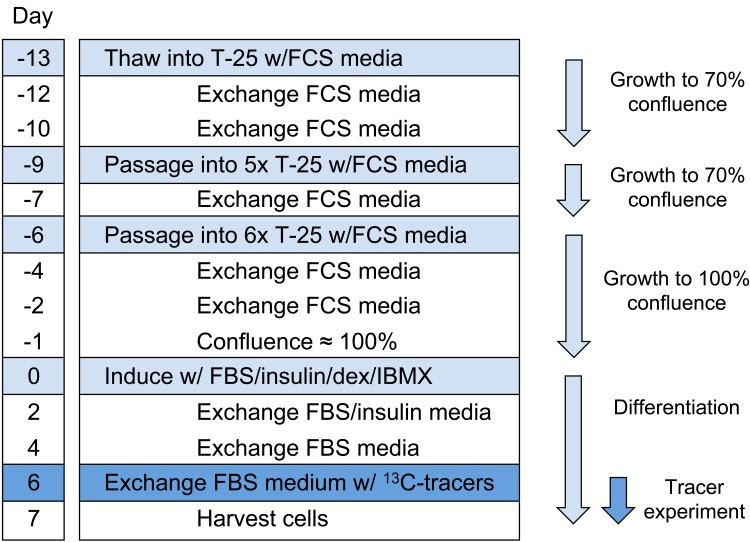
Fig 1. Timeline for 13C-tracer experiments with 3T3-L1 adipocytes.
Fig 2
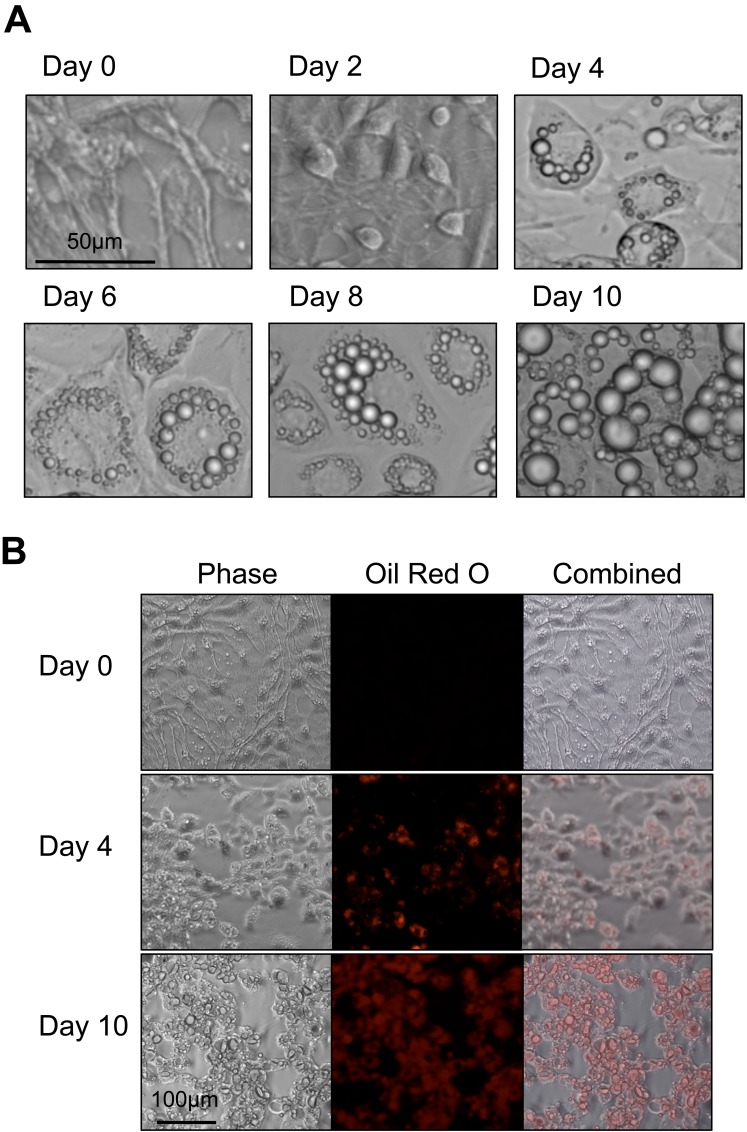
Fig 2. 3T3-L1 adipocyte differentiation.
(A) Phase contrast images of 3T3-L1 cells from induction (day 0) to ten days post-induction. Cells initially display a fibroblast phenotype. Over the course of differentiation, cell morphology changes and cells accumulate lipid droplets internally. (B) Triglyceride staining of 3T3-L1 cells with Oil Red O. Initially, the fibroblast phenotype displays negligible staining. As the adipocytes mature, the amount of staining increases until almost the entire cell volume is stained red.
Fig 3
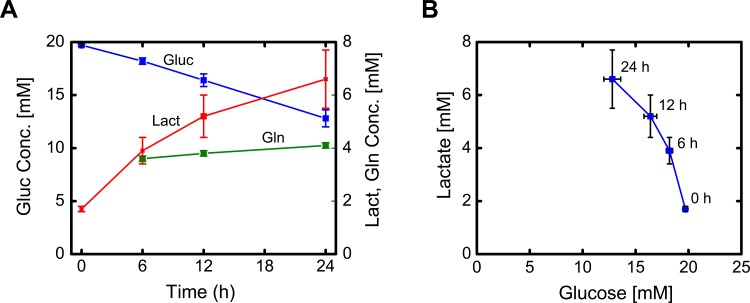
Fig 3. (A) Glucose, lactate, and glutamine concentration profiles over the course of the tracer experiment between days 6 and 7 (mean ± stdev; n = 4 biological replicates). (B) Profile of lactate concentration versus glucose concentration.
The yield of lactate on glucose decreased during the experiment as indicated by a change in the slope.
Fig 4
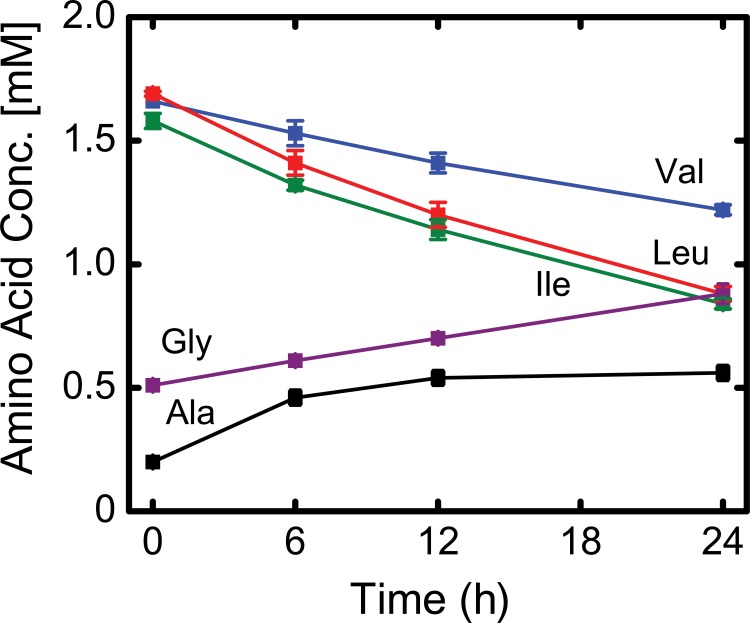
Fig 4. Amino acid concentration profiles over the course of the tracer experiment between days 6 and 7 (mean ± stdev; n = 4 biological replicates).
Valine, leucine and isoleucine were consumed at a high rate, while glycine and alanine were secreted by the cells.
Fig 5
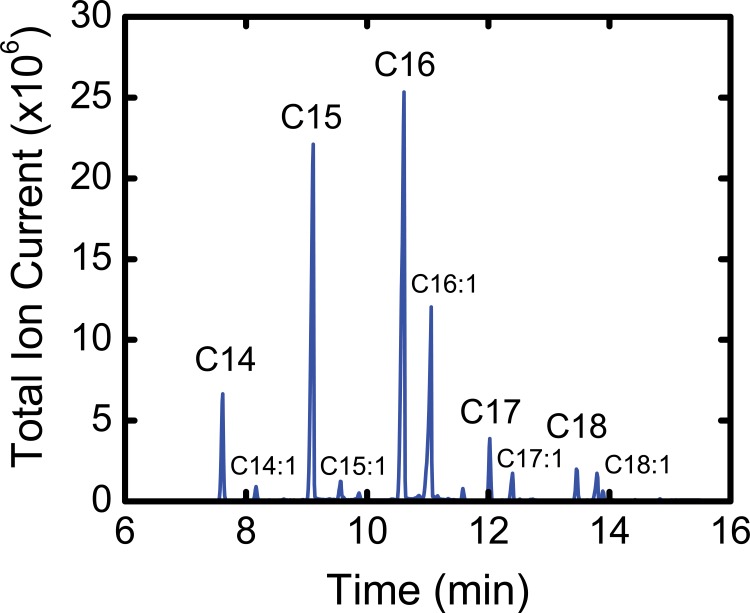
Fig 5. Total ion chromatogram from GC-MS analysis of fatty acid methyl esters (FAMEs).
Fatty acids were extracted from differentiated 3T3-L1 adipocytes. Selected ion recording of molecular ions was conducted for GC-MS analysis.
Fig 6
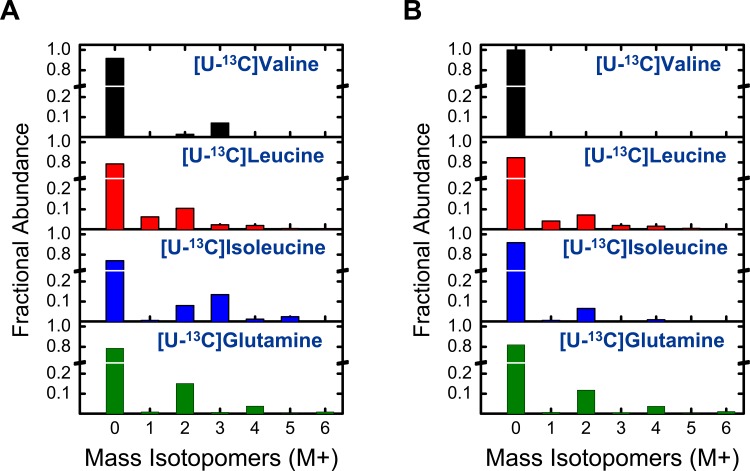
Fig 6. Mass isotopomer distributions of (A) methyl pentadecanoate (C15:0) and (B) methyl palmitate (C16:0) for four parallel labeling experiments with [U-13C]valine, [U-13C]leucine, [U-13C]isoleucine and [U-13C]glutamine tracers.
Fig 7
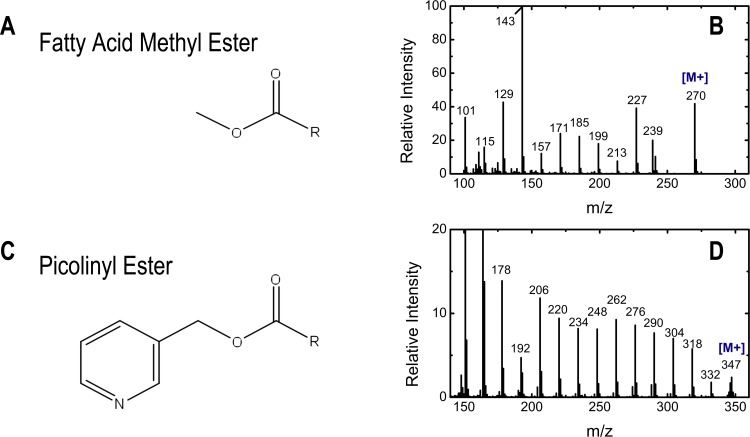
Fig 7. GC-MS analysis of fatty acid picolinyl ester derivatives.
(A) Chemical structure of fatty acid methyl ester derivatives. (B) Mass spectrum of palmitic acid (C16:0) methyl ester derivative. Intermediate mass fragments cannot be used for positional labeling information as they are not unique fragments. (C) Chemical structure of fatty acid picolinyl ester derivatives. (D) Mass spectrum of palmitic acid (C16:0) picolinyl ester derivative. The dominant fragments in the spectrum are separated by 14 amu corresponding to a unique loss of consecutive CH2 groups.
Fig 8
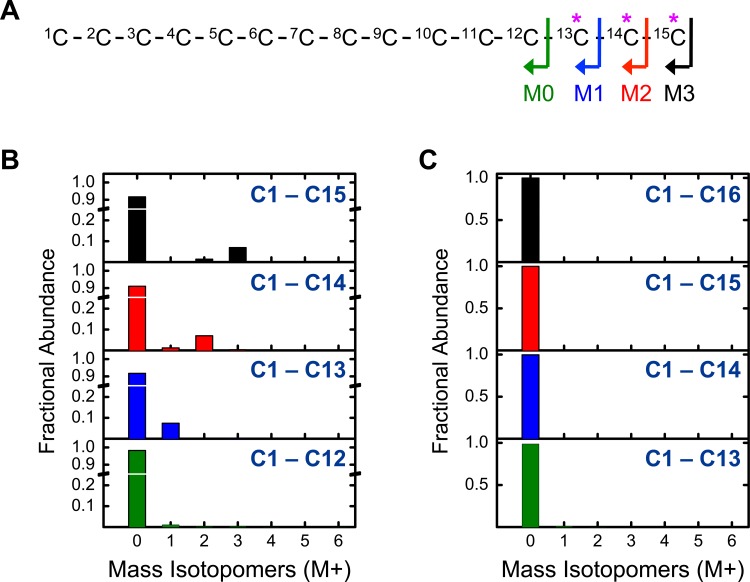
Fig 8. (A) Fragments of pentadecanoatic acid (C15:0) measured by GC-MS. An asterisk (*) indicates the expected location of 13C-labeled carbon atoms from [U-13C]valine. (B) Mass isotopomer distributions for four fragments of C15:0 retaining different parts of the fatty acid carbon backbone (from [U-13C]valine experiment). (C) Mass isotopomer distributions measured for four fragments of C16:0 from [U-13C]valine experiment.
Fig 9
Fig 9. Isotopomer spectral analysis (ISA) results.
(A) Estimated D(AcCoA)-values, fractional contributions to lipogenic acetyl-CoA precursor pool. (B) Estimated D(PropCoA)-values, fractional contributions to lipogenic propionyl-CoA precursor pool. (C) Estimated g(24h)-values, fractional new synthesis of each fatty acid during the 24 hr tracer experiment between days 6 and 7. (D & E) Estimated mass isotopomer labeling (M+1, M+2 and M+3) of AcCoA and PropCoA precursor pools from the various 13C-tracers used in this study.
Fig 10
Fig 10. Pathways for branched chain amino acid catabolism.
Valine degradation produces one propionyl-CoA, isoleucine catabolism produces one propionyl-CoA and one acetyl-CoA, and leucine catabolism produces three acetyl-CoA. Colors indicate the carbons which arise in propionyl-CoA (blue), acetyl-CoA (red), and acetoacetate (green).

References

    1. Layman DK. The role of leucine in weight loss diets and glucose homeostasis. J Nutr. 2003; 133:261S–267S. - PubMed
    1. Wahren J, Felig P, Hagenfeldt L. Effect of protein ingestion on splanchnic and leg metabolism in normal man and in patients with diabetes mellitus. J Clin Invest. 1976; 57:987–999. - PMC - PubMed
    1. Suryawan A, Hawes JW, Harris RA, Shimomura Y, Jenkins AE, Hutson SM. A molecular model of human branched-chain amino acid metabolism. Am J Clin Nutr. 1998; 68:72–81. - PubMed
    1. Cota D, Proulx K, Smith KA, Kozma SC, Thomas G, Woods SC, et al. Hypothalamic mTOR signaling regulates food intake. Science. 2006; 312:927–930. - PubMed
    1. Hay N, Sonenberg N. Upstream and downstream of mTOR. Genes Dev. 2004; 18:1926–1945. - PubMed

Publication types

LinkOut - more resources