


The evolution of anticoagulant therapy
- PMID: 26710352
- PMCID: PMC4781787
- DOI: 10.2450/2015.0096-15
The evolution of anticoagulant therapy
Abstract
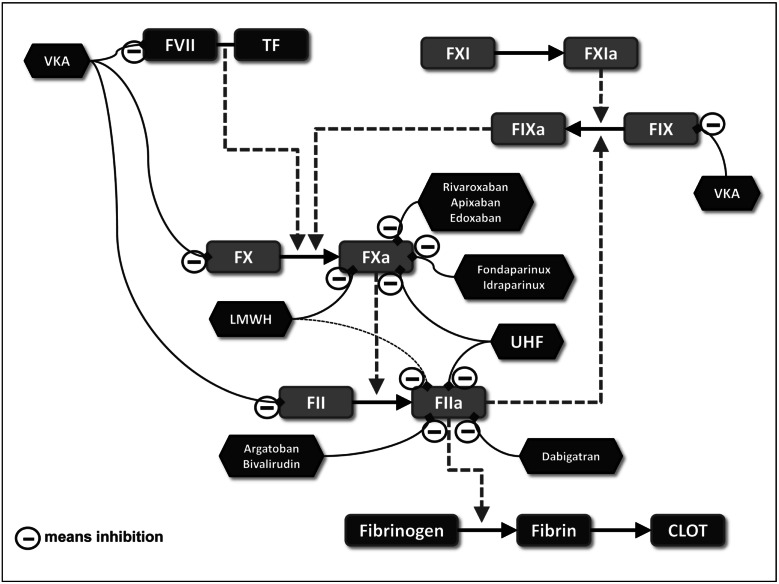
Arterial and venous thromboembolism are leading causes of morbidity and mortality around the world. For almost 70 years, heparins (unfractionated heparin and low molecular weight heparins) and vitamin K antagonists have been the leading therapeutic medical options for the treatment and prevention of thromboembolic disorders. Nevertheless, the many limitations of these traditional anticoagulants have fuelled the search for novel agents over the past 15 years, and a new class of oral anticoagulants that specifically target activated factor X and thrombin has been developed and is now commercially available. In this narrative review, the evolution of anticoagulant therapy is summarised, with a focus on newer oral anticoagulants.
Figures
References
-
- Mannucci PM, Franchini M. Old and new anticoagulant drugs. Ann Med. 2011;43:116–23. - PubMed
-
- Lippi G, Franchini M, Targher G. Arterial thrombus formation in cardiovascular disease. Nat Rev Cardiol. 2011;8:502–12. - PubMed
-
- Lippi G, Franchini M. Pathogenesis of venous thromboembolism: when the cup runneth over. Semin Thromb Hemost. 2008;34:747–61. - PubMed
-
- Eikelboom JW, Weitz JI. Update on antithrombotic therapy. New anticoagulants. Circulation. 2010;121:1523–32. - PubMed
-
- Hirsh J. Heparin. N Engl J Med. 1991;324:1565–74. - PubMed
Publication types
MeSH terms
Substances
LinkOut - more resources
Full Text Sources
Other Literature Sources
Medical
Miscellaneous
