


Differential Cytotoxicity of Acetaminophen in Mouse Macrophage J774.2 and Human Hepatoma HepG2 Cells: Protection by Diallyl Sulfide
- PMID: 26714183
- PMCID: PMC4694617
- DOI: 10.1371/journal.pone.0145965
Differential Cytotoxicity of Acetaminophen in Mouse Macrophage J774.2 and Human Hepatoma HepG2 Cells: Protection by Diallyl Sulfide
Abstract
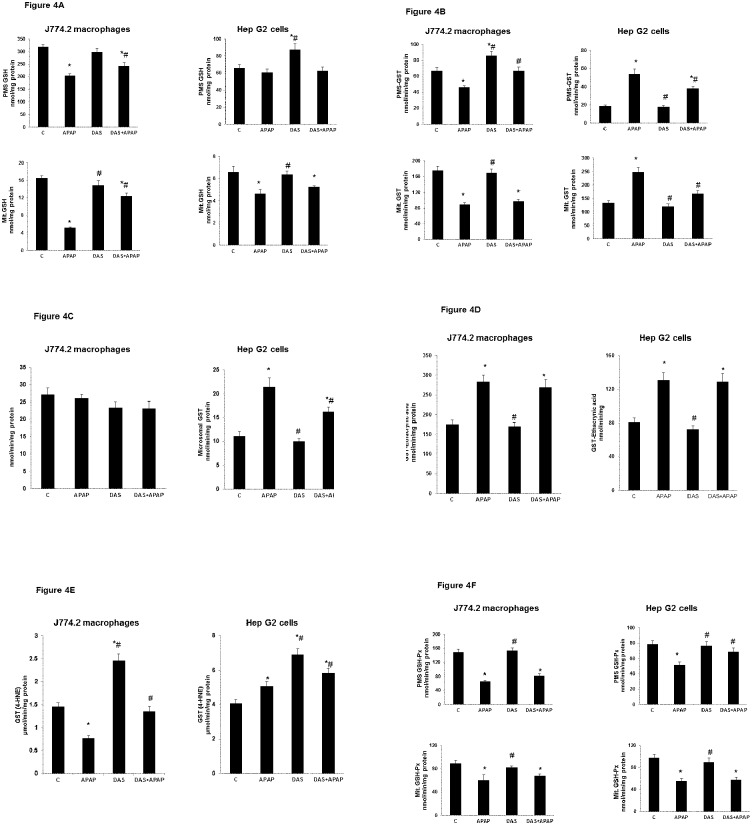
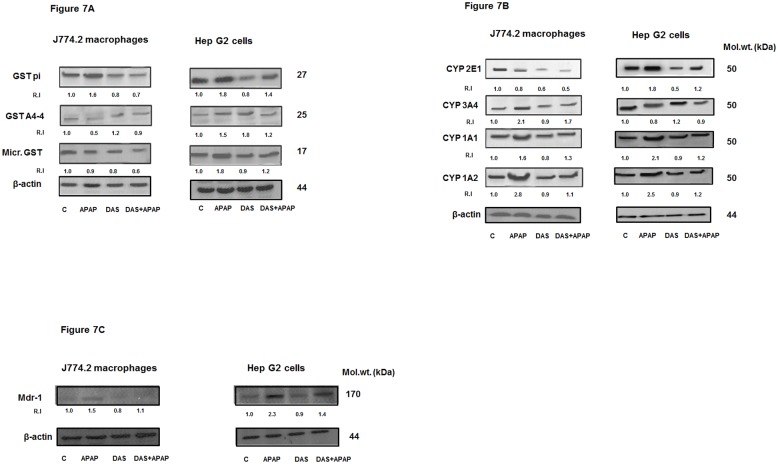
Non-steroidal anti-inflammatory drugs (NSAIDs), including acetaminophen (APAP), have been reported to induce cytotoxicity in cancer and non-cancerous cells. Overdose of acetaminophen (APAP) causes liver injury in humans and animals. Hepatic glutathione (GSH) depletion followed by oxidative stress and mitochondrial dysfunction are believed to be the main causes of APAP toxicity. The precise molecular mechanism of APAP toxicity in different cellular systems is, however, not clearly understood. Our previous studies on mouse macrophage J774.2 cells treated with APAP strongly suggest induction of apoptosis associated with mitochondrial dysfunction and oxidative stress. In the present study, using human hepatoma HepG2 cells, we have further demonstrated that macrophages are a more sensitive target for APAP-induced toxicity than HepG2 cells. Using similar dose- and time-point studies, a marked increase in apoptosis and DNA fragmentation were seen in macrophages compared to HepG2 cells. Differential effects of APAP on mitochondrial respiratory functions and oxidative stress were observed in the two cell lines which are presumably dependent on the varying degree of drug metabolism by the different cytochrome P450s and detoxification by glutathione S-transferase enzyme systems. Our results demonstrate a marked increase in the activity and expression of glutathione transferase (GST) and multidrug resistance (MDR1) proteins in APAP-treated HepG2 cells compared to macrophages. This may explain the apparent resistance of HepG2 cells to APAP toxicity. However, treatment of these cells with diallyl sulfide (DAS, 200 μM), a known chemopreventive agent from garlic extract, 24 h prior to APAP (10 μmol/ml for 18h) exhibited comparable cytoprotective effects in the two cell lines. These results may help in better understanding the mechanism of cytotoxicity caused by APAP and cytoprotection by chemopreventive agents in cancer and non-cancerous cellular systems.
Conflict of interest statement
Figures




References
-
- Pachkoria K, Lucena MI, Molokhia M, Cueto R, Carballo AS, Carvajal A, et al. Genetic and molecular factors in drug-induced liver injury: a review. Curr Drug Saf. 2007; 2: 97–112. - PubMed
-
- Reid AB, Kurten RC, McCullough SS, Brock RW, Hinson JA. Mechanisms of acetaminophen-induced hepatotoxicity: role of oxidative stress and mitochondrial permeability transition in freshly isolated mouse hepatocytes. J Pharmacol Exp Ther. 2005; 312: 509–516. - PubMed
-
- Lazerow SK, Abdi MS, Lewis JH. Drug-induced liver disease 2004. Curr Opin Gastroenterol. 2005; 21: 283–292. - PubMed
-
- Lee WM. Acetaminophen and the U.S. Acute Liver Failure Study Group: lowering the risks of hepatic failure. Hepatology 2004; 40: 6–9. - PubMed
Publication types
MeSH terms
Substances
LinkOut - more resources
Full Text Sources
Other Literature Sources
Medical
Research Materials
