


Heritability of the limbic networks
- PMID: 26714573
- PMCID: PMC4847695
- DOI: 10.1093/scan/nsv156
Heritability of the limbic networks
Abstract
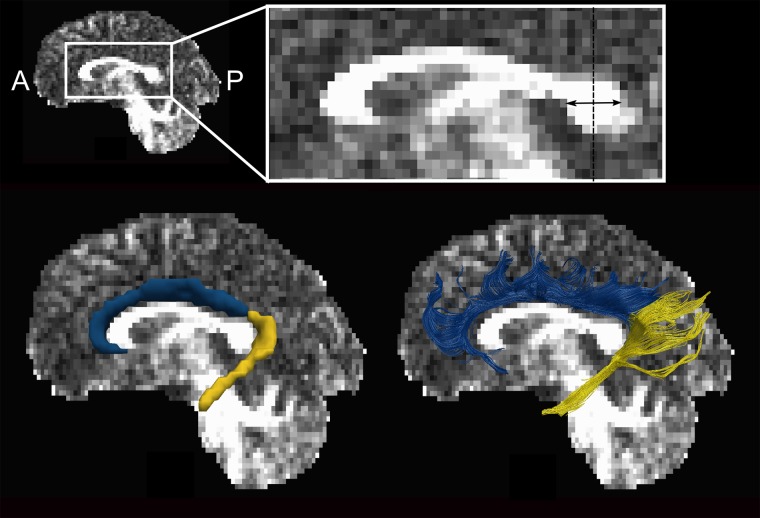
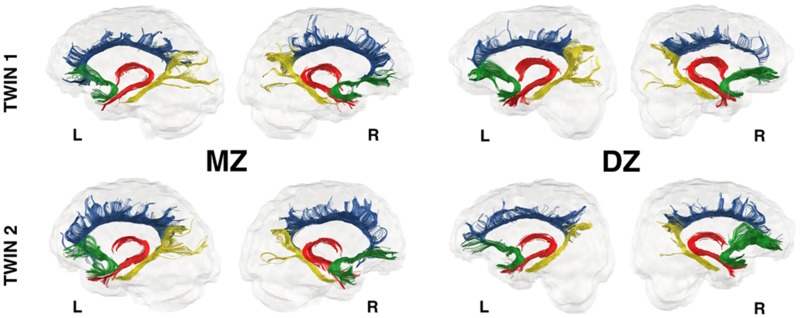
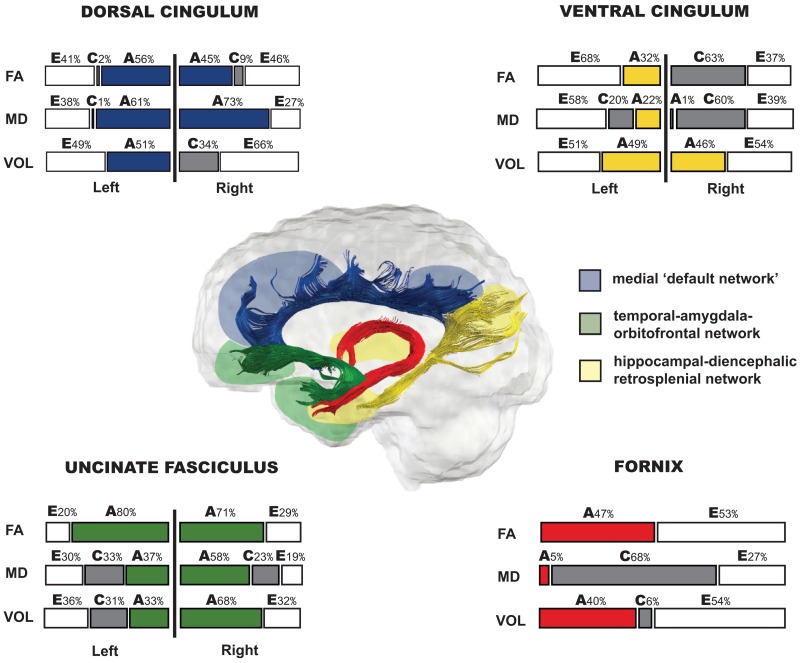
Individual differences in cognitive ability and social behaviour are influenced by the variability in the structure and function of the limbic system. A strong heritability of the limbic cortex has been previously reported, but little is known about how genetic factors influence specific limbic networks. We used diffusion tensor imaging tractography to investigate heritability of different limbic tracts in 52 monozygotic and 34 dizygotic healthy adult twins. We explored the connections that contribute to the activity of three distinct functional limbic networks, namely the dorsal cingulum ('medial default-mode network'), the ventral cingulum and the fornix ('hippocampal-diencephalic-retrosplenial network') and the uncinate fasciculus ('temporo-amygdala-orbitofrontal network'). Genetic and environmental variances were mapped for multiple tract-specific measures that reflect different aspects of the underlying anatomy. We report the highest heritability for the uncinate fasciculus, a tract that underpins emotion processing, semantic cognition, and social behaviour. High to moderate genetic and shared environmental effects were found for pathways important for social behaviour and memory, for example, fornix, dorsal and ventral cingulum. These findings indicate that within the limbic system inheritance of specific traits may rely on the anatomy of distinct networks and is higher for fronto-temporal pathways dedicated to complex social behaviour and emotional processing.
Keywords: cingulum; diffusion tractography; fornix; heritability; limbic system; uncinate fasciculus.
© The Author (2015). Published by Oxford University Press.
Figures
References
-
- Aggleton J.P. (2008). EPS Mid-Career Award 2006. Understanding anterograde amnesia: disconnections and hidden lesions. Quarterly Journal of Experimental Psychology , 61(10), 1441–71. - PubMed
-
- Alhusaini S., Whelan C.D., Doherty C.P., Delanty N., Fitzsimons M., Cavalleri G.L. (2015). Temporal cortex morphology in mesial temporal lobe epilepsy patients and their asymptomatic siblings. Cerebral Cortex, pii: bhu315 - PubMed
-
- Ameis S.H., Catani M. (2015). Altered white matter connectivity as a neural substrate for social impairment in Autism Spectrum Disorder. Cortex , 62, 158–81. - PubMed
-
- Amodio D.M., Frith C.D. (2006). Meeting of minds: the medial frontal cortex and social cognition. Nature Reviews Neuroscience , 7(4), 268–77. - PubMed
-
- Beaulieu C. (2002). The basis of anisotropic water diffusion in the nervous system—a technical review. NMR in Biomedicine , 15(7–8), 435–55. - PubMed
Publication types
MeSH terms
Grants and funding
LinkOut - more resources
Full Text Sources
Other Literature Sources
