


Safety of Dalbavancin in the Treatment of Skin and Skin Structure Infections: A Pooled Analysis of Randomized, Comparative Studies
- PMID: 26715497
- PMCID: PMC4735234
- DOI: 10.1007/s40264-015-0374-9
Safety of Dalbavancin in the Treatment of Skin and Skin Structure Infections: A Pooled Analysis of Randomized, Comparative Studies
Abstract
Introduction: Dalbavancin is a new lipoglycopeptide that is active against Gram-positive pathogens, including methicillin-resistant Staphylococcus aureus. It has a half-life of 14.4 days, permitting intravenous treatment of acute bacterial skin and skin structure infections without the need for daily dosing.
Objective: The objective of these analyses was to compare the adverse event profile of dalbavancin with that of the comparator agents in the treatment of skin and skin structure infections.
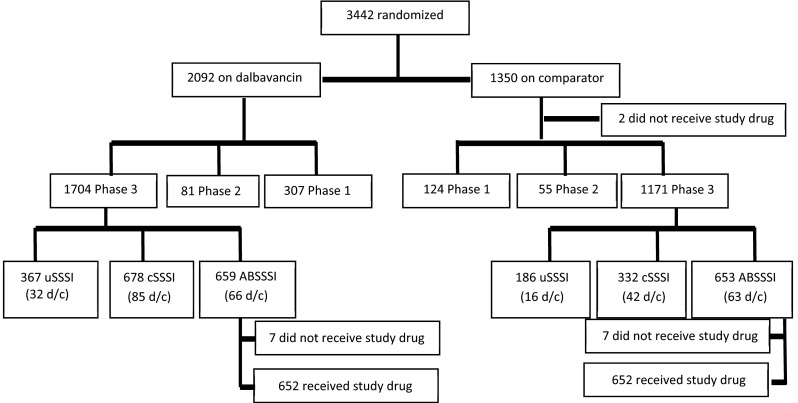
Methods: Data on adverse events and laboratory assessments collected from 3002 patients enrolled in seven late-stage, randomized clinical trials were analyzed for patients receiving dalbavancin or a comparator antibiotic.
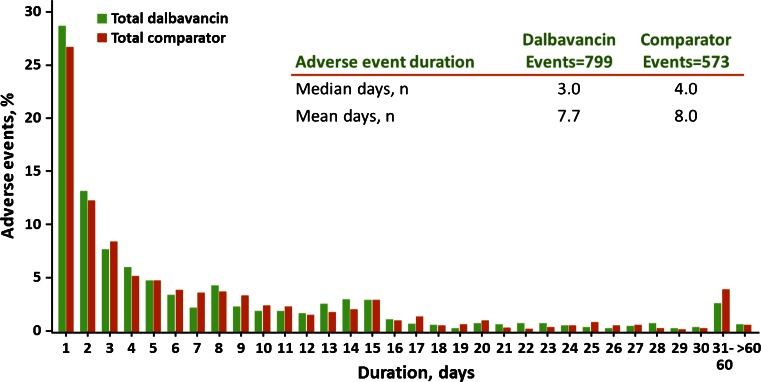
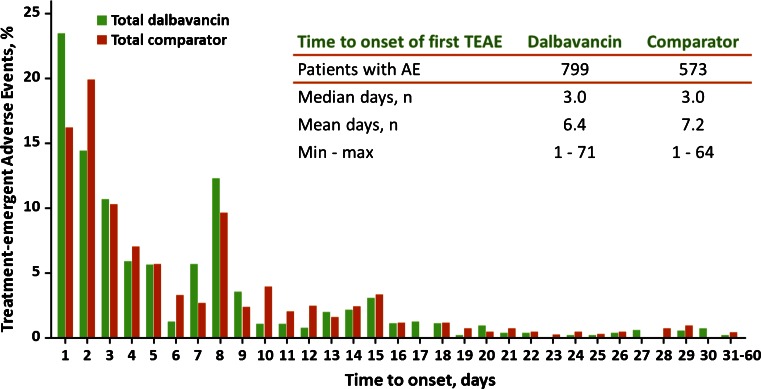
Results: Overall adverse event rates were similar or lower for patients receiving dalbavancin (799/1778; 44.9%) compared with those receiving comparator agents (573/1224; 46.8%, p = 0.012). The most common treatment-emergent adverse events were nausea, headache, diarrhea, constipation, vomiting, rash, urinary tract infection, pruritus, and insomnia. The duration and timing of the onset of adverse events were similar for patients receiving dalbavancin relative to the comparators.
Conclusion: Dalbavancin exhibits a favorable overall safety profile for treatment of acute bacterial skin and skin structure infections due to Gram-positive bacteria.
Figures
References
-
- Pallin DJ, Egan DJ, Pelletier AJ, et al. Increased US emergency department visits for skin and soft tissue infections, and changes in antibiotic choices, during the emergence of community-associated methicillin-resistant Staphylococcus aureus. Ann Emerg Med. 2008;51(3):292–298. doi: 10.1016/j.annemergmed.2007.12.004. - DOI - PubMed
-
- Liu C, Bayer A, Cosgrove SE, et al. Clinical practice guidelines by the Infectious Diseases Society of America for the treatment of methicillin-resistant Staphylococcus aureus infections in adults and children. Clin Infect Dis. 2011 - PubMed
-
- Dorr MB, Jabes D, Cavaleri M, et al. Human pharmacokinetics and rationale for once-weekly dosing of dalbavancin, a semi-synthetic glycopeptide. J Antimicrob Chemother 2005;55(Suppl 2): ii25–30. - PubMed
Publication types
MeSH terms
Substances
LinkOut - more resources
Full Text Sources
Other Literature Sources
Medical
