. 2015 Dec 30;90(6):2806-17.
doi: 10.1128/JVI.02652-15.

Structure-Guided Redesign Increases the Propensity of HIV Env To Generate Highly Stable Soluble Trimers

Affiliations

Structure-Guided Redesign Increases the Propensity of HIV Env To Generate Highly Stable Soluble Trimers

Javier Guenaga et al. J Virol. .

Abstract

Due to high viral diversity, an effective HIV-1 vaccine will likely require Envs derived from multiple subtypes to generate broadly neutralizing antibodies (bNAbs). Soluble Env mimics, like the native flexibly linked (NFL) and SOSIP trimers, derived from the subtype A BG505 Env, form homogeneous, stable native-like trimers. However, other Env sequences, such as JRFL and 16055 from subtypes B and C, do so to a lesser degree. The high-resolution BG505 SOSIP crystal structures permit the identification and redesign of Env elements involved in trimer stability. Here, we identified structure trimer-derived (TD) residues that increased the propensity of the subtype B JRFL and subtype C 16055 Env sequences to form well-ordered, homogenous, and highly stable soluble trimers. The generation of these spike mimics no longer required antibody-based selection, positive or negative. Using the redesigned subtype B and C trimer representatives as respective foundations, we further stabilized the NFL TD trimers by engineering an intraprotomer disulfide linkage in the prebridging sheet, I201C-A433C (CC), that locks the gp120 in the receptor nontriggered state. We demonstrated that this disulfide pair prevented CD4 induced-conformational rearrangements in NFL trimers derived from the prototypic subtype A, B, and C representatives. Coupling the TD-based design with the engineered disulfide linkage, CC, increased the propensity of Env to form soluble highly stable spike mimics that are resistant to CD4-induced changes. These advances will allow testing of the hypothesis that such stabilized immunogens will more efficiently elicit neutralizing antibodies in small-animal models and primates.

Importance: HIV-1 displays unprecedented global diversity circulating in the human population. Since the envelope glycoprotein (Env) is the target of neutralizing antibodies, Env-based vaccine candidates that address such diversity are needed. Soluble well-ordered Env mimics, typified by NFL and SOSIP trimers, are attractive vaccine candidates. However, the current designs do not allow most Envs to form well-ordered trimers. Here, we made design modifications to increase the propensity of representatives from two of the major HIV subtypes to form highly stable trimers. This approach should be applicable to other viral Envs, permitting the generation of a repertoire of homogeneous, highly stable trimers. The availability of such an array will allow us to assess if sequential or cocktail immune strategies can overcome some of the vaccine challenges presented by HIV diversity.


Figures

FIG 1
FIG 1
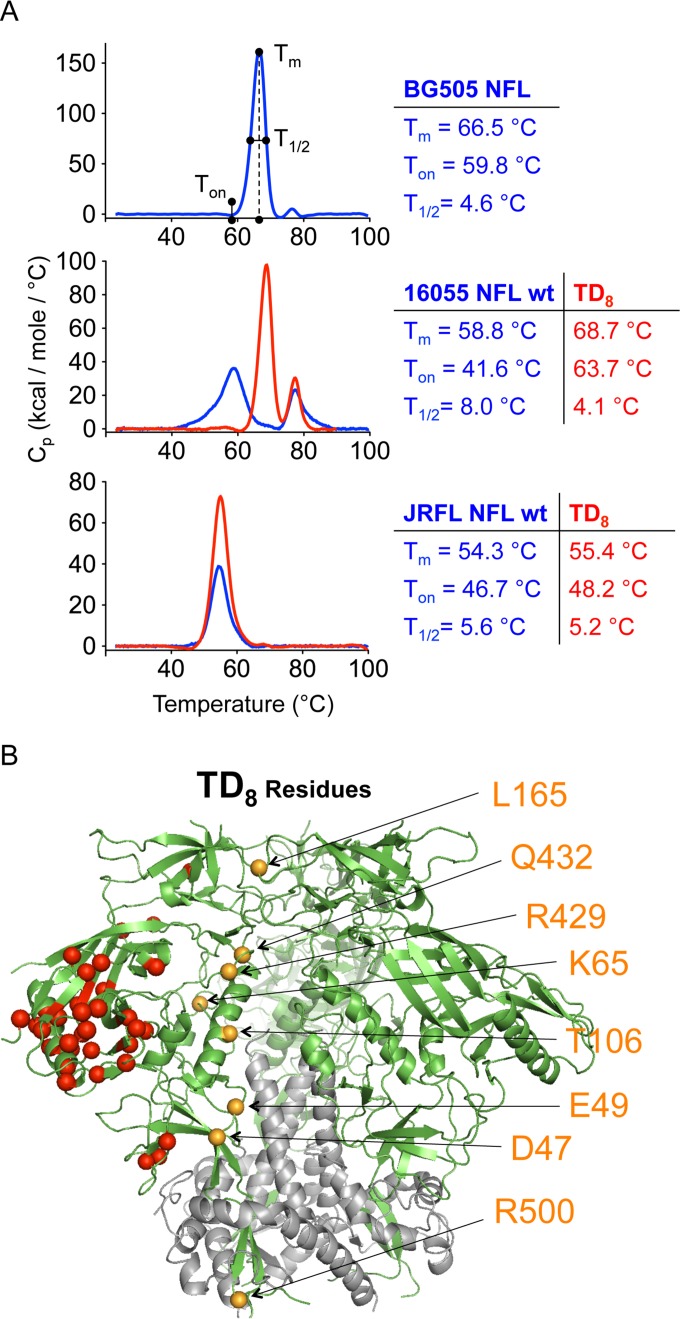
Modifications and thermostability of NFL trimers. (A) DSC analysis of NFL trimers before and after BG505 trimer-derived (TD) substitutions. Clade A BG505, clade B JRFL, and clade C 16055 NFL wt DSC thermal transition curves are shown in blue while those corresponding to the NFL TD8 versions are shown in red. DSC parameters (Tm, Ton, and T1/2) are displayed next to the curves in corresponding colors. (B) Ribbon representation of the BG505 SOSIP structure (derived from PDB entry 4TVP) where gp120 is shown in green and gp41 is shown in gray. The eight BG505 TD residues located proximal to the trimer axis that were substituted in JRFL and 16055 NFL to generate the TD8 variants are annotated by orange spheres. Red spheres represent residues that were identified in the sequence alignments but that were not evaluated due to their distal location to the trimer axis. Cp, heat capacity at constant pressure.
FIG 2
FIG 2
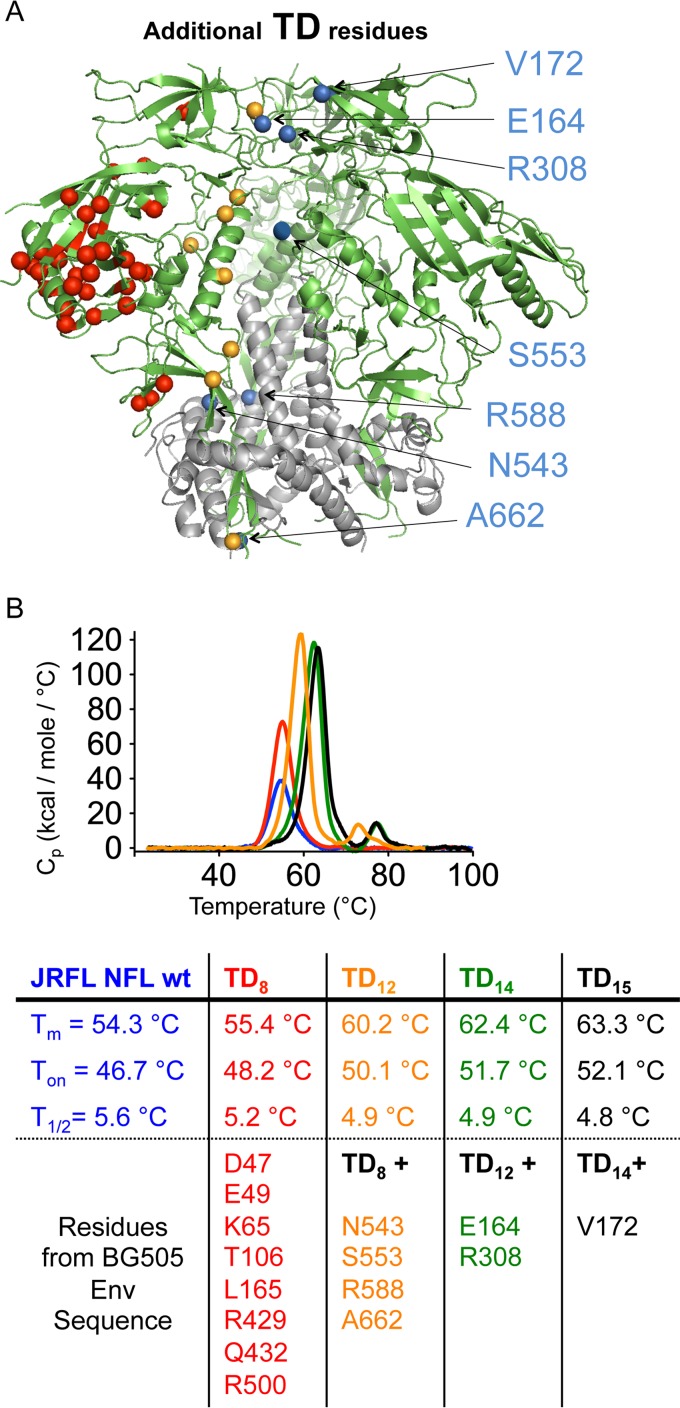
Additional TD15 modifications and thermostability of JRFL NFL variants. (A) Additional TD substitutions beyond the original TD8 residues (orange) from Fig. 1 are indicated as blue spheres in the context of the BG505 SOSIP structure (PDB accession number 4TVP). A total of 15 residues were transferred from the BG505 envelope glycoprotein sequence to the JRFL NFL trimer to generate the more stable TD15 trimer variant with increased thermostability. (B) DSC thermal transition curves and derived parameters of the JRFL HIV-1 sequence-derived NFL trimers, with the wt in blue, TD8 in red, TD12 in orange, TD14 in green, and TD15 in black, associated with progressive improvement of the JRFL NFL trimer thermal stability.
FIG 3
FIG 3
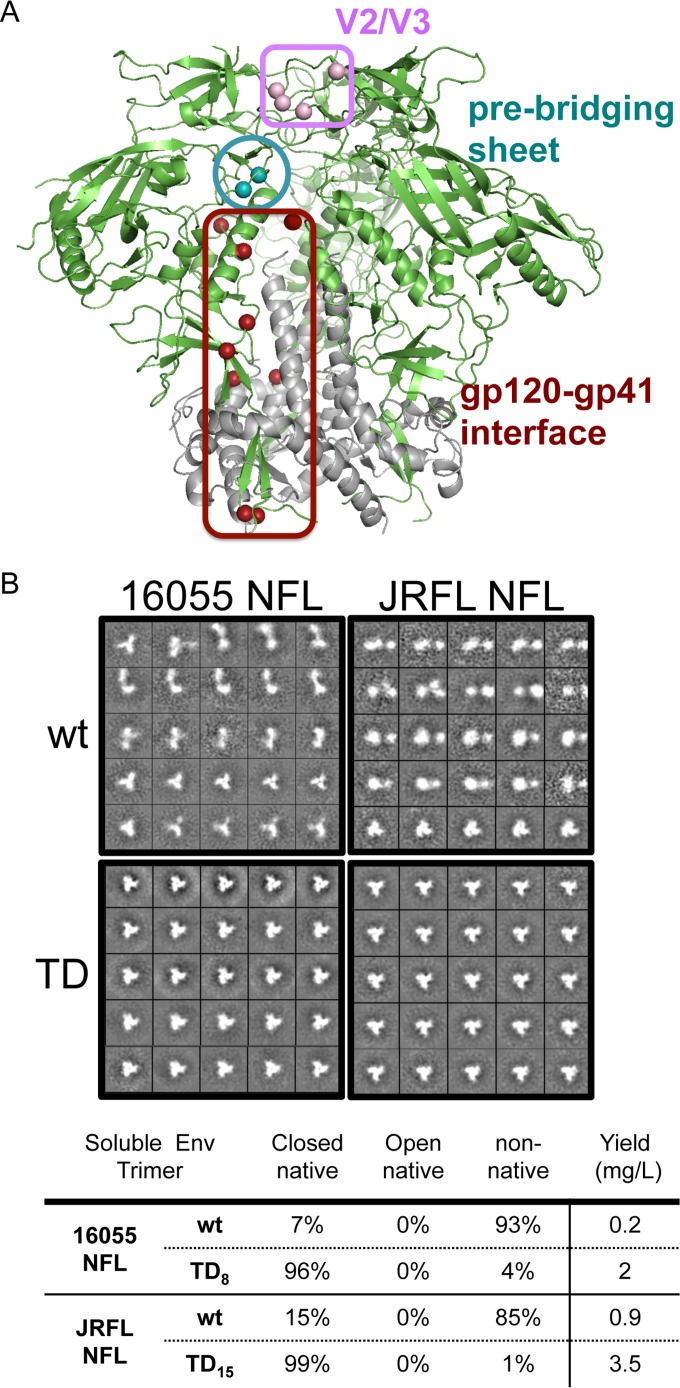
Regions of stability of soluble Env and representative 2D class averages of NFL trimers by negative staining EM. (A) BG505 TD residues transferred to the JRFL and 16055 HIV sequences to generate more stable NFL TD variant trimers highlight three regions critical for soluble Env stability, namely, the variable region V2/V3 (lavender), the prebridging sheet (teal), and the gp120-gp41 interface (brown). (B) Comparison of representative 2D class averages of the 16055 and JRFL NFL wt trimers (top panels) versus those of the corresponding TD variants (bottom panels) by negative staining EM. Indicated below the EM images are the corresponding calculated proportions of native trimers and nonnative trimers and the final yields of protein in milligrams per liter of transfected cell supernatants.
FIG 4
FIG 4
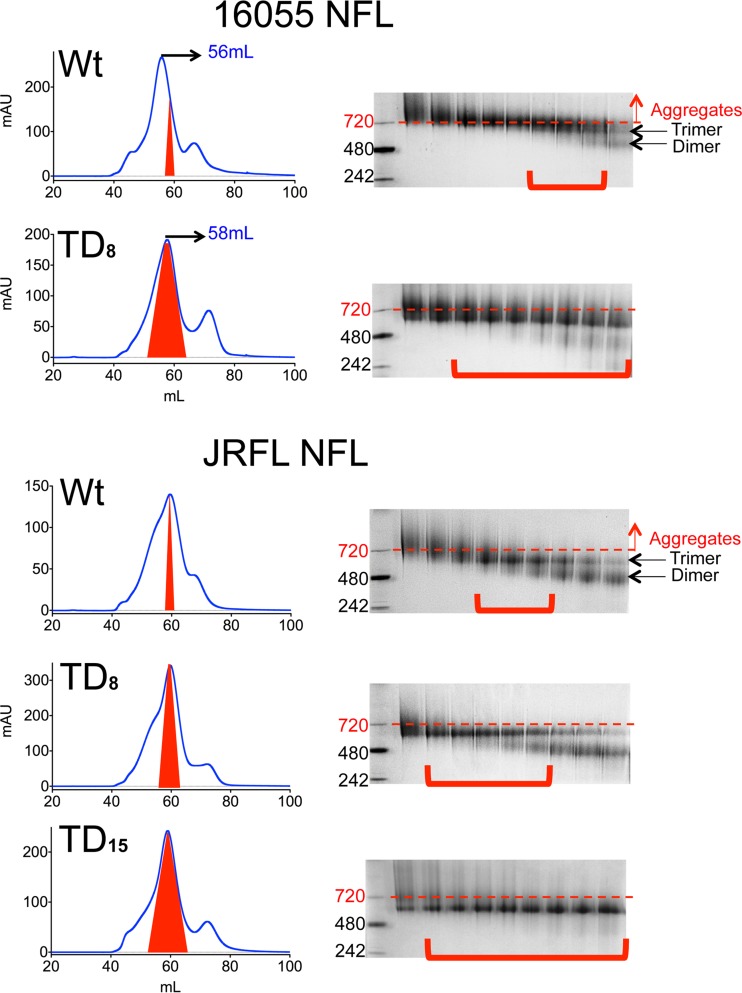
SEC profiles and BN gels of lectin affinity-purified trimers. SEC profiles of lectin affinity-purified wt and TD 16055 NFL and JRFL NFL trimer variants are shown. The shaded red area indicates the native-like trimer fractions. These fractions are indicated with red brackets in the BN-PAGE gel images. AU, arbitrary units.
FIG 5
FIG 5
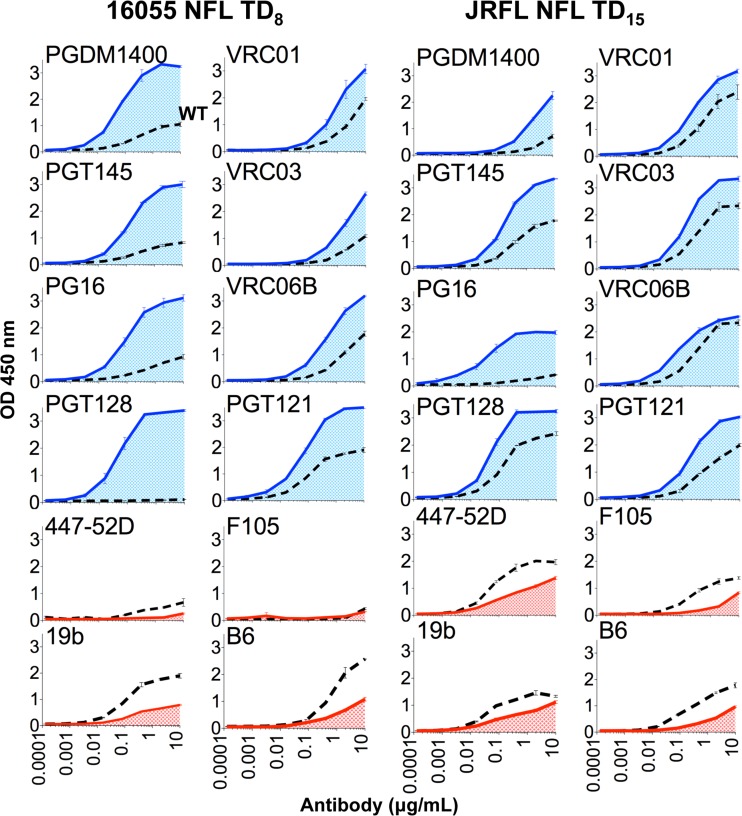
ELISA binding of selected antibodies to the NFL trimers. (A) ELISA binding of selected bNAbs (in blue) and non-NAbs (in red) targeting the variable region cap and CD4bs regions to 16055 NFL TD8 (left) and JRFL NFL TD15 (right) trimers purified by lectin affinity followed by SEC. Black discontinuous lines represent reference values for the wt NFL trimers.
FIG 6
FIG 6
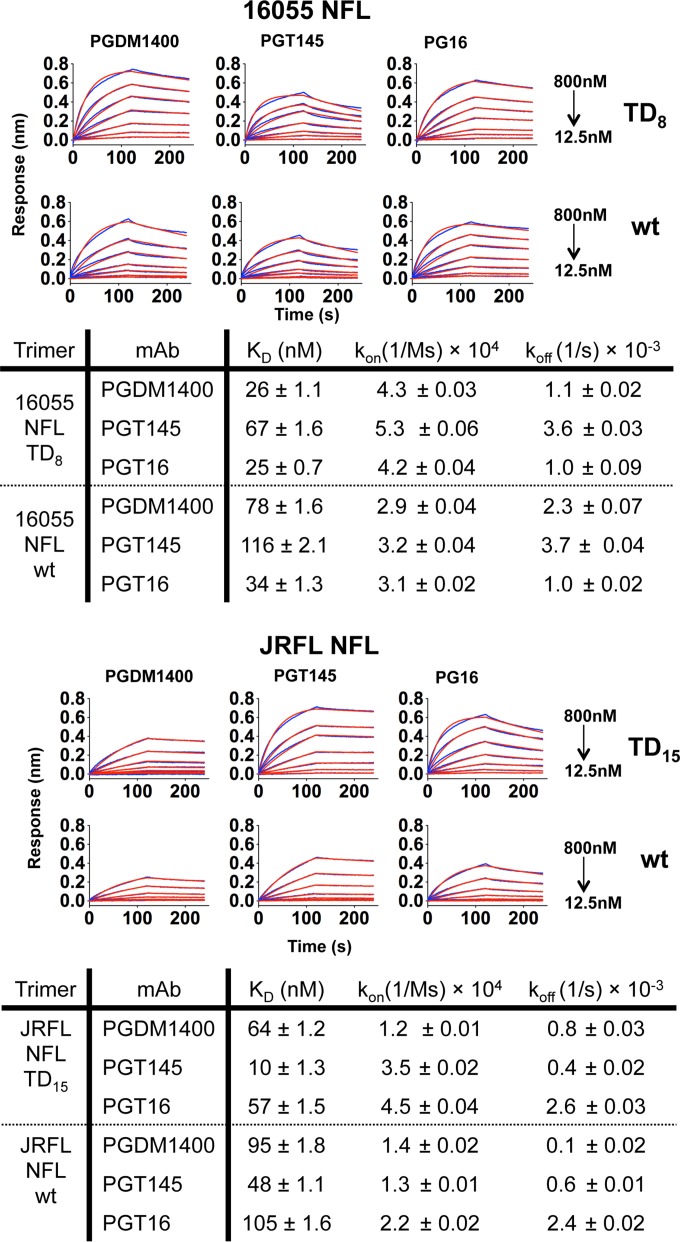
Biolayer interferometry (Octet) kinetic measurements for trimer-preferring bNAbs targeting the V2 cap of Env. Kinetic parameters were derived by biolayer light interferometry using three trimer-preferring bNAbs as ligands immobilized on the sensor surface and the NFL trimers as analytes in solution. KD, equilibrium dissociation constant; kon, association rate constant; koff, dissociation rate constant.
FIG 7
FIG 7
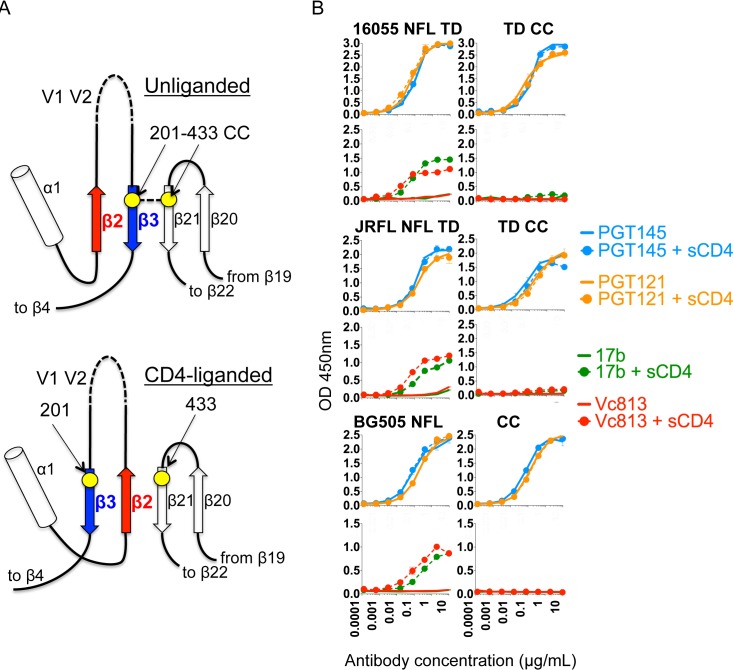
Effect of the stabilizing disulfide (I201C-A433C) on CD4-induced trimer antigenicity with and without sCD4. (A) Schematic model of the prebridging sheet region of the HIV trimer depicting the location of the residues implicated in the formation of the stabilizing intraprotomer disulfide (CC), marked here as yellow circles. The residues 201 and 433 are located within disulfide bond distances on adjacent β-strands (β3 and β21, respectively) in the unliganded HIV trimer while they are separated by a third β-strand, β2, when the trimer is CD4 liganded (from PDB accession number 3J5M). (B) Antigenic changes detected on NFL trimers following CD4 induction by ELISA. Solid lines represent trimer recognition by antibodies in the absence of sCD4, whereas dotted lines represent binding of antibodies following sCD4-induced conformational changes.
FIG 8
FIG 8
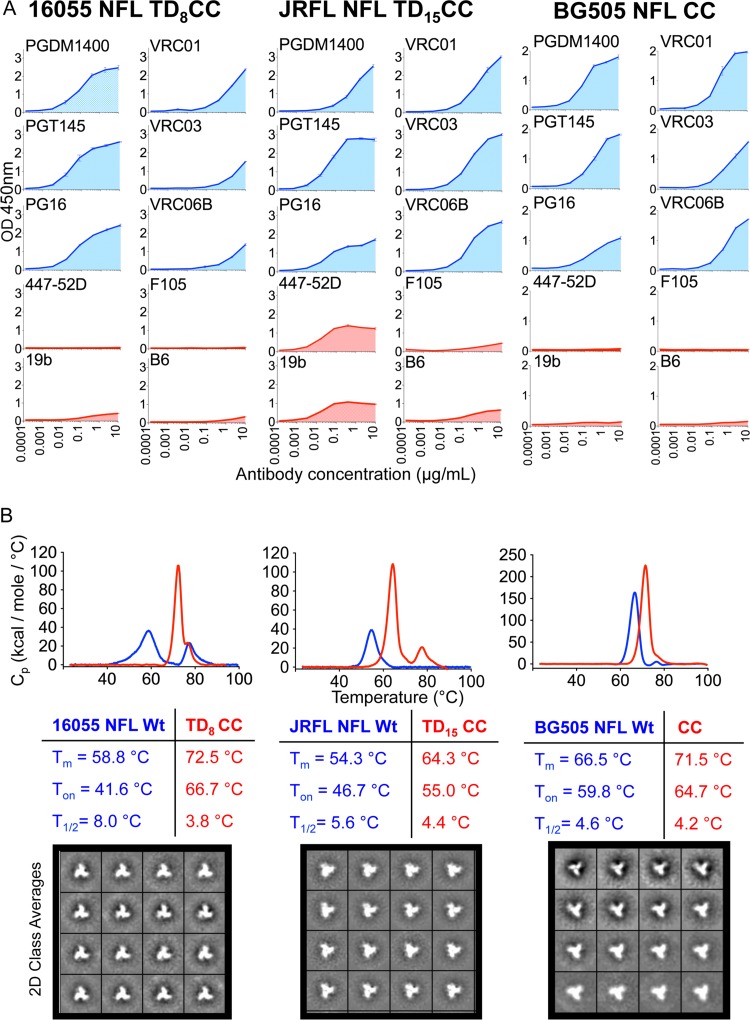
Biophysical characterization of the disulfide CC-stabilized NFL trimers. (A) ELISA binding curves of selected bNAbs (blue) and non-NAbs (red) to the three disulfide-stabilized NFL trimers representing the three major HIV subtypes, BG505 NFL CC from subtype A, JRFL NFL TD15 CC from subtype B, and 16055 NFL TD8 CC from subtype C. (B) DSC thermal transition curves comparing the wt NFL trimers to the stabilized trimer variants 16055 NFL TD8 CC, JRFL NFL TD15 CC, and BG505 NFL CC. DSC parameters are shown next to the curves in blue for wt NFLs and in red for the stabilized NFL trimers. Representative negative staining EM 2D class averages corresponding to the disulfide-stabilized NFL trimer variants 16055 NFL TD8 CC, JRFL NFL TD15 CC, and BG505 NFL CC are also shown. OD450, optical density at 450 nm.
FIG 9
FIG 9
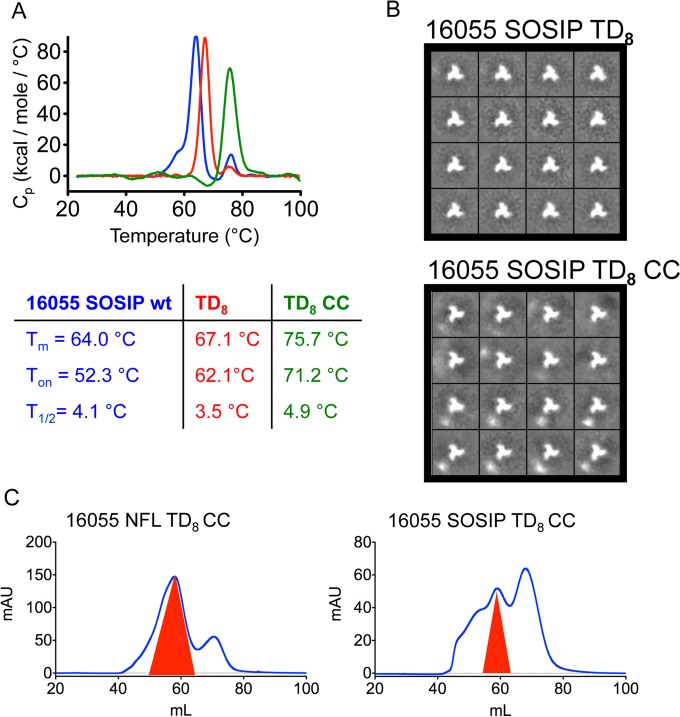
Biophysical characterization of stabilized 16055 SOSIP trimer variants. (A) DSC transition melting curves corresponding to 16055 SOSIP wt (blue), TD8 (orange), and TD8 CC (red) and derived DSC parameters. (B) Negative staining EM micrographs and derived 2D class averages for 16055 NFL TD8 and 16055 NFL TD8 CC variants. (C) SEC profiles comparing 16055 NFL versus SOSIP with both the TD and the CC modifications.

References

    1. Earl PL, Broder CC, Long D, Lee SA, Peterson J, Chakrabarti S, Doms RW, Moss B. 1994. Native oligomeric human immunodeficiency virus type 1 envelope glycoprotein elicits diverse monoclonal antibody reactivities. J Virol 68:3015–3026. - PMC - PubMed
    1. Earl PL, Sugiura W, Montefiori DC, Broder CC, Lee SA, Wild C, Lifson J, Moss B. 2001. Immunogenicity and protective efficacy of oligomeric human immunodeficiency virus type 1 gp140. J Virol 75:645–653. doi: 10.1128/JVI.75.2.645-653.2001. - DOI - PMC - PubMed
    1. Gao F, Weaver EA, Lu Z, Li Y, Liao HX, Ma B, Alam SM, Scearce RM, Sutherland LL, Yu JS, Decker JM, Shaw GM, Montefiori DC, Korber BT, Hahn BH, Haynes BF. 2005. Antigenicity and immunogenicity of a synthetic human immunodeficiency virus type 1 group m consensus envelope glycoprotein. J Virol 79:1154–1163. doi: 10.1128/JVI.79.2.1154-1163.2005. - DOI - PMC - PubMed
    1. Kovacs JM, Noeldeke E, Ha HJ, Peng H, Rits-Volloch S, Harrison SC, Chen B. 2014. Stable, uncleaved HIV-1 envelope glycoprotein gp140 forms a tightly folded trimer with a native-like structure. Proc Natl Acad Sci U S A 111:18542–18547. doi: 10.1073/pnas.1422269112. - DOI - PMC - PubMed
    1. Forsell MN, Li Y, Sundback M, Svehla K, Liljestrom P, Mascola JR, Wyatt R, Karlsson Hedestam GB. 2005. Biochemical and immunogenic characterization of soluble human immunodeficiency virus type 1 envelope glycoprotein trimers expressed by Semliki Forest virus. J Virol 79:10902–10914. doi: 10.1128/JVI.79.17.10902-10914.2005. - DOI - PMC - PubMed

Publication types

MeSH terms