


Cognitive dysfunction in bipolar disorder and schizophrenia: a systematic review of meta-analyses
- PMID: 26719696
- PMCID: PMC4689290
- DOI: 10.2147/NDT.S76700
Cognitive dysfunction in bipolar disorder and schizophrenia: a systematic review of meta-analyses
Abstract
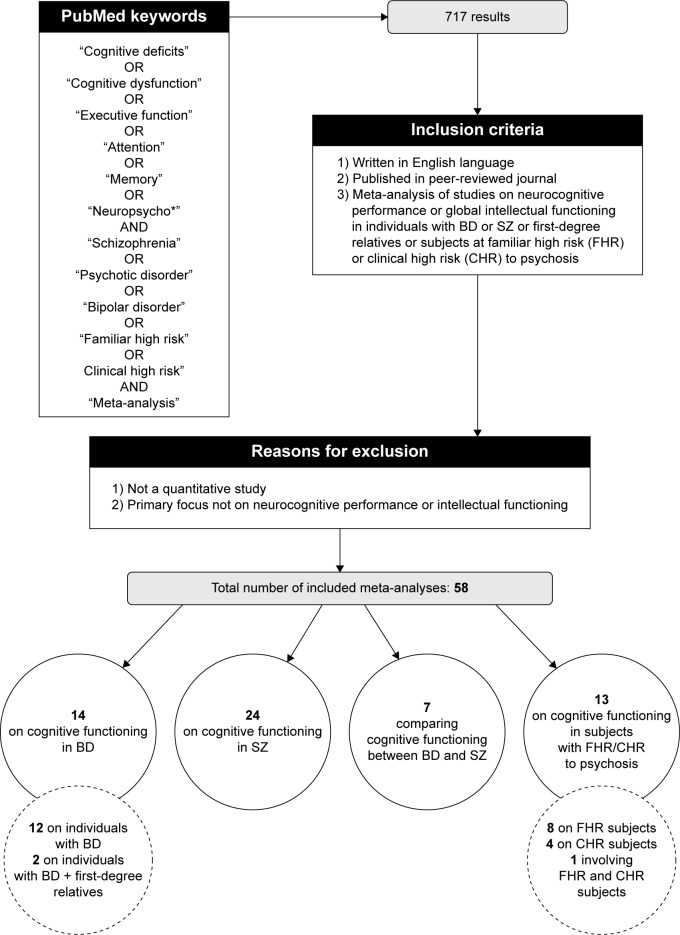
Cognitive impairment is a core feature of schizophrenia (SZ) and bipolar disorder (BD). A neurocognitive profile characterized by widespread cognitive deficits across multiple domains in the context of substantial intellectual impairment, which appears to antedate illness onset, is a replicated finding in SZ. There is no specific neuropsychological signature that can facilitate the diagnostic differentiation of SZ and BD, notwithstanding, neuropsychological deficits appear more severe in SZ. The literature in this field has provided contradictory results due to methodological differences across studies. Meta-analytic techniques may offer an opportunity to synthesize findings and to control for potential sources of heterogeneity. Here, we performed a systematic review of meta-analyses of neuropsychological findings in SZ and BD. While there is no conclusive evidence for progressive cognitive deterioration in either SZ or BD, some findings point to more severe cognitive deficits in patients with early illness onset across both disorders. A compromised pattern of cognitive functioning in individuals at familiar and/or clinical risk to psychosis as well as in first-degree relatives of BD patients suggests that early neurodevelopmental factors may play a role in the emergence of cognitive deficits in both disorders. Premorbid intellectual impairment in SZ and at least in a subgroup of patients with BD may be related to a shared genetically determined influence on neurodevelopment.
Keywords: bipolar disorder; cognition; meta-analysis; neuropsychological tests; psychiatry; psychosis; schizophrenia.
Figures
References
-
- Hedman AM, van Haren NE, van Baal CG, Kahn RS, Hulshoff Pol HE. IQ change over time in schizophrenia and healthy individuals: a meta-analysis. Schizophr Res. 2013;146(1–3):201–208. - PubMed
-
- Szoke A, Trandafir A, Dupont ME, Meary A, Schurhoff F, Leboyer M. Longitudinal studies of cognition in schizophrenia: meta-analysis. Br J Psychiat J Mental Sci. 2008;192(4):248–257. - PubMed
-
- De Herdt A, Wampers M, Vancampfort D, et al. Neurocognition in clinical high risk young adults who did or did not convert to a first schizophrenic psychosis: a meta-analysis. Schizophr Res. 2013;149(1–3):48–55. - PubMed
-
- Bora E, Lin A, Wood SJ, Yung AR, McGorry PD, Pantelis C. Cognitive deficits in youth with familial and clinical high risk to psychosis: a systematic review and meta-analysis. Acta Psychiatr Scand. 2014;130(1):1–15. - PubMed
-
- Schultze-Lutter F, Schimmelmann BG, Ruhrmann S, Michel C. ‘A rose is a rose is a rose’, but at-risk criteria differ. Psychopathology. 2013;46(2):75–87. - PubMed
Publication types
LinkOut - more resources
Full Text Sources
