


Molecular and cytological analyses reveal distinct transformations of intestinal epithelial cells during Xenopus metamorphosis
- PMID: 26719790
- PMCID: PMC4696227
- DOI: 10.1186/s13578-015-0065-3
Molecular and cytological analyses reveal distinct transformations of intestinal epithelial cells during Xenopus metamorphosis
Abstract
Background: The thyroid hormone (T3)-induced formation of adult intestine during amphibian metamorphosis resembles the maturation of the mammalian intestine during postembryonic development, the period around birth when plasma T3 level peaks. This process involves de novo formation of adult intestinal stem cells as well as the removal of the larval epithelial cells through apoptosis. Earlier studies have revealed a number of cytological and molecular markers for the epithelial cells undergoing different changes during metamorphosis. However, the lack of established double labeling has made it difficult to ascertain the identities of the metamorphosing epithelial cells.
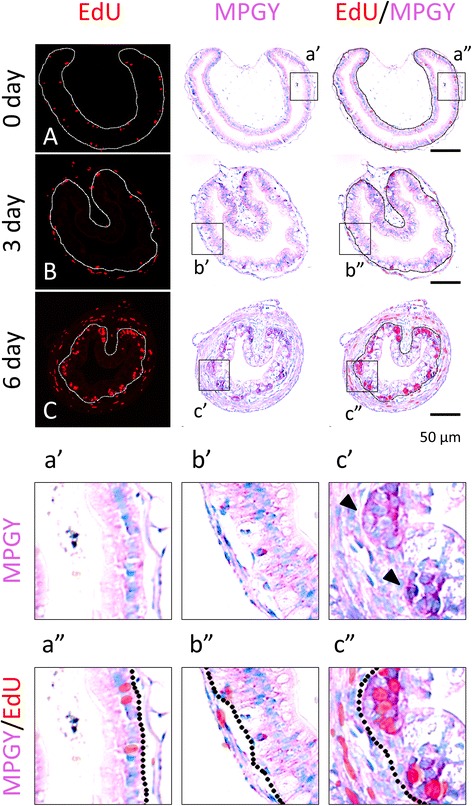
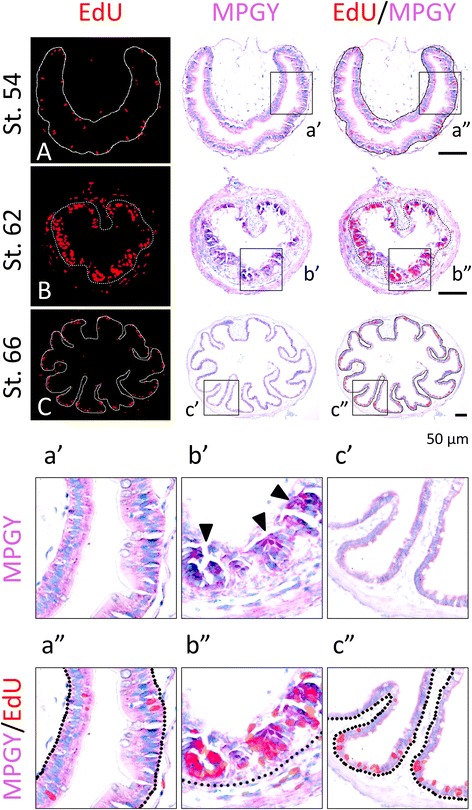
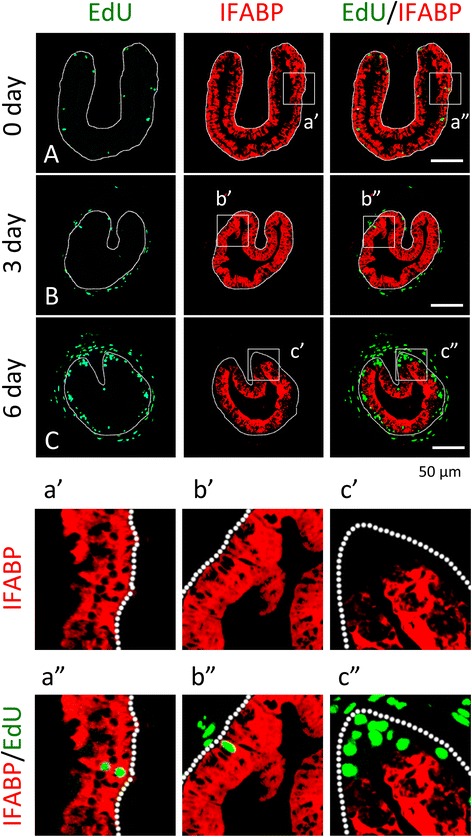
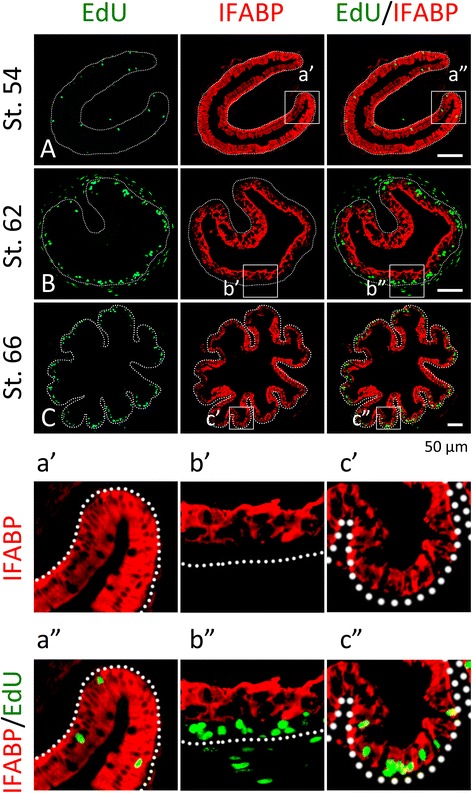
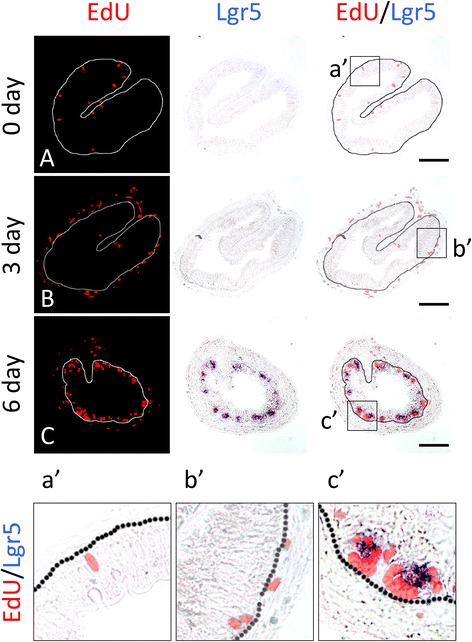
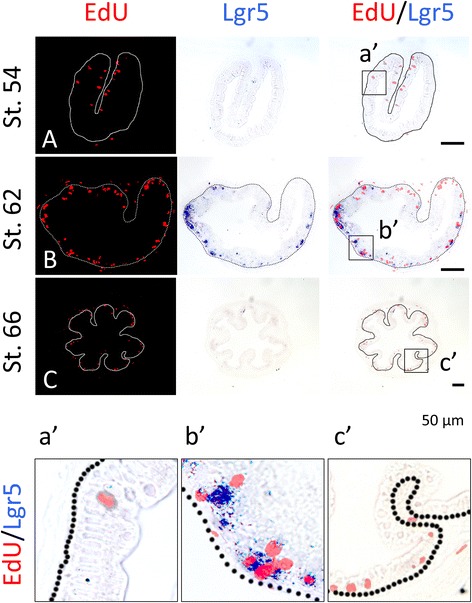
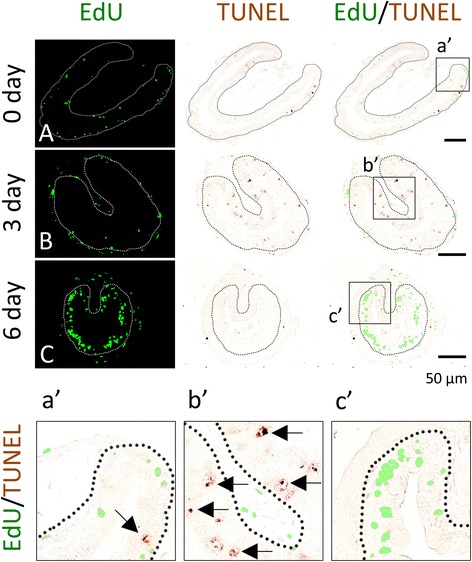
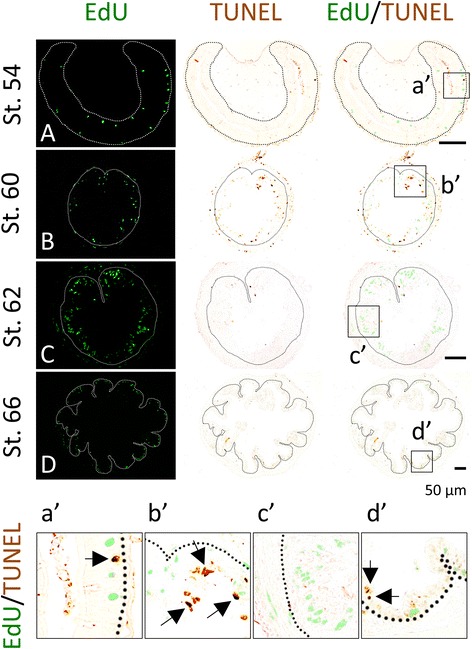
Results: Here, we carried out different double-staining with a number of cytological and molecular markers during T3-induced and natural metamorphosis in Xenopus laevis. Our studies demonstrated conclusively that the clusters of proliferating cells in the epithelium at the climax of metamorphosis are undifferentiated epithelial cells and express the well-known adult intestinal stem cell marker gene Lgr5. We further show that the adult stem cells and apoptotic larval epithelial cells are distinct epithelial cells during metamorphosis.
Conclusions: Our findings suggest that morphologically identical larval epithelial cells choose two alternative paths: programmed cell death or dedifferentiation to form adult stem cells, in response to T3 during metamorphosis with apoptosis occurring prior to the formation of the proliferating adult stem cell clusters (islets).
Keywords: Intestine; Metamorphosis; Stem cells; Thyroid hormone; Thyroid hormone receptor; Xenopus laevis.
Figures
References
-
- Ishizuya-Oka A, Shi YB. Regulation of adult intestinal epithelial stem cell development by thyroid hormone during Xenopus laevis metamorphosis. Dev Dyn. 2007. - PubMed
-
- Muncan V, Heijmans J, Krasinski SD, Buller NV, Wildenberg ME, Meisner S, Radonjic M, Stapleton KA, Lamers WH, Biemond I, van den Bergh Weerman MA, O’Carroll D, Hardwick JC, Hommes DW, van den Brink GR. Blimp1 regulates the transition of neonatal to adult intestinal epithelium. Nat Commun. 2011;2:452. - PMC - PubMed
LinkOut - more resources
Full Text Sources
Other Literature Sources
