


Poor drug adherence and lack of awareness of hypertension among hypertensive stroke patients in Kampala, Uganda: a cross sectional study
- PMID: 26725042
- PMCID: PMC4698320
- DOI: 10.1186/s13104-015-1830-4
Poor drug adherence and lack of awareness of hypertension among hypertensive stroke patients in Kampala, Uganda: a cross sectional study
Abstract
Background: Raised blood pressure (BP) remains an important risk factor for cardiovascular diseases such as stroke. Adherence to therapeutic recommendations especially antihypertensive drugs is important in BP control. The aim of the study was to assess the stroke risk factors and levels of adherence among hypertensive patients with stroke in Kampala Uganda.
Methods: In a cross-sectional study we describe 112 hypertensive subjects with stroke from two Kampala city hospitals. A standardized pre-tested questionnaire was used to collect medical history, clinical details, radiological findings and laboratory data.
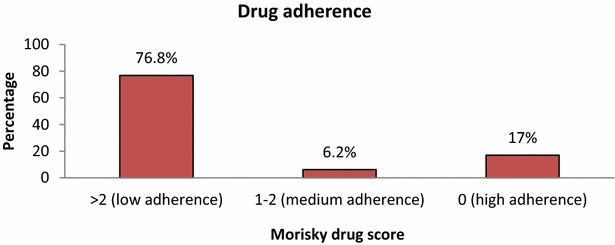
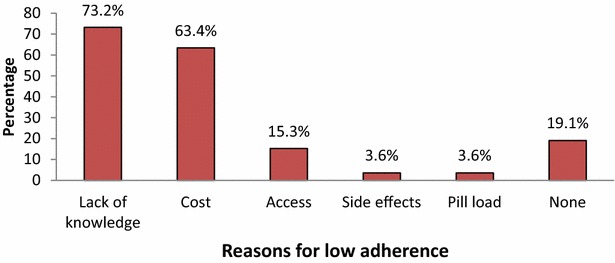
Results: A total of 112 hypertensive subjects with stroke were enrolled between May 2013 and April 2014. The median ages were 63.5 years (52.5-75.0) for the cases. Seventy percent (78/112) of the study participants had ischemic strokes. Only 17% were adherent to anti-hypertensive medications. The main cause of non-adherence appears to be lack of knowledge.
Conclusions: Poor adherence of anti-hypertensive medications among hypertensive patients remains a big challenge in our setting. This has been attributed to lack of adequate knowledge and cost of the prescribed drugs. There is therefore an urgent need to promptly diagnose and educate hypertensive patients with emphasis on adherence to anti hypertensive drugs.
Figures
References
-
- WHO CVD Strategy: cardiovascular diseases—prevention and control 2001–2002. Geneva: WHO; 2002.
-
- Global burden disease estimates (http://www.who.int/healthinfo/global_burden_disease/estimates_regional/en/).
-
- O’Donnell MJ, Xavier D, Liu L, Zhang H, Chin SL, Rao-Melacini P, Rangarajan S, Islam S, Pais P, McQueen MJ, et al. Risk factors for ischaemic and intracerebral haemorrhagic stroke in 22 countries (the INTERSTROKE study): a case-control study. Lancet. 2010;376(9735):112–123. doi: 10.1016/S0140-6736(10)60834-3. - DOI - PubMed
Publication types
MeSH terms
Substances
Grants and funding
LinkOut - more resources
Full Text Sources
Other Literature Sources
Medical
Miscellaneous
